
1 / 10
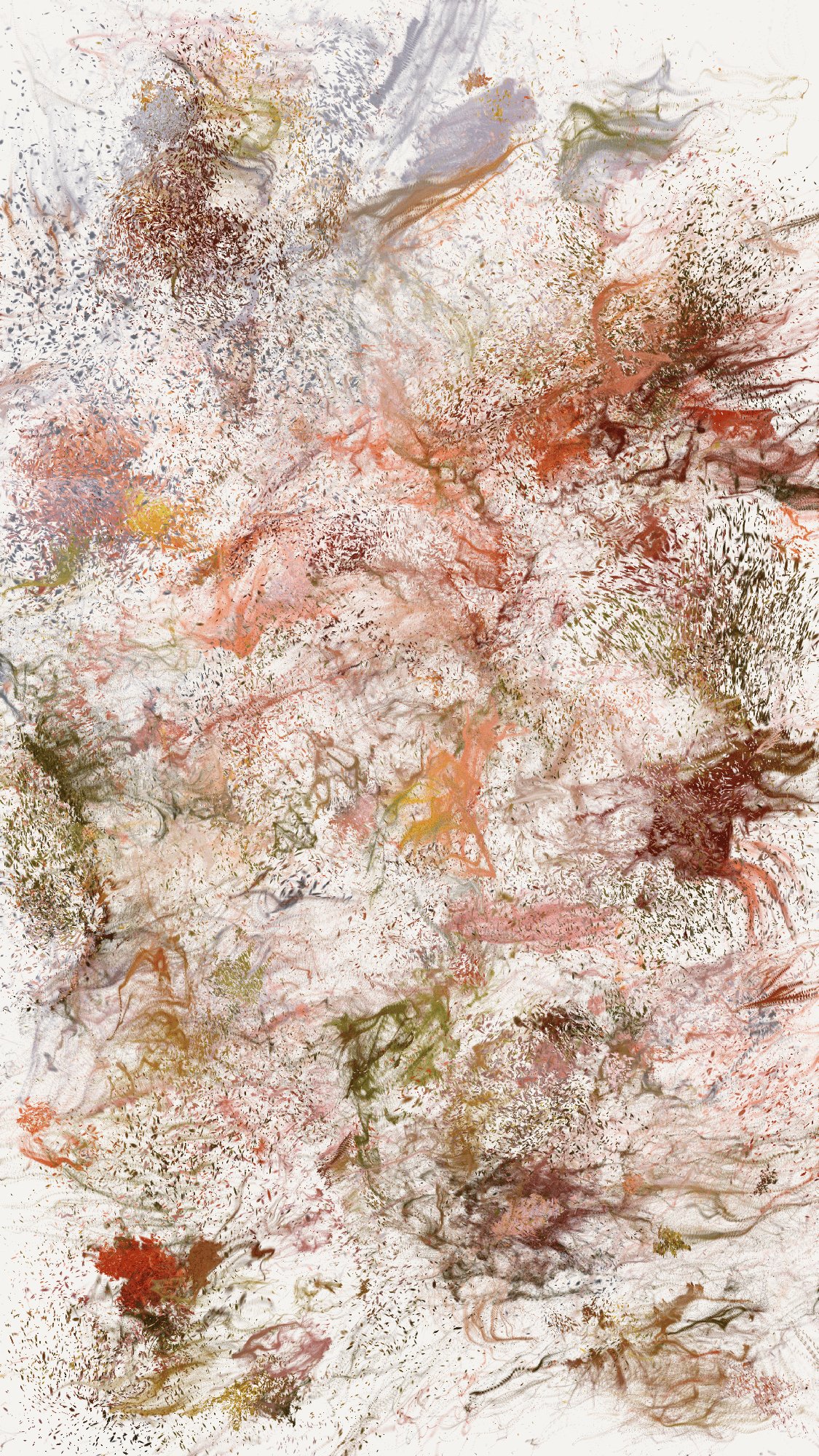
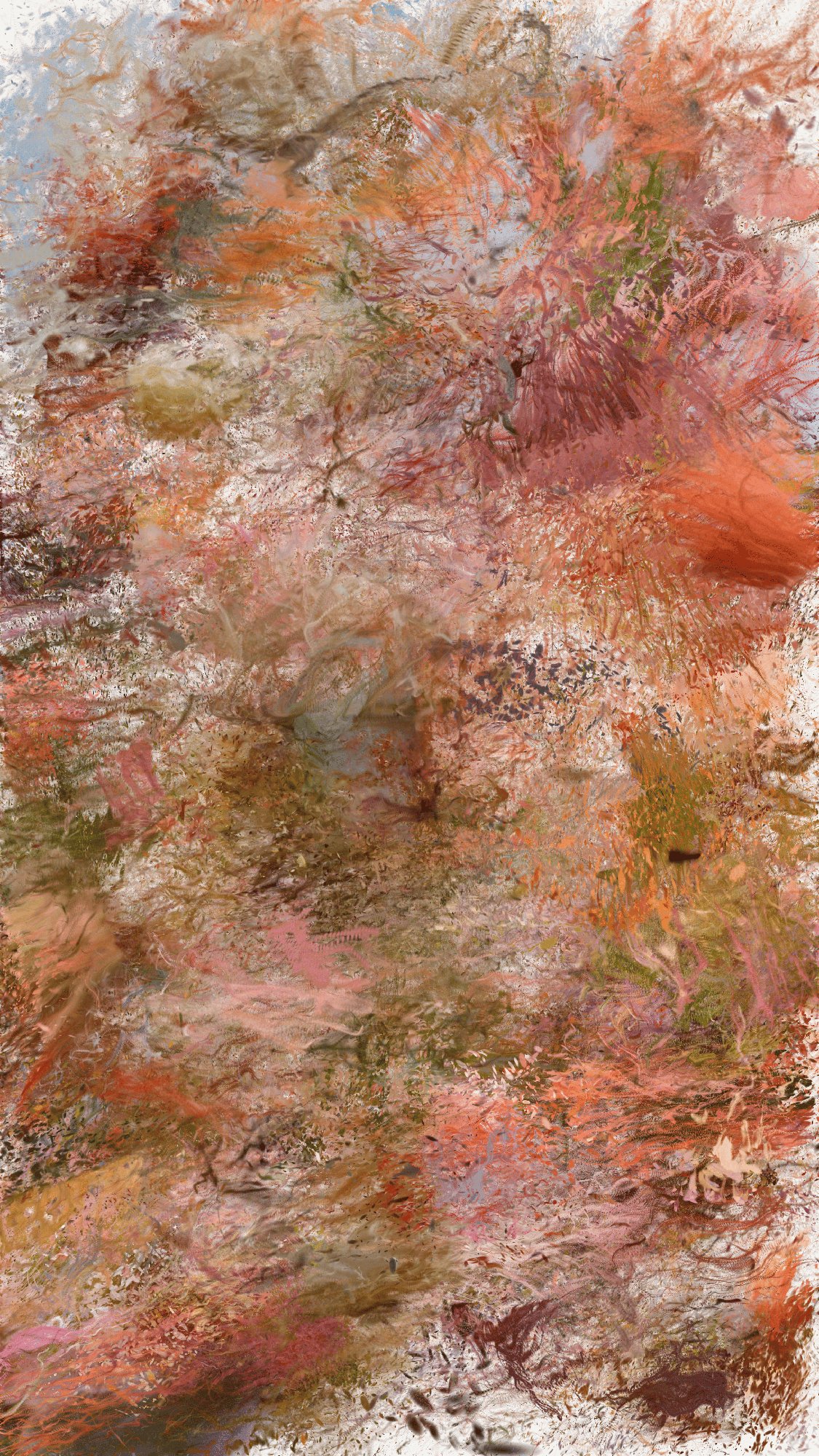
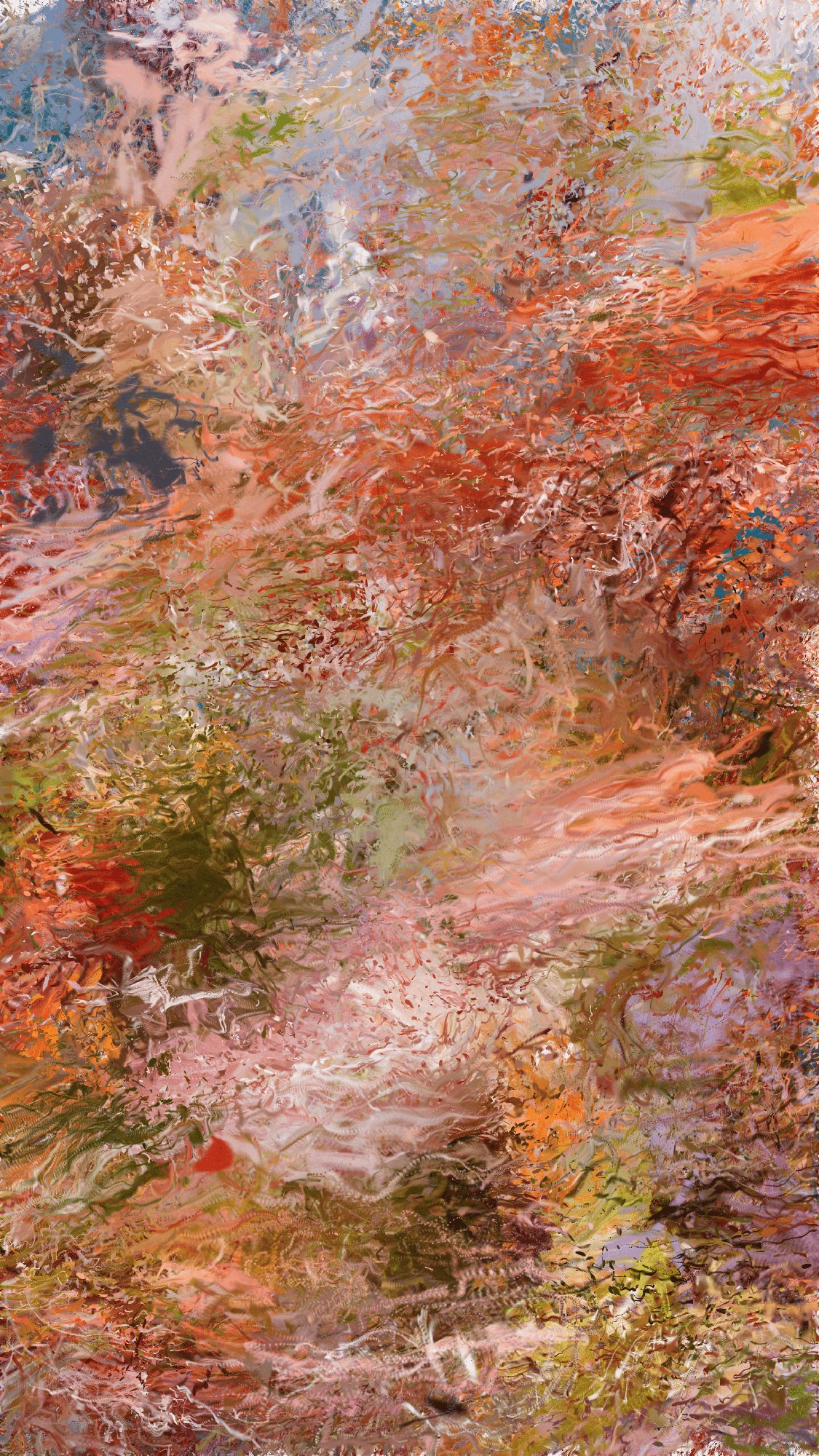
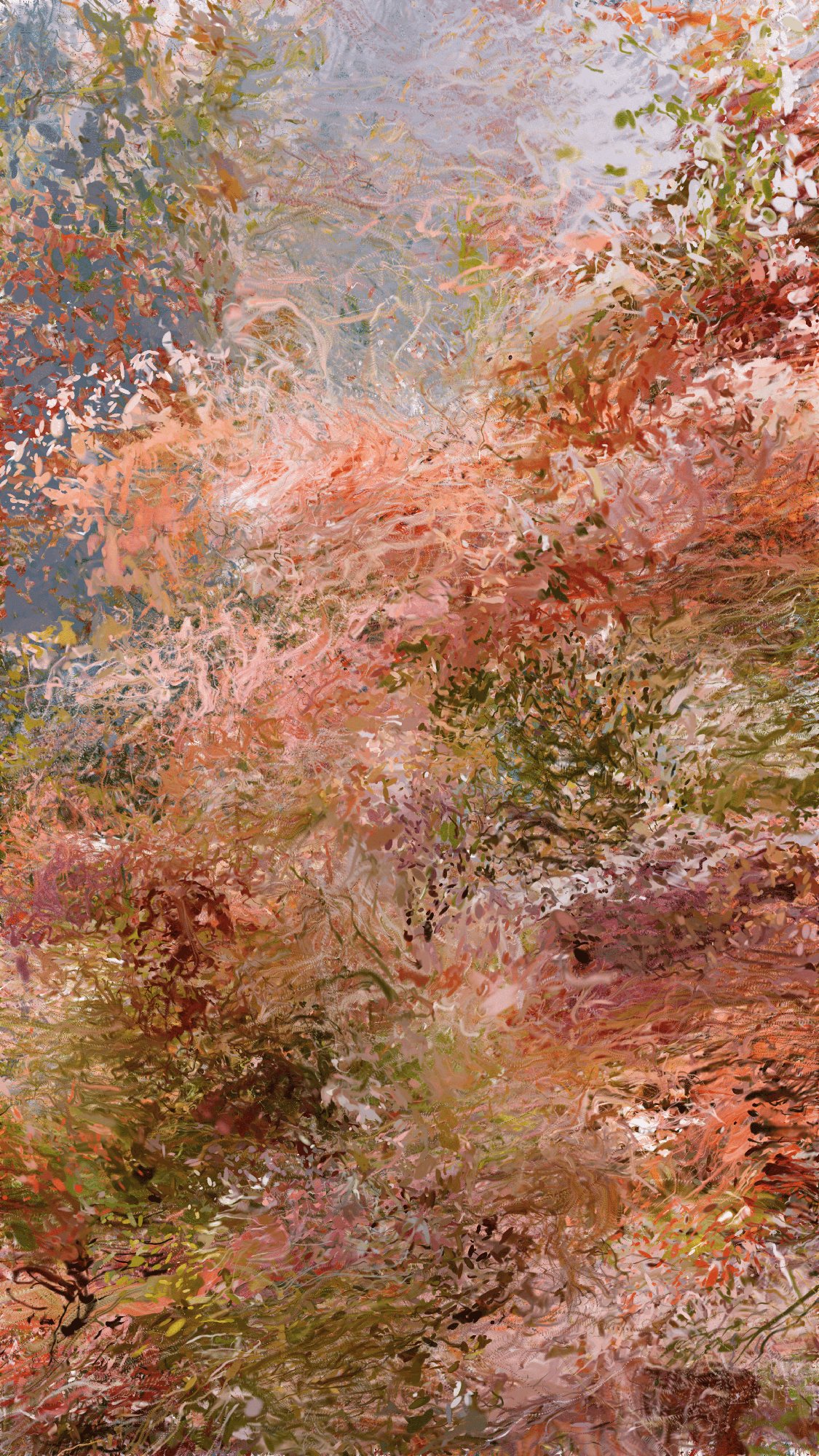
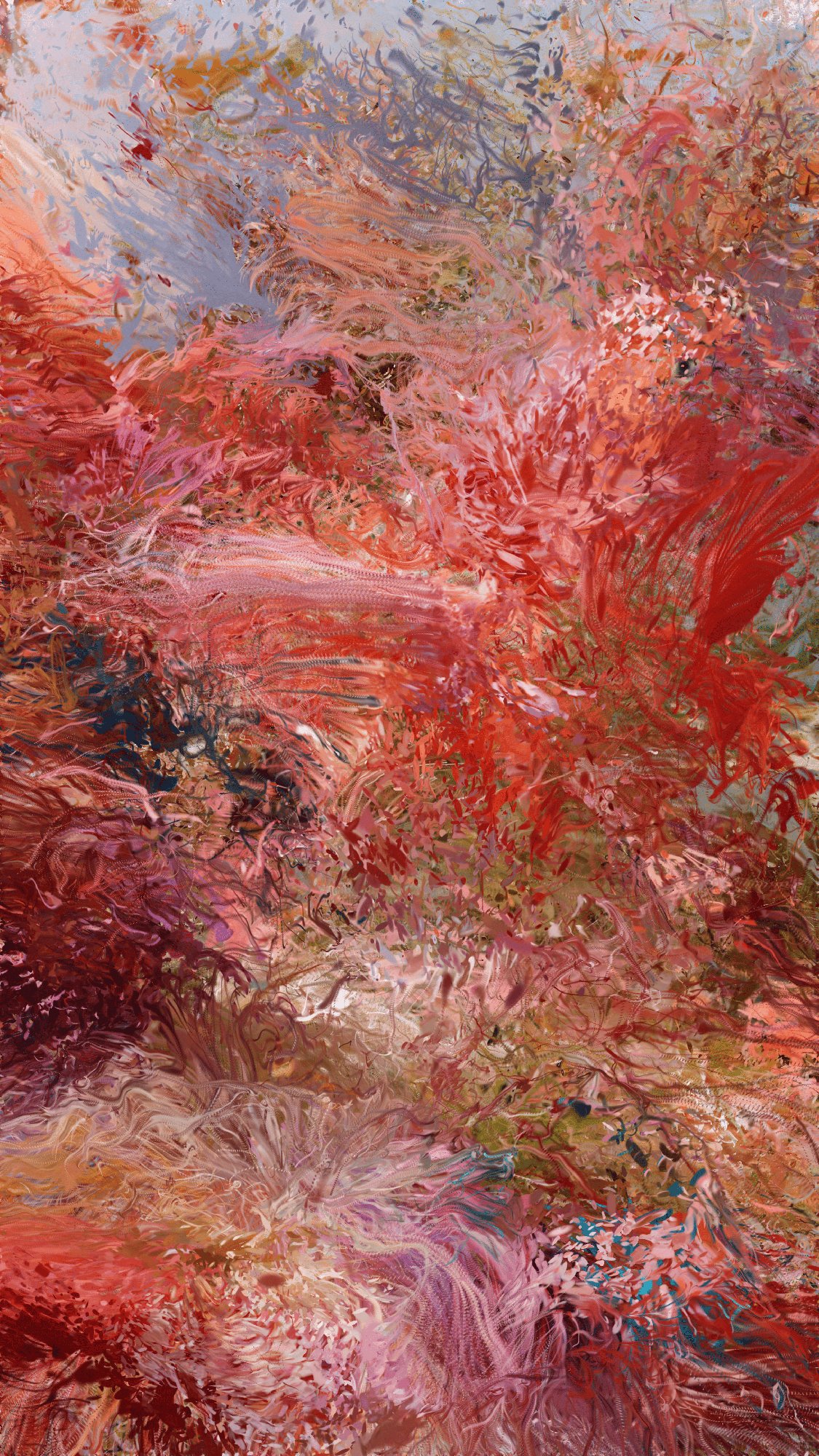
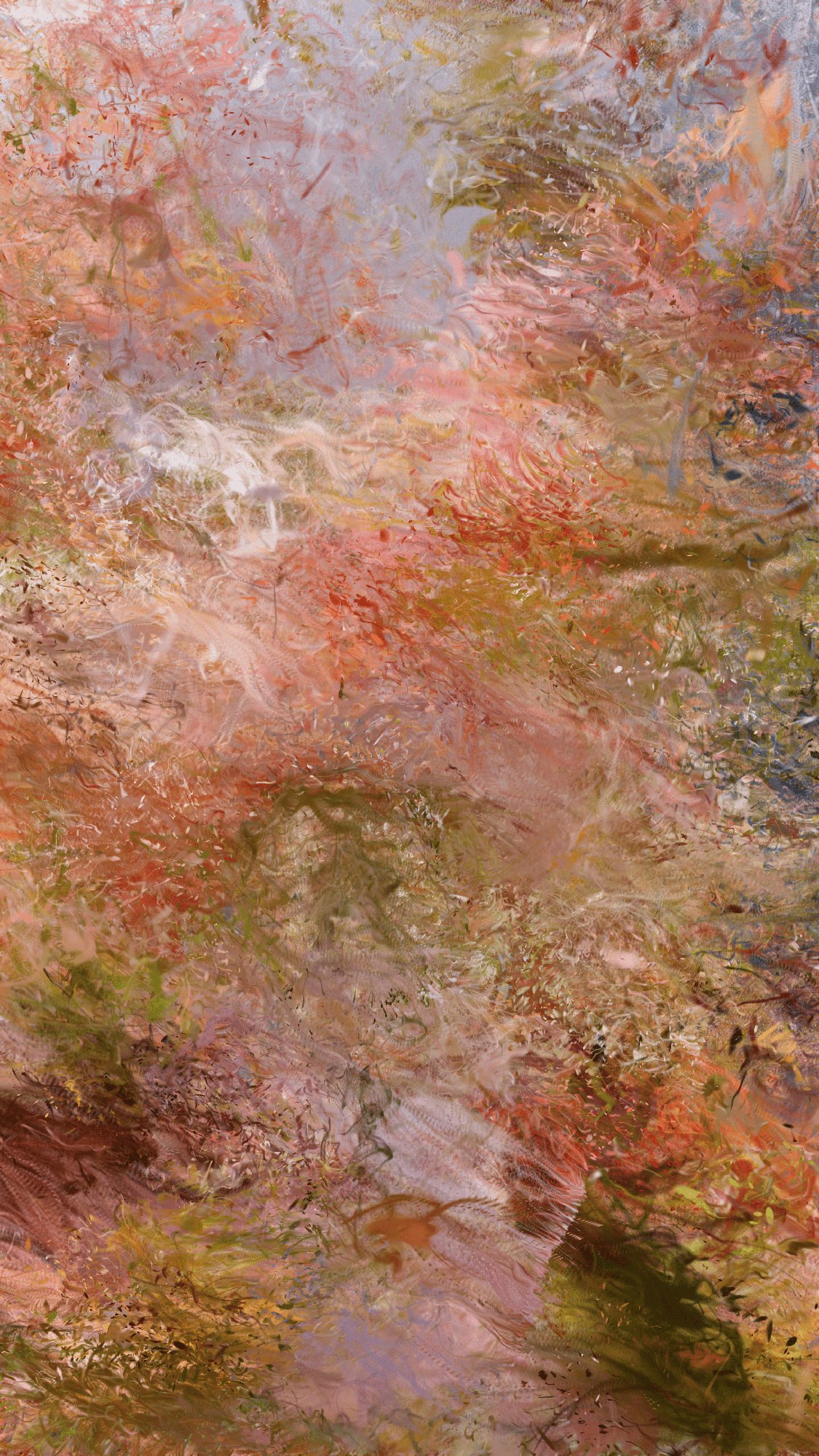
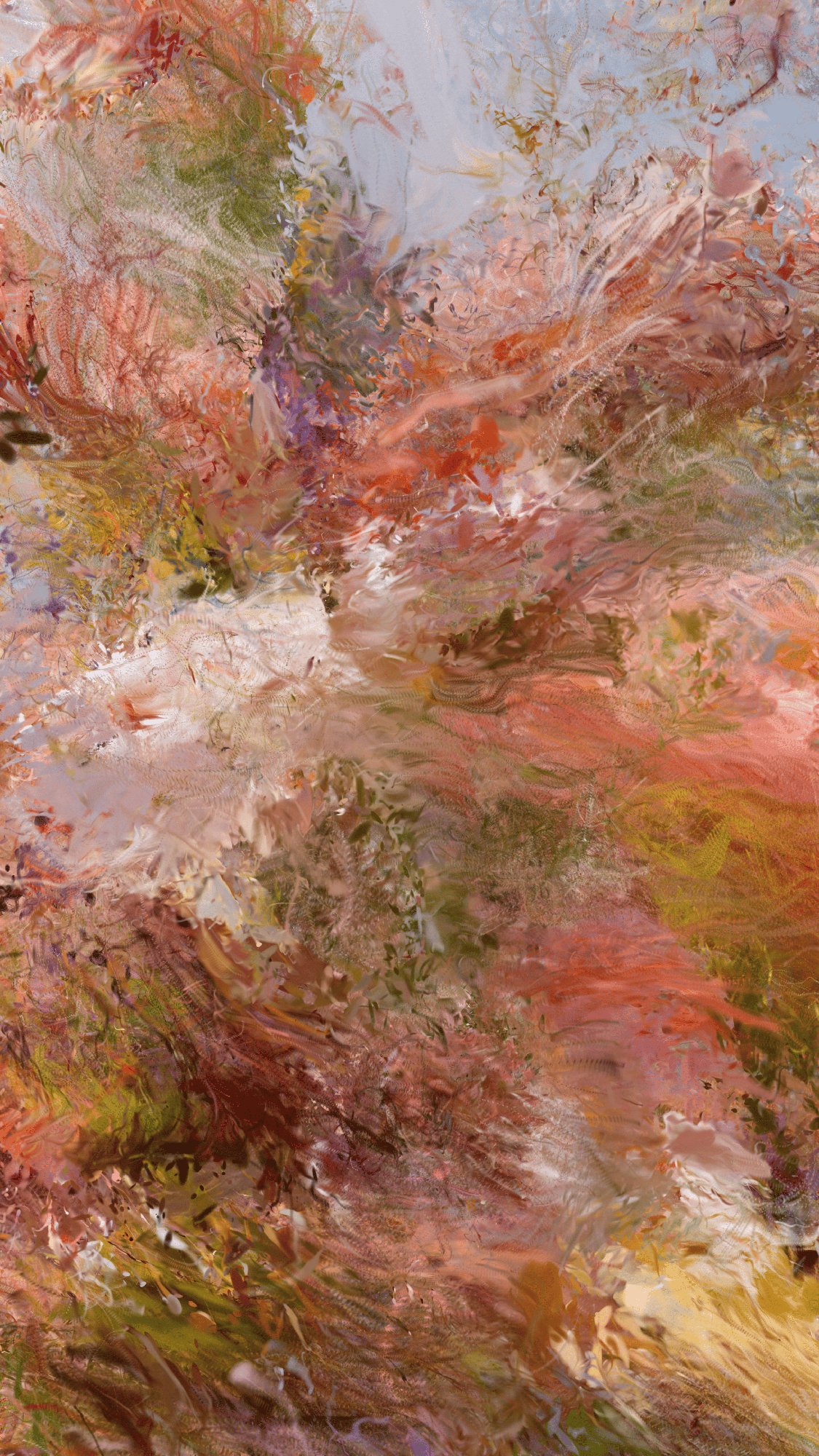
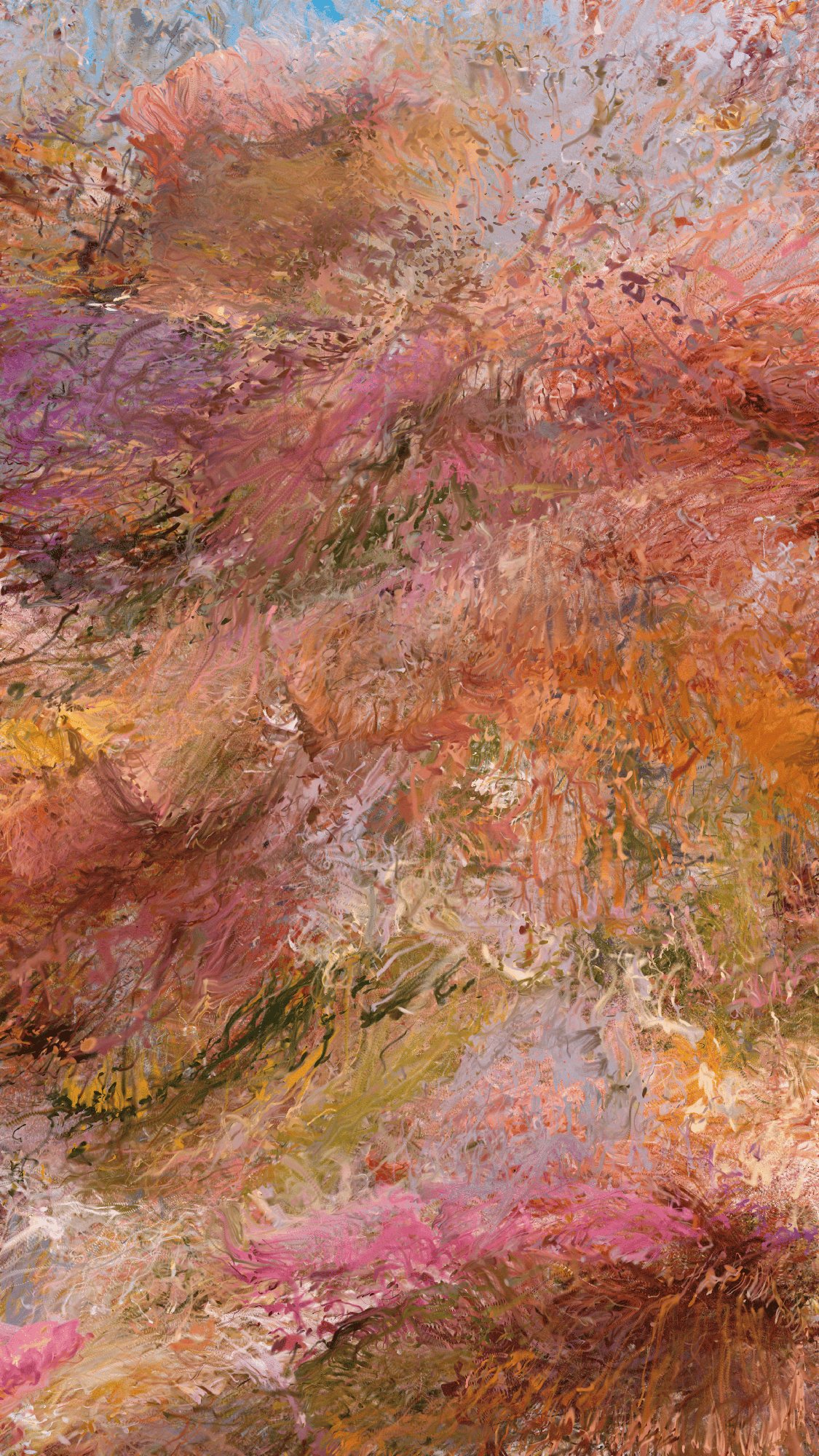
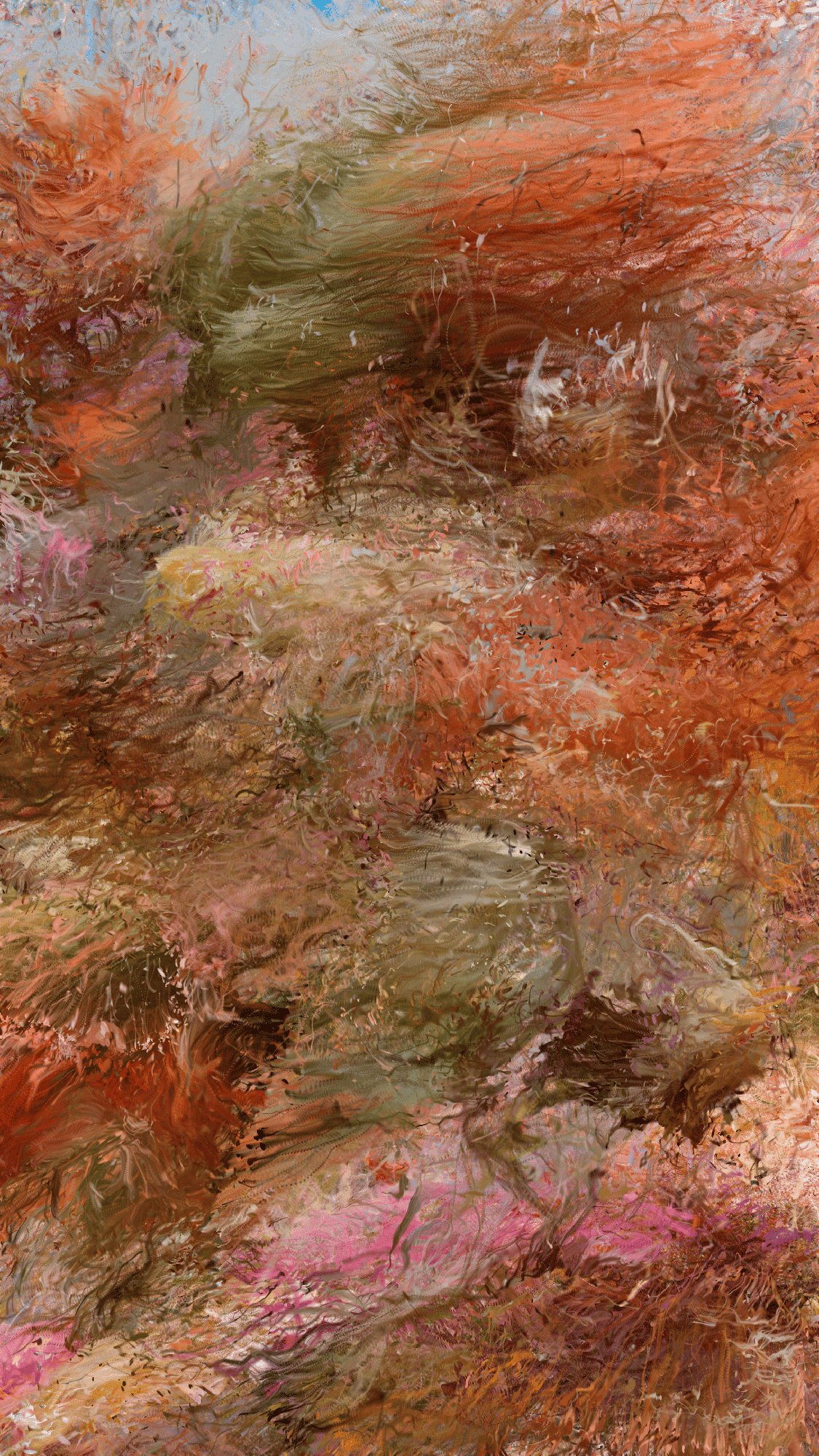
Agential is a generative, real-time artwork that traces steering as a foundational principle in the evolution of intelligence. Drawing on Max Bennett’s account of steering as an early breakthrough in bilaterian cognition, the artwork employs thousands of primitive agents that follow a simple set of rules: sense, steer and settle. The machinic gestures of these rudimentary agents accumulate over time, materialising invisible traces within their habitat to bring forth a gestural, action-based synthetic model of their reality. Agential begins with deliberately rudimentary agents, but the relations it sets in motion between sensing, action and the environment offer a way of thinking about the increasingly complex artificial agents now occupying our shared digital spaces. Non-human traffic accounts for more than half of all web activity, yet much of this remains visible only through logs and dashboards. Agential attempts to provide new vocabularies to these individual traces, making agent activity visible, understandable and also contestable. In doing so, it asks where the agency itself is situated. Does it partially lie in the rich collective digital habitat of the internet, with its own affordances and constraints? Is it in the LLM that acts as the command centre of an agent’s actions? Or in the very actions themselves? In Agential, it is the combination of these ingredients, and the relations between them, that produces the varying degrees of agency and intelligence we see around us today.
Agential is a real-time generative system composed of three interdependent layers: a visual environment, a computer-vision sensing layer and a population of rule-based agents. A custom Stable Diffusion workflow generates temporally conditioned image sequences, while motion estimation and frame warping interpolate between generated states to produce a continuous stream that serves as the agents’ environment. Computer-vision algorithms then re-estimate motion alongside colour intensity and spatial structure, converting these features into signals for thousands of lightweight agents. Each agent follows a minimal loop: sense, steer and settle, adjusting direction to local signals. This creates a recursive pipeline in which estimated motion first constructs the environment and then guides behaviours within it. The resulting trajectories form a field of gestural traces, continuously shaped by the interaction between the generated environment, sensing and agent actions.
Irem Bugdayci
Irem Bugdayci is an artist and researcher working with interactive media, generative algorithms and moving image to attend to intelligence in its small, varied and plural forms. Grounded in evolutionary cognition and computational frameworks, she creates action-perception loops between minds and machines, formalised through characteristically colourful and layered fields inspired by the richness of our own world models. She holds a BA in Architectural Studies from Tufts University and an MA in Interactive Design specialising in Robotics from Bartlett, UCL. Her work has been presented at the Barbican Centre, Ars Electronica, Phillips in London and Hong Kong.