
1 / 11
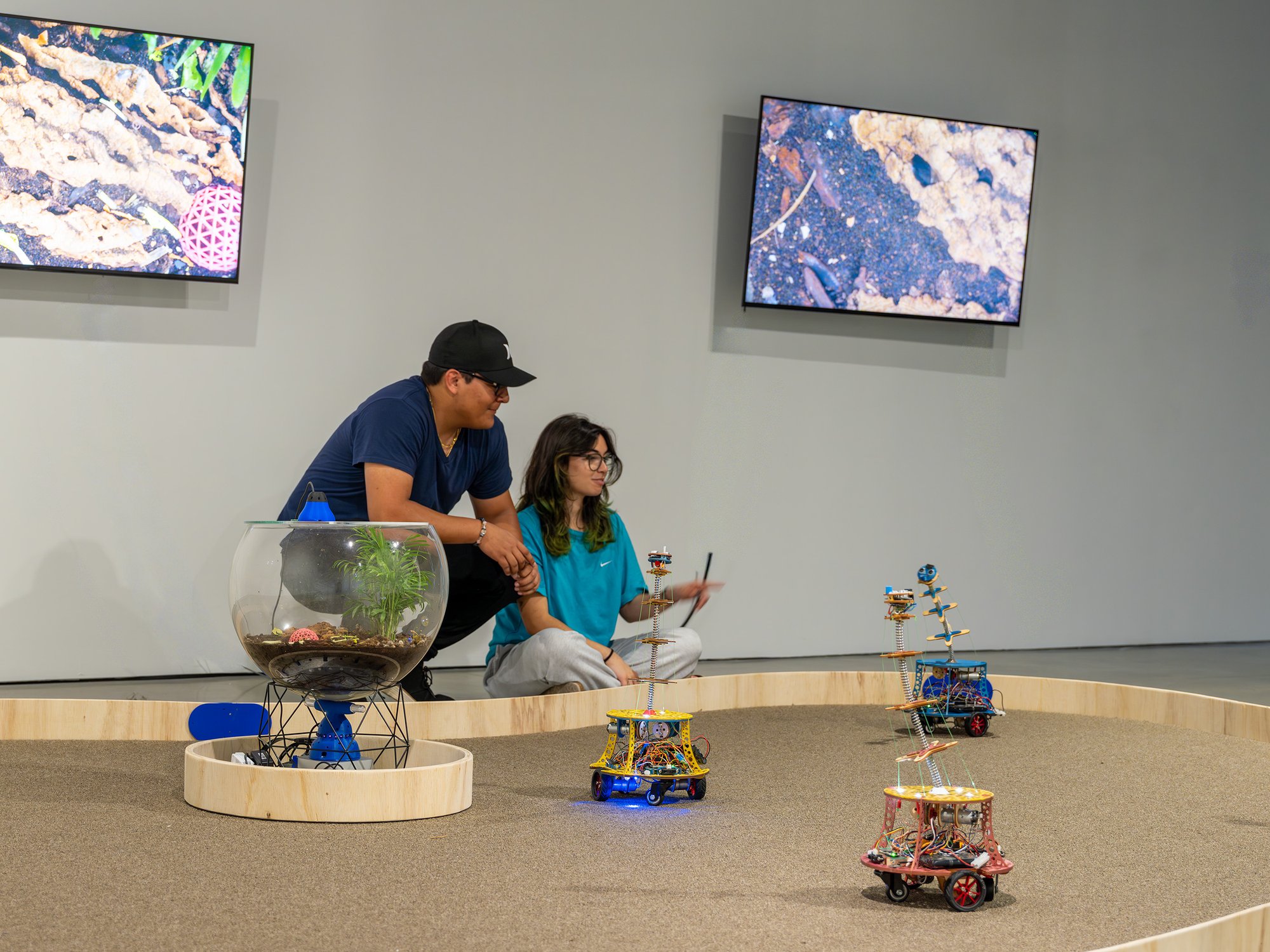
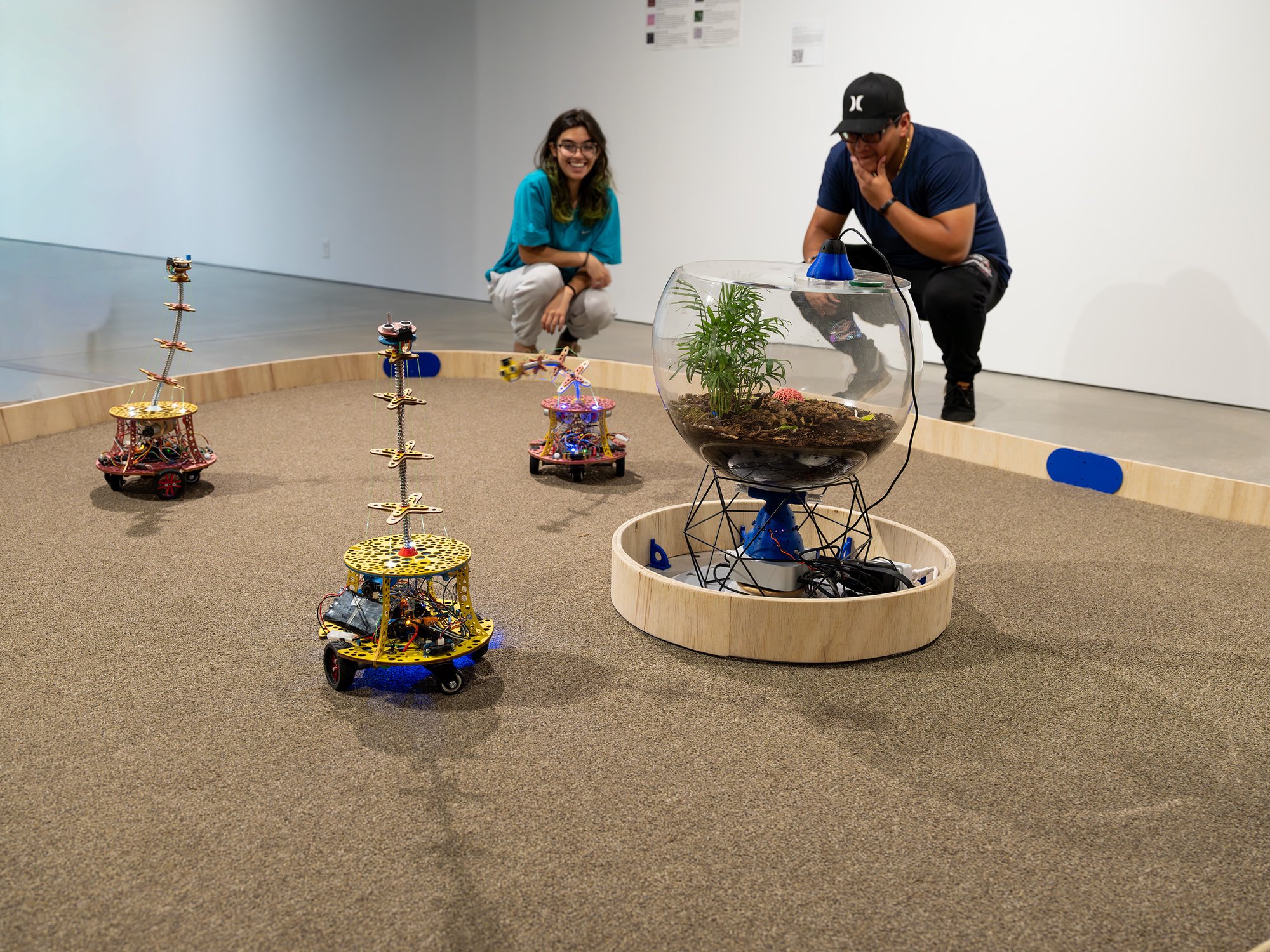
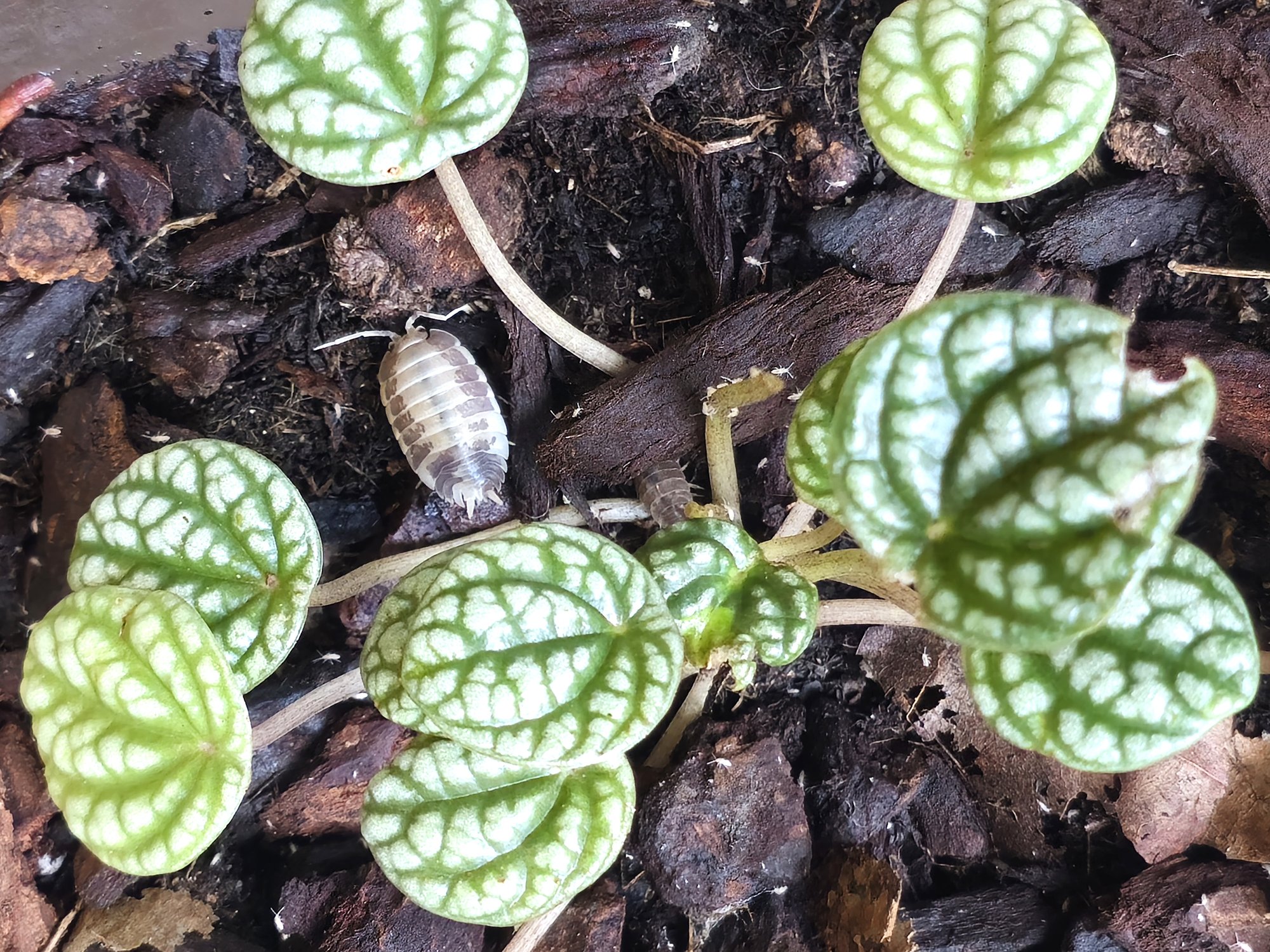
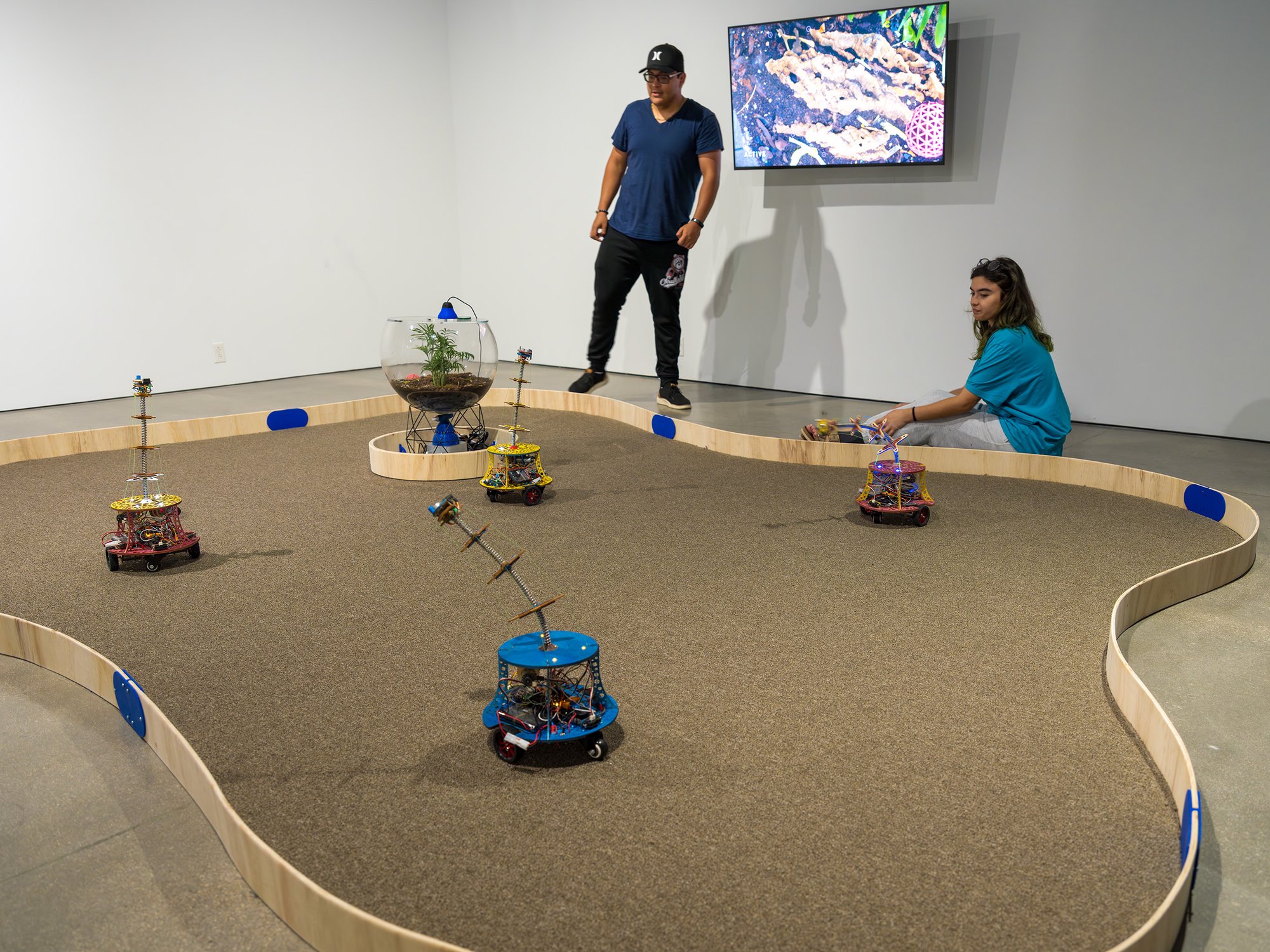
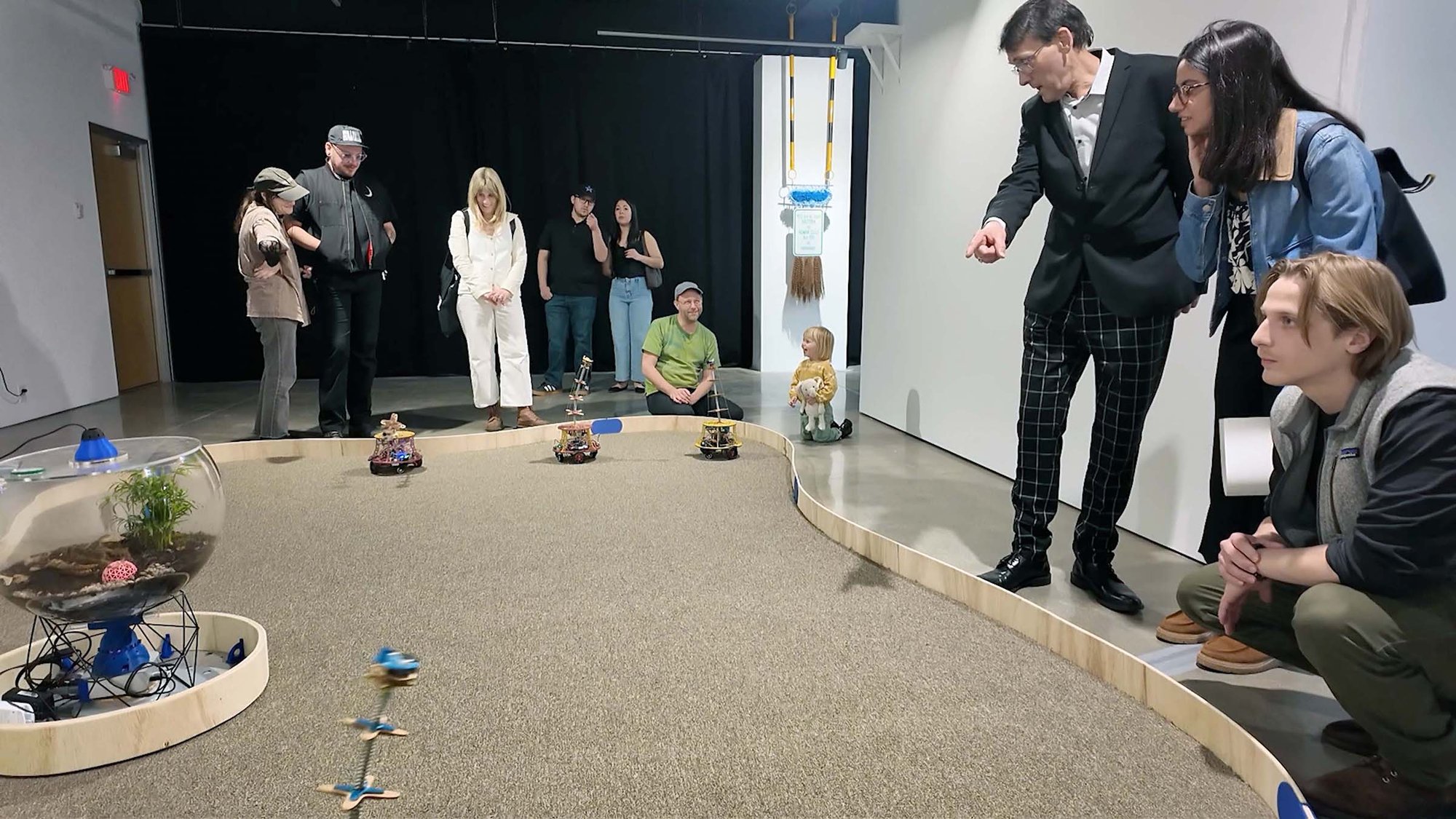
Anicca Antenna: Soil as Brain is an interactive biohybrid installation that explores intelligence as an emergent property of relationships rather than as something confined to individual organisms or machines. At its center is a living terrarium inhabited by soil microbes, isopods, springtails, and plants whose subtle activities are sensed by autonomous AI-driven robotic agents. The robots respond through movement, light, and sound, transforming otherwise imperceptible ecological processes into an evolving audiovisual experience. Rather than representing nature, the machines become participants in a shared ecosystem where biological and technological communities continually influence one another.
The work draws upon theories of distributed cognition, microbial intelligence, systems ecology, artificial life, and posthuman philosophy. It is informed by contemporary research into microbial communication, self-organizing systems, and the concept that life emerges through networks of information exchange rather than isolated individuals. The title references the Buddhist principle of anicca (impermanence), emphasizing that both living and technological systems exist in continuous states of change, adaptation, and becoming. The installation proposes soil as an active, dynamic intelligence—an ecology where microbes, insects, environmental conditions, algorithms, and robotic agents collectively generate meaning and resilience.
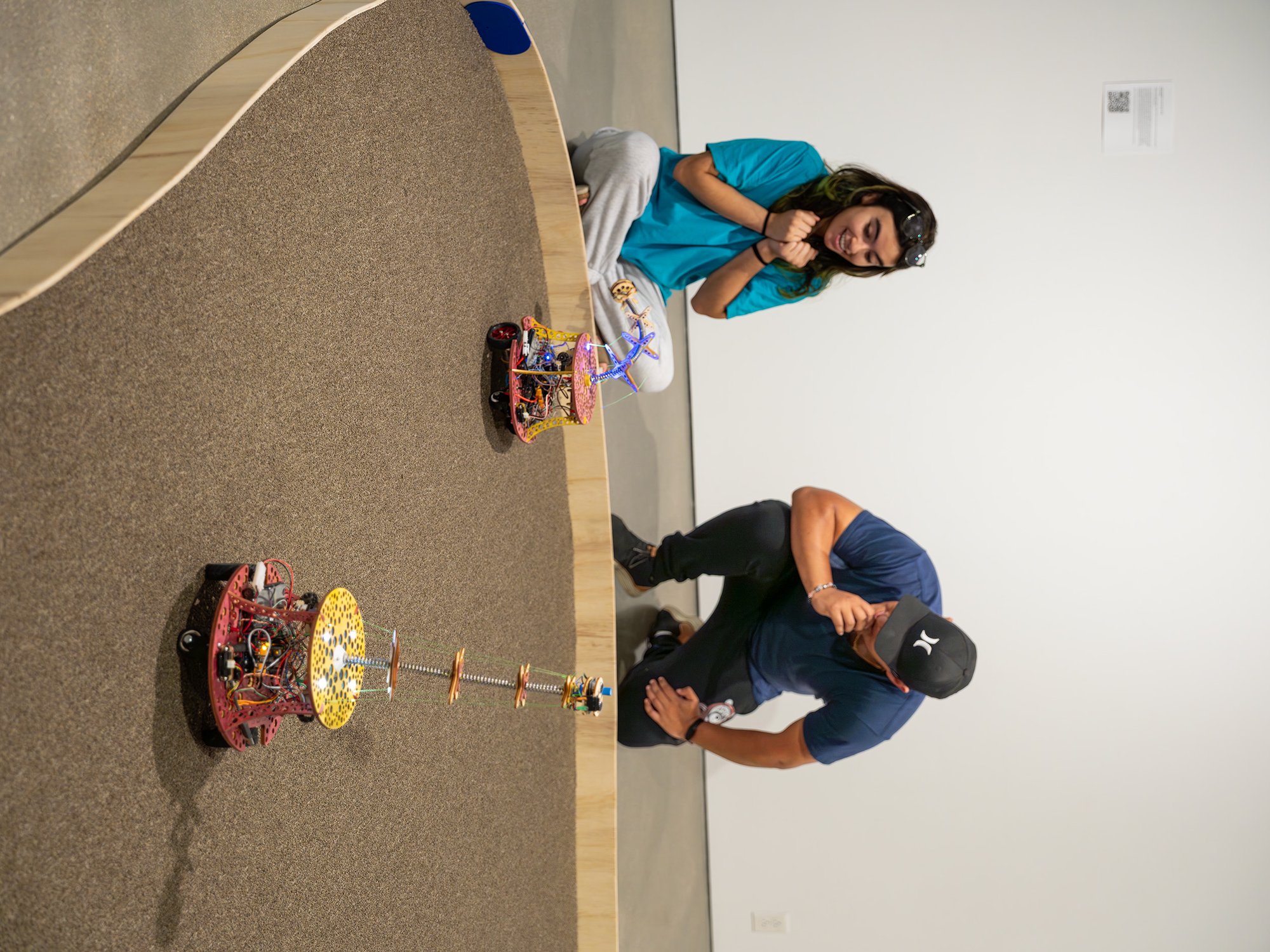
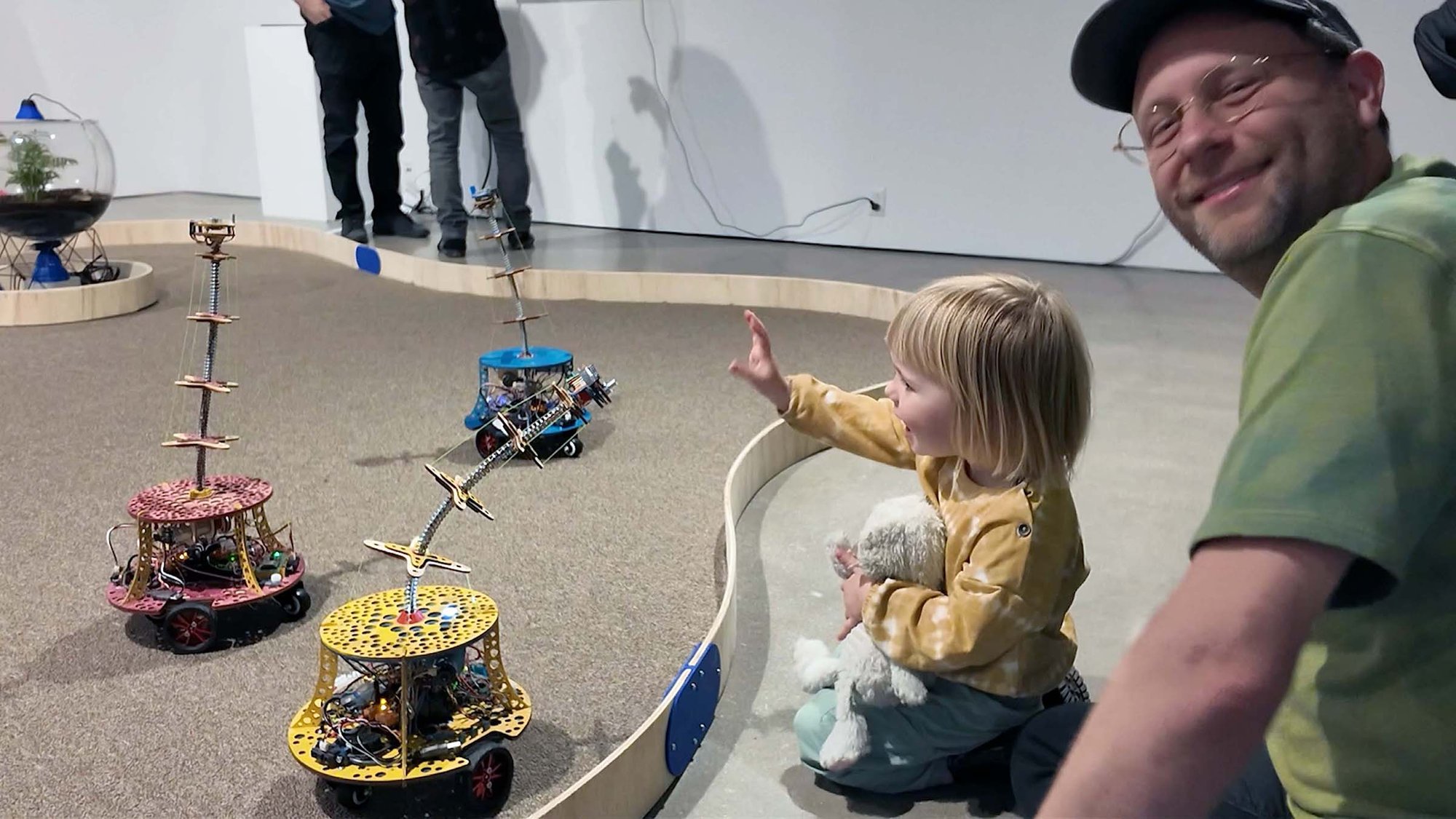
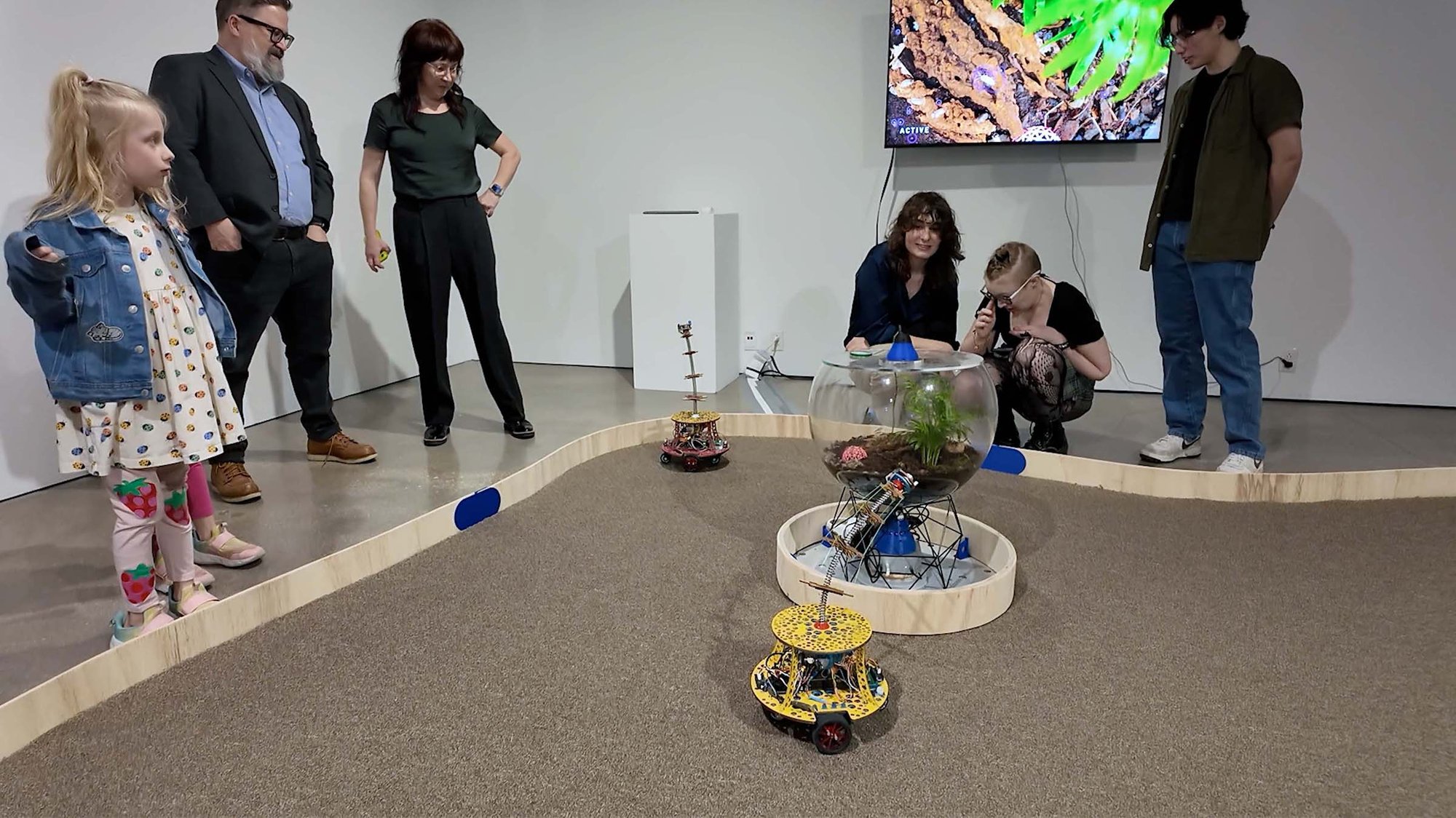
Visitors are invited to approach the installation slowly and attentively. Close observation reveals that even the smallest movements of the soil's inhabitants can influence the robots' behaviors and the evolving soundscape. The audience becomes part of this feedback system through their presence, encouraging reflection on humanity's place within larger ecological networks. Rather than offering fixed narratives, Anicca Antenna: Soil as Brain asks viewers to consider technology not as separate from nature, but as an evolving extension of life's interconnected processes.
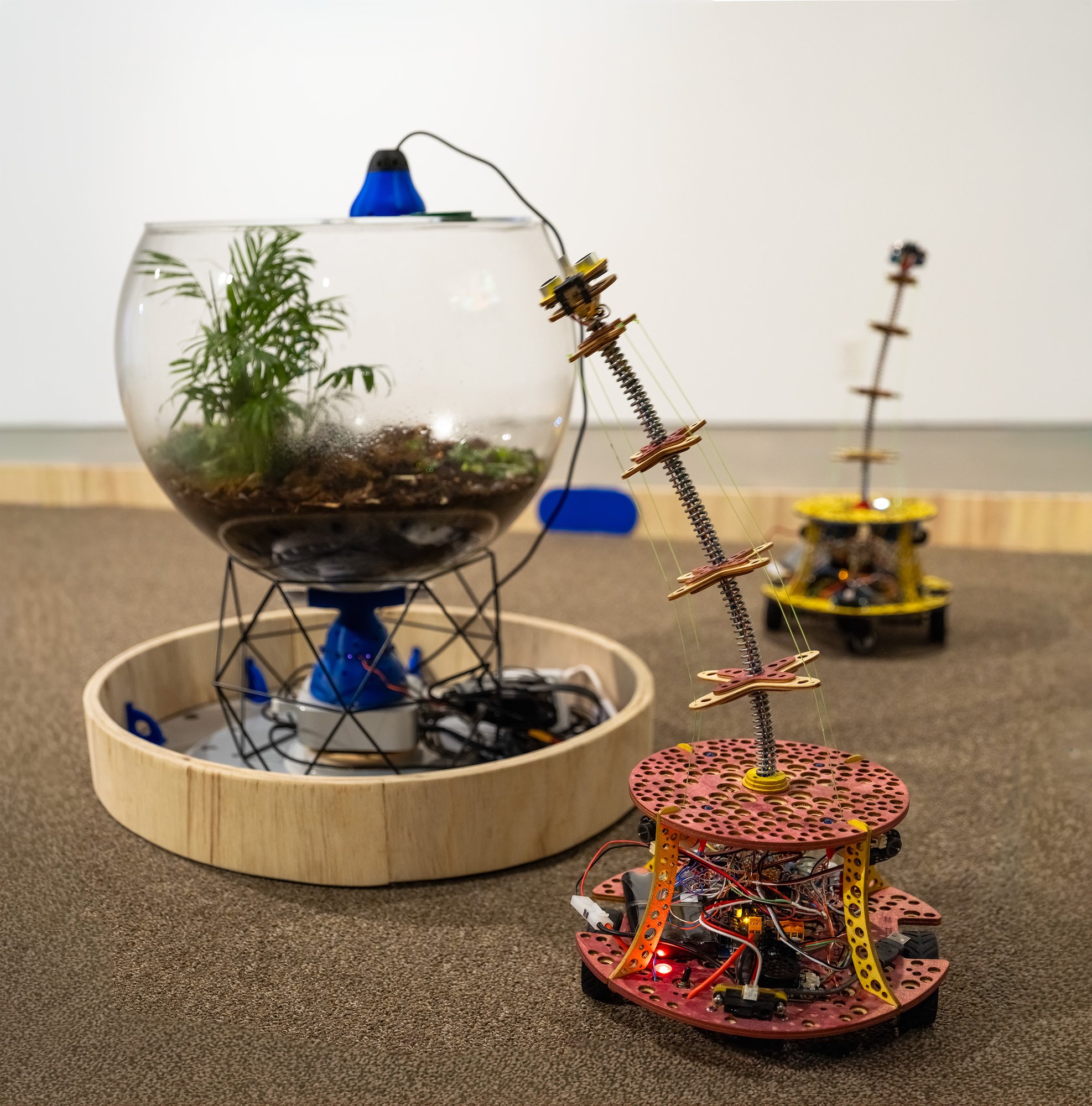
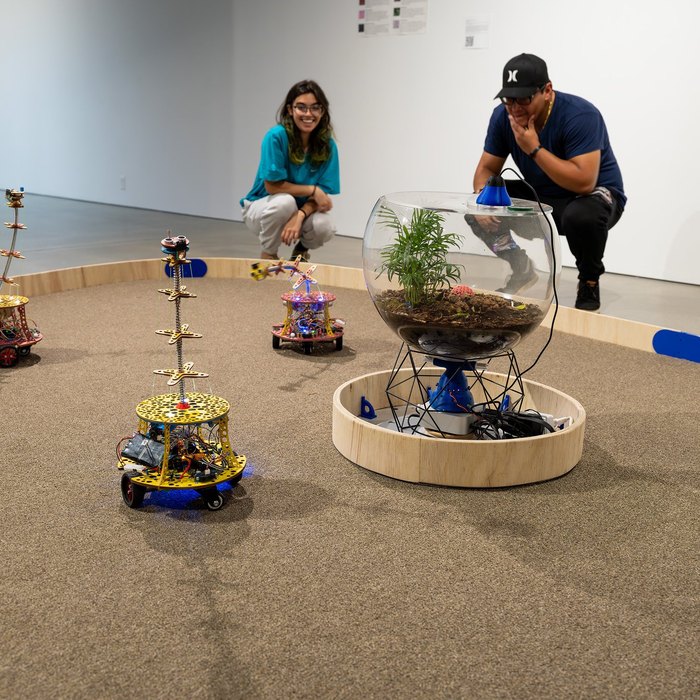
Anicca Antenna: Soil as Brain consists of a colony of custom laser-cut autonomous robotic agents integrated with a living terrarium through a real-time sensing and control system. Each robot is driven by an Arduino Mega microcontroller executing more than 6,500 lines of custom software written in the Arduino IDE. A motor drive board sits on top of the Arduino Mega. The robots operate autonomously, using front- and rear-facing active infrared sensors for collision avoidance and a digital compass to maintain orientation relative to the cardinal directions.
Each robot is equipped with a digital MP3 player containing a library of insect vocalizations that are triggered in response to events occurring within the living terrarium. Communication between the computational system and the robots occurs through infrared receivers on each robot that receive coded commands from an infrared beacon located beneath the terrarium.
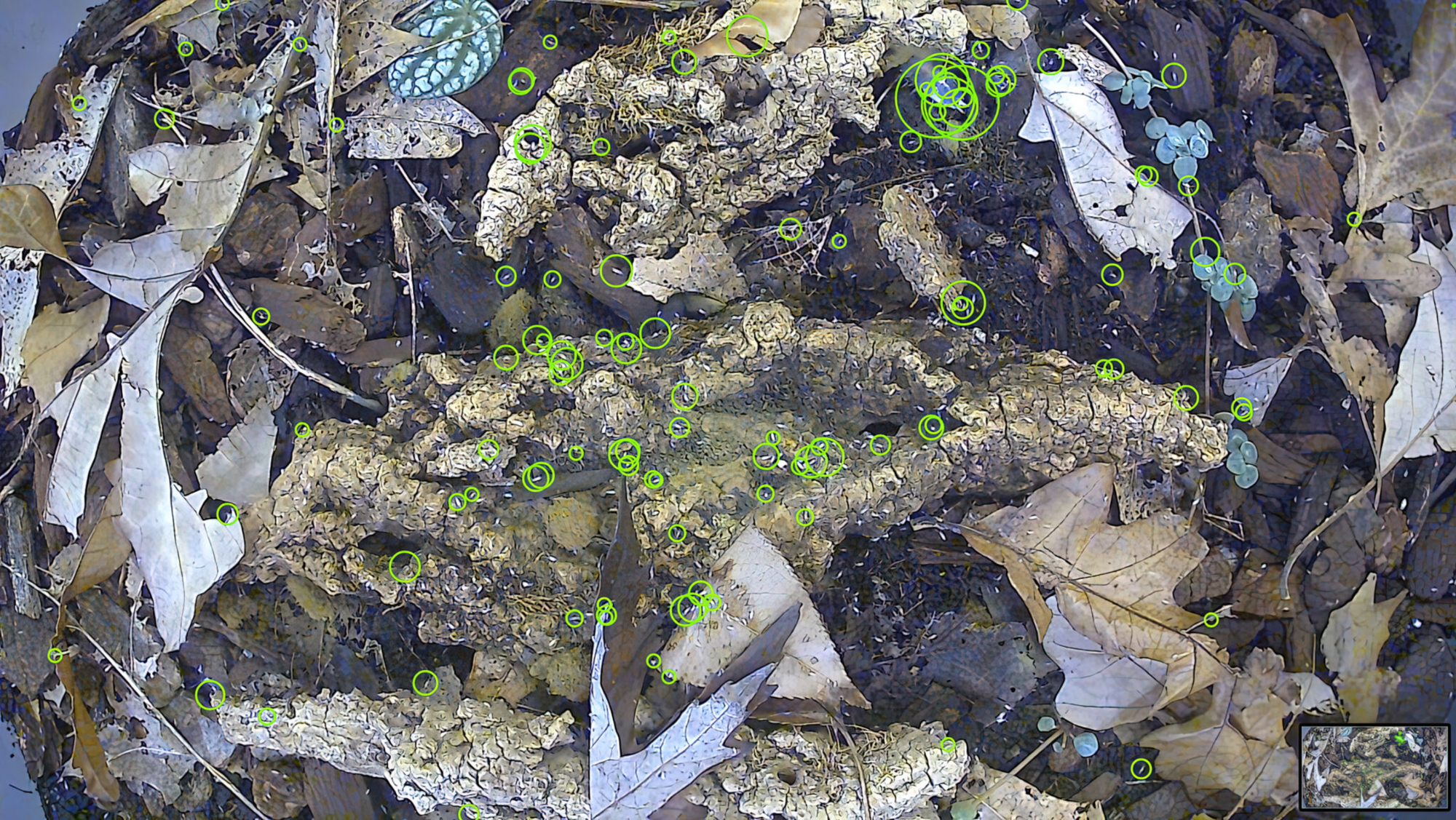
A 4K webcam housed in a custom 3D rapid prototyped enclosure, continuously images the terrarium and streams video to a Mac Mini running custom software developed in MAX/MSP/Jitter with OpenCV computer vision. The software tracks the movement and trajectories of isopods and springtails in real time and translates these biological behaviors into infrared command sequences housed under the terrarium in a custom 3D rapid prototyped enclosure, that coordinates the robots' movements and responses.
Each robot has four DC motors: two provide locomotion (forward, reverse, and differential steering), while two independently actuate the antennae. Rotary encoders on the antenna motors provide closed-loop position feedback, while accelerometers mounted at the antenna tips measure their orientation, enabling precise gesture control. Distributed LEDs communicate the robots' internal behavioral or "emotional" states to viewers.
The robots operate in two behavioral modes. In Active Mode, they navigate autonomously in response to insect activity and environmental conditions. In Sleep Mode, locomotion is suspended to conserve battery power while the antennae continue slow oscillatory movements resembling REM sleep.
Additional ultrasonic sensors at the tip of each robot antennae detect walls and nearby visitors for obstacle avoidance, while photoresistors allow the robots to orient toward the illuminated terrarium, which serves as a visual beacon. The robots are physically constrained within a shaped ring with a custom-shaped rug for better traction. There are two screens on the wall; One displays the live tracking of the insects with Open Computer vision and the other the interior of the terrarium.
The installation's soundscape is composed using AI-assisted composition and mixed in Audacity from insect vocalizations, environmental recordings, and occasional telephone signaling tones.
Together, the biological organisms, computer vision, embedded controllers, robotics, sound synthesis, and audience interactions form a cybernetic feedback system in which living activity drives computational processes that continuously generate adaptive robotic behaviors.
Ken Rinaldo
Emergent Systems, The Ohio State University: Art and Technology, Antennae, The Journal of Nature in Visual Culture
kenrinaldo.com · YouTube · Vimeo · filmfreeway.com · darpa.us · flickr.com · farmfountain.com · newmediaartist.org · LinkedIn · Facebook · Instagram · Bluesky
Ken Rinaldo is an internationally recognized artist whose interactive bio-art, robotic, and sound installations explore relationships among humans, machines, plants, and animals through hybrid ecologies. His work has been commissioned by museums and galleries worldwide and is held in public and private collections. Exhibited in more than 35 countries and featured in hundreds of books and critical reviews, Rinaldo has received an Award of Distinction at Ars Electronica, First Prize at VIDA 3.0, a United Nations Green Leaf Award, and commissions including Nuit Blanche Toronto, the Vancouver Olympics, Te Papa Museum, and Kiasma Museum.