
1 / 8
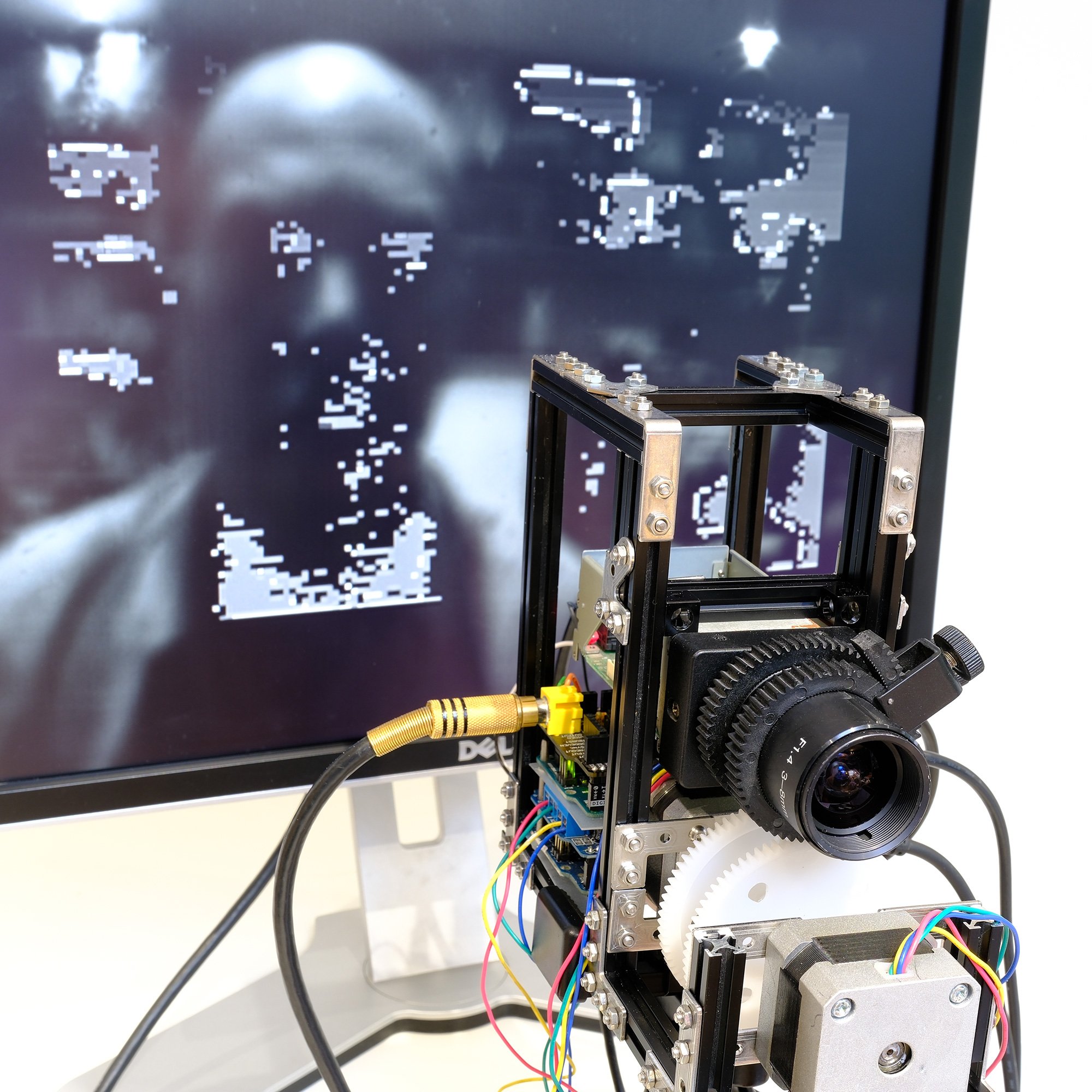
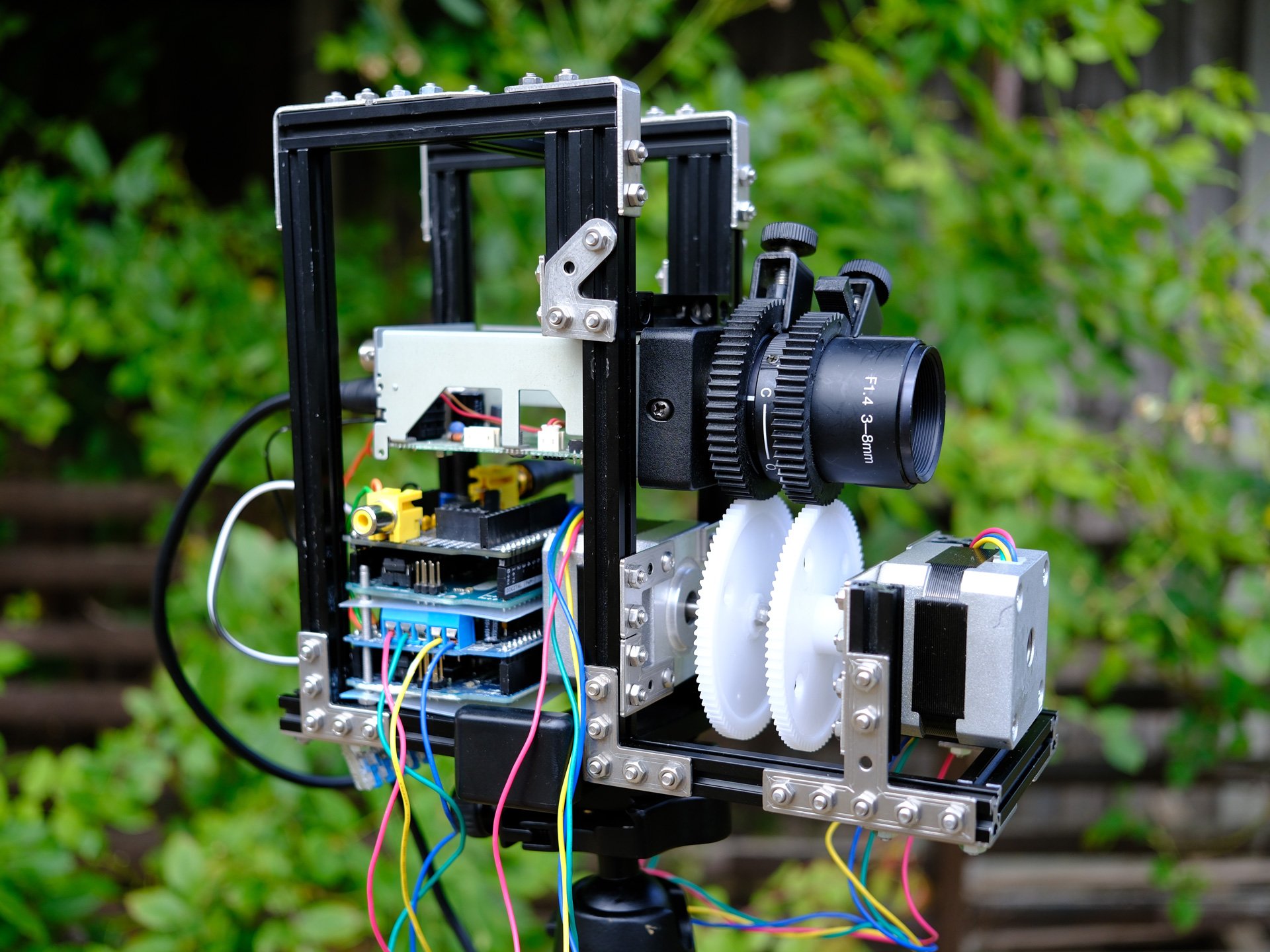
Perception is an interactive installation that explores machine vision as a situated, uncertain and self-referential process. Rather than presenting computational seeing as objective or authoritative, the work stages perception as an ongoing negotiation between sensing, interpretation and action. The installation employs a deliberately constrained vision system shaped by principles of permacomputing and material efficiency. Using only a rudimentary image analysis process, the system attempts to make sense of its environment and continually adjusts its own camera in response. This creates a recursive feedback loop in which every act of looking alters what can subsequently be seen. The work draws on critical discussions surrounding computer vision, cybernetics and the politics of technological perception. Contemporary machine vision systems are often understood as increasingly sophisticated mechanisms for extracting meaning from images. Perception instead exposes the fragility of this process by foregrounding ambiguity, error and instability. The sculpture's erratic movements and continual self-corrections reveal vision not as a transparent window onto reality but as a constructed and contingent operation. Audiences encounter a machine engaged in a perpetual struggle to understand its surroundings. By observing its attempts to perceive, viewers are invited to reflect on how technological systems frame, simplify and transform the world, and how assumptions of clarity, objectivity and progress are embedded within acts of computer vision.
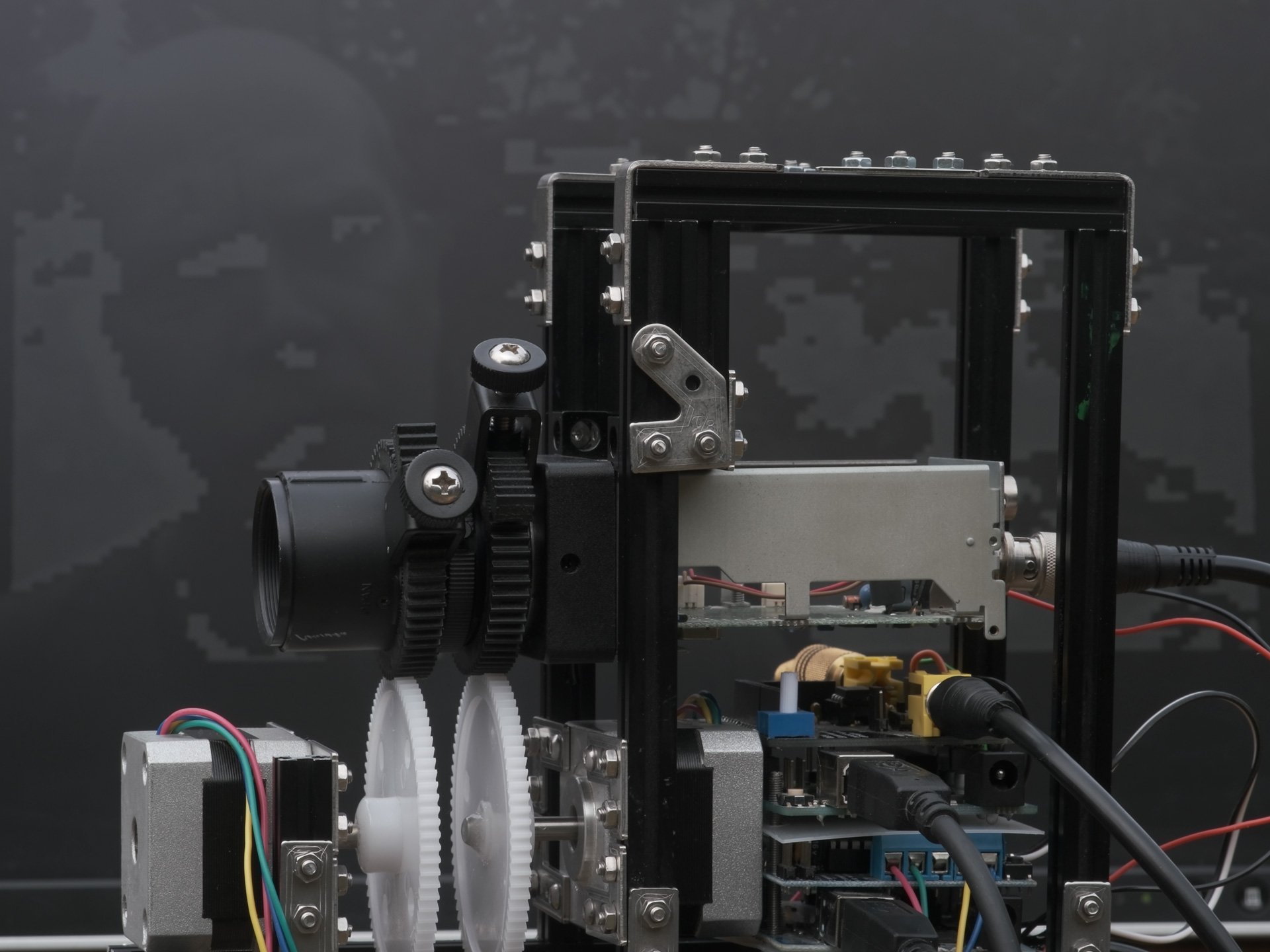
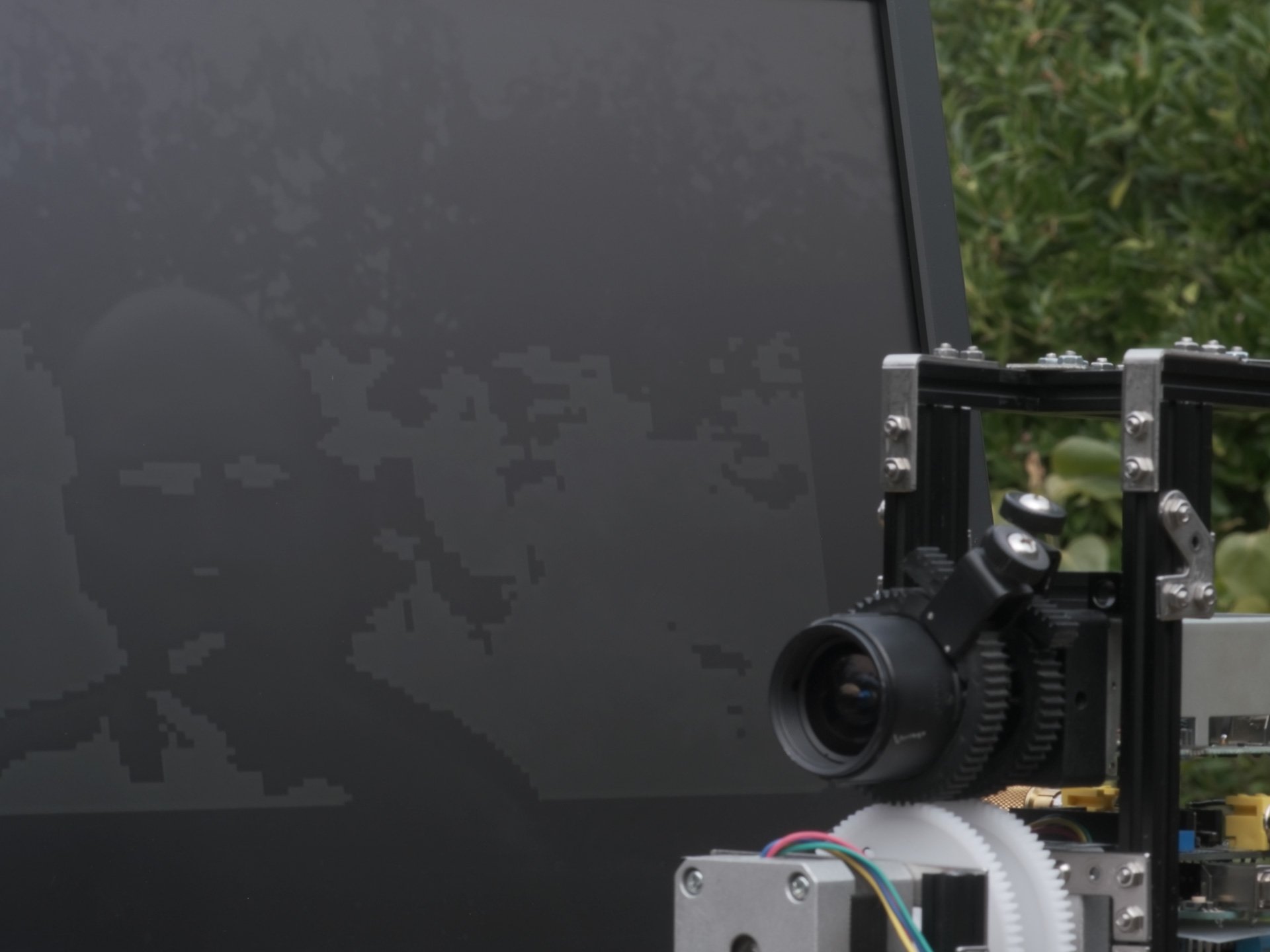
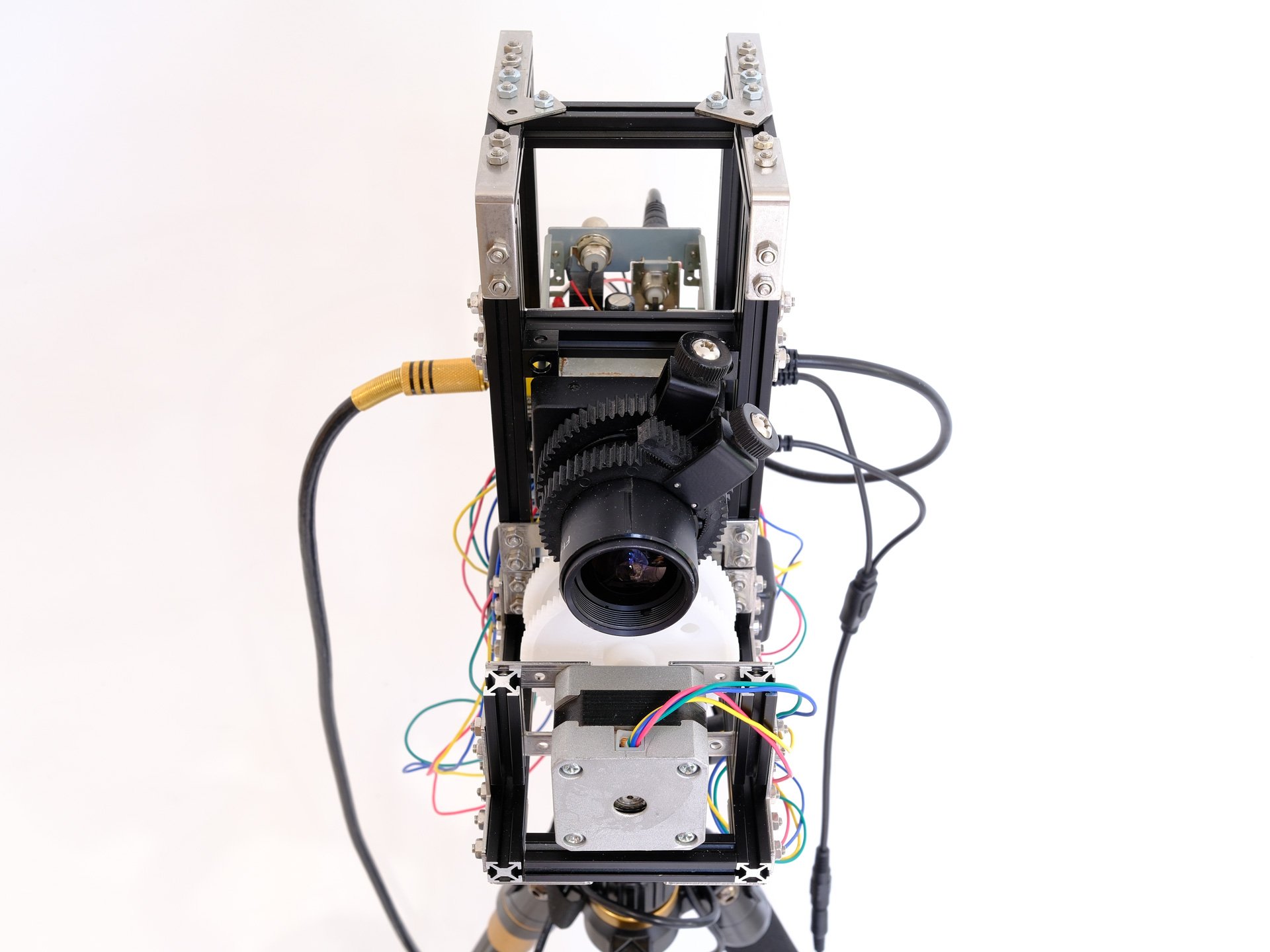
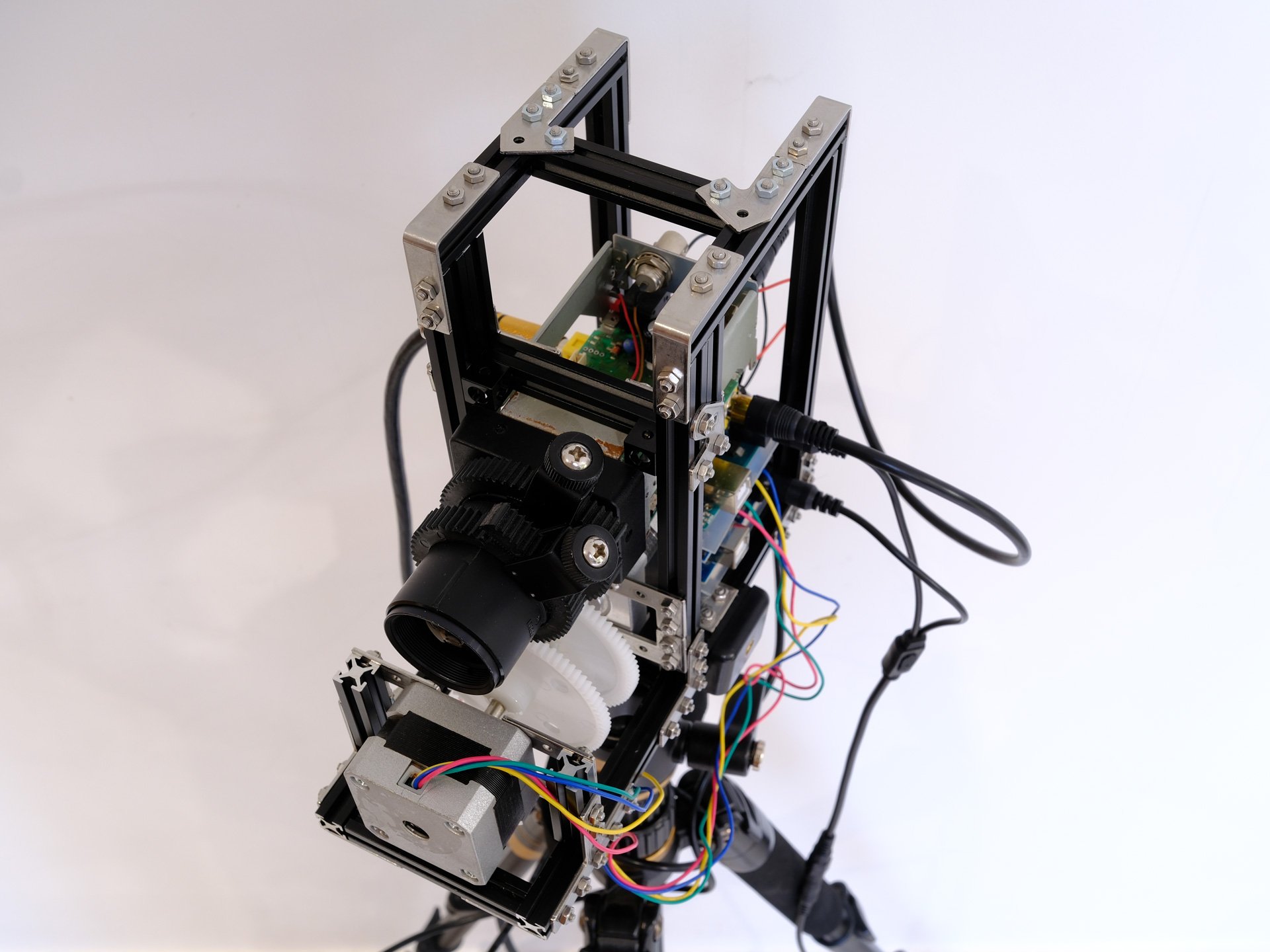
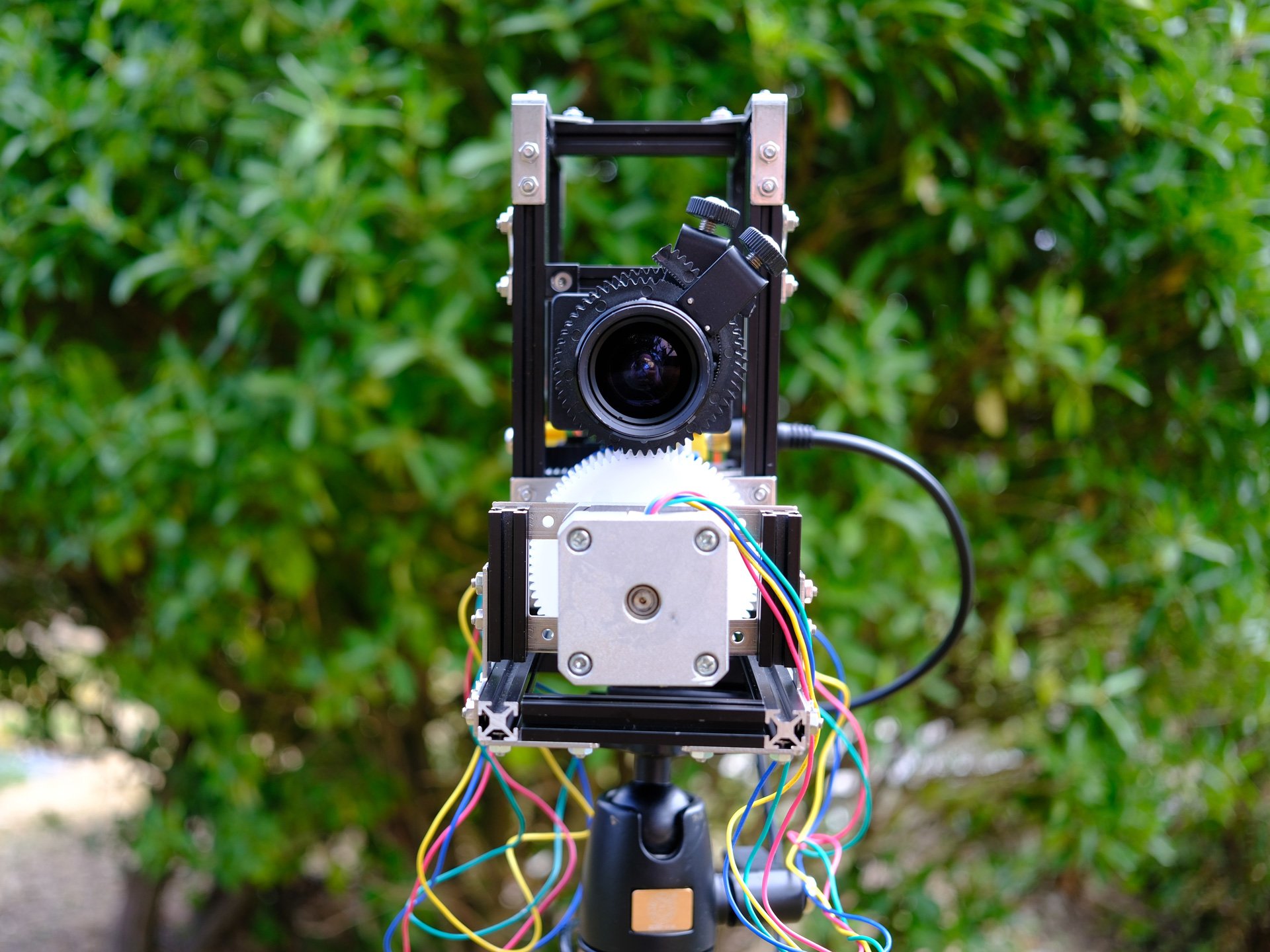
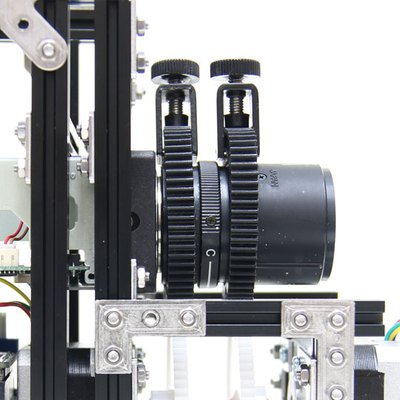
Perception is a closed-loop machine vision installation consisting of a CCTV camera, an embedded image-processing system and motorised camera controls. The system continuously captures live video from its environment and uses the resulting image data to control its own optical parameters. Input to the system is a low-resolution grayscale video stream from the camera. Frames are processed in real time using a lightweight computer vision pipeline implemented on an Arduino-based platform. Rather than employing computationally intensive edge detection methods, the system uses a custom approach based on thresholding and local pixel intensity comparisons using Nootropic Design Video Experimenter and their custom TVOut library. Neighbouring pixels are evaluated to estimate edge density, producing a single complexity metric representing the visual structure of the scene. This metric is mapped to outputs controlling zoom and focus motors attached to the camera. Changes in zoom and focus alter the image being captured, which immediately affects subsequent analysis. The installation therefore operates as a recursive feedback system in which perception directly influences future perception. The work translates information across multiple modalities: optical input becomes computational measurement, measurement becomes mechanical movement, and movement reshapes optical input. By exposing each stage of this process, Perception functions both as an artwork and as a material demonstration of machine vision operating under severe computational constraints. The resulting behaviour is intentionally unstable, making visible the assumptions, approximations and errors that underpin automated perception.
Damien Borowik
Central Saint Martins, Creative Computing Institute, Goldsmiths
Damien Borowik is a London-based artist, creative technologist, and educator. Trained at Central Saint Martins and Goldsmiths, he seamlessly bridges digital innovation and analog art-making. Borowik designs custom hardware, software, and bespoke drawing machines to craft unique generative artwork across code, print, robotics, and mixed media. His practice deeply investigates process, materiality, and the interplay of serendipity and technology. His works have been acquired by the Victoria and Albert Museum and exhibited internationally. Borowik has also collaborated with high-profile clients, including Christian Dior Couture, Tate Modern, Conran Design Group and Samsung Electronics.