1 / 2
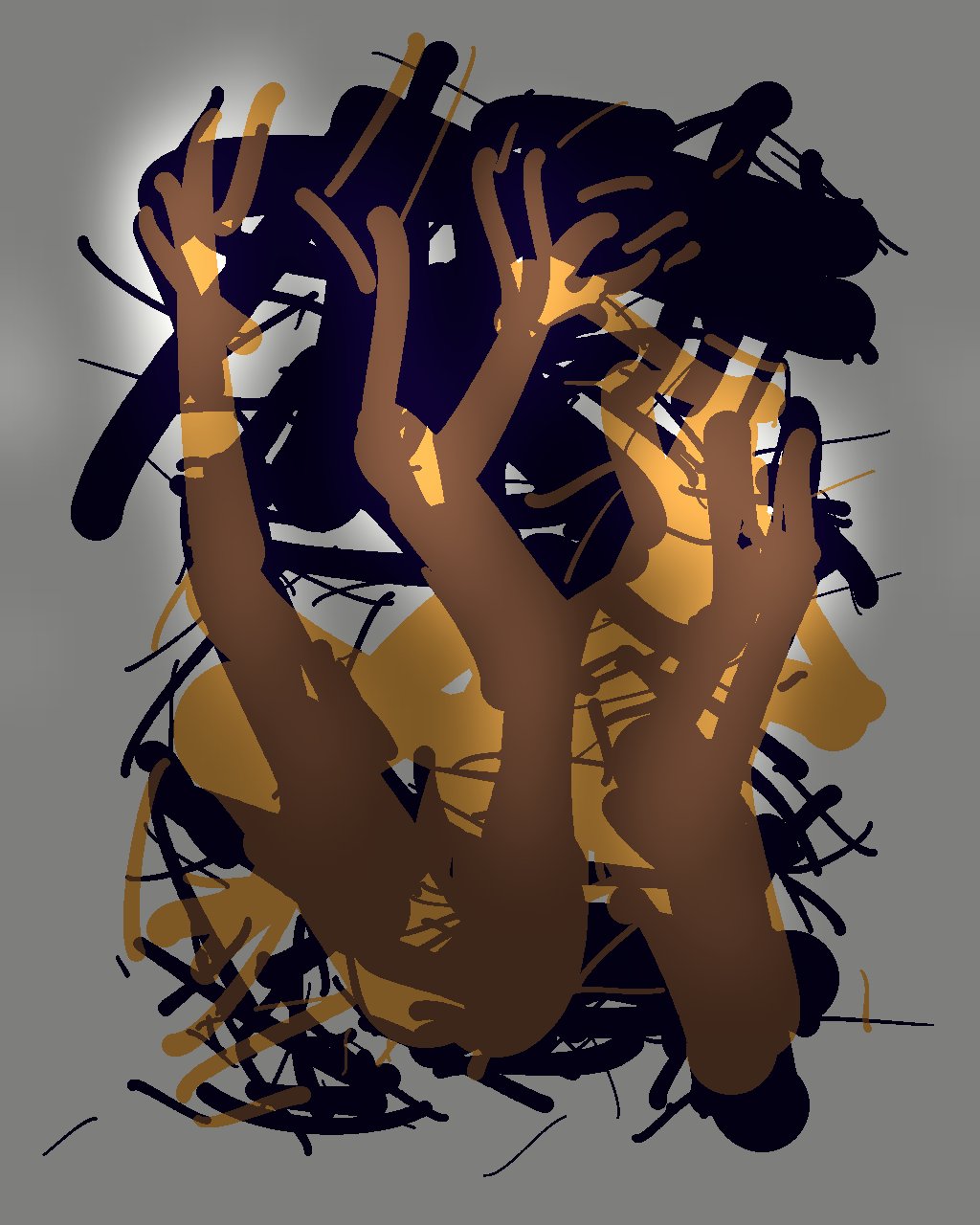
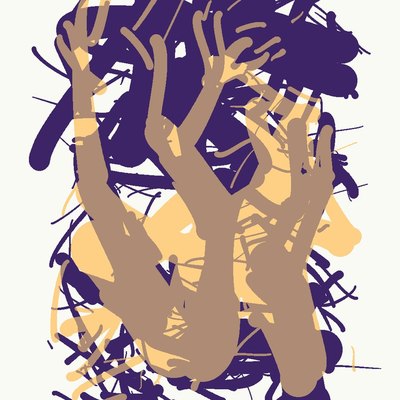
Show of Hands is an animated drawing of raised hands, grown by an algorithm searching for an image that many separately trained neural networks would all recognize as the same thing.
The work builds on "Rosetta neurons" (Dravid et al.): individual units that, across networks trained independently on different data and objectives, fire on the same visual structure — a rare point of agreement between otherwise incommensurable machine minds. I located a neuron for raised, open hands shared across twelve vision models (self-supervised, contrastive, and reconstruction-trained, ranging from roughly 90 million to 7 billion parameters), then used an evolutionary optimizer to evolve a vector drawing — constrained to screen-printable inks — that drives that shared neuron as hard as possible. Tellingly, where the source images showed hands holding signs or lanterns, the optimizer discarded the held objects and drew only the hands: the concept the machines hold in common is the gesture itself. The physical print is lit from behind by the activation heatmaps of these models in turn — a custom lightbox in which the glow drifts from one network's view to the next.
The resulting form activates the concept not only in the models it was optimized against, but in models held out from the search — and even in a network trained exclusively on photographs of plants and animals, which has no reason to know human signage yet still reads the gesture. The print is a physical artifact of a percept that many machines share but no engineer designed: a consensus image, a show of hands cast by neural networks. It extends my contribution to the 2018 ECCV Art Gallery (Perception Engines), continuing a search for the forms that emerge when we ask not what we trained machines to see, but what they see in common.
Tom White
Tom White is a New Zealand-based artist who has been exploring how artificial intelligence and machines perceive the world since 2017. He collaborates with AI systems to create physical abstract prints believing that by giving algorithms a voice, we can better understand the world through the eyes of machines. He is also a lecturer at Victoria University of Wellington's School of Design, where he teaches computational design and creative AI courses.