1 / 6
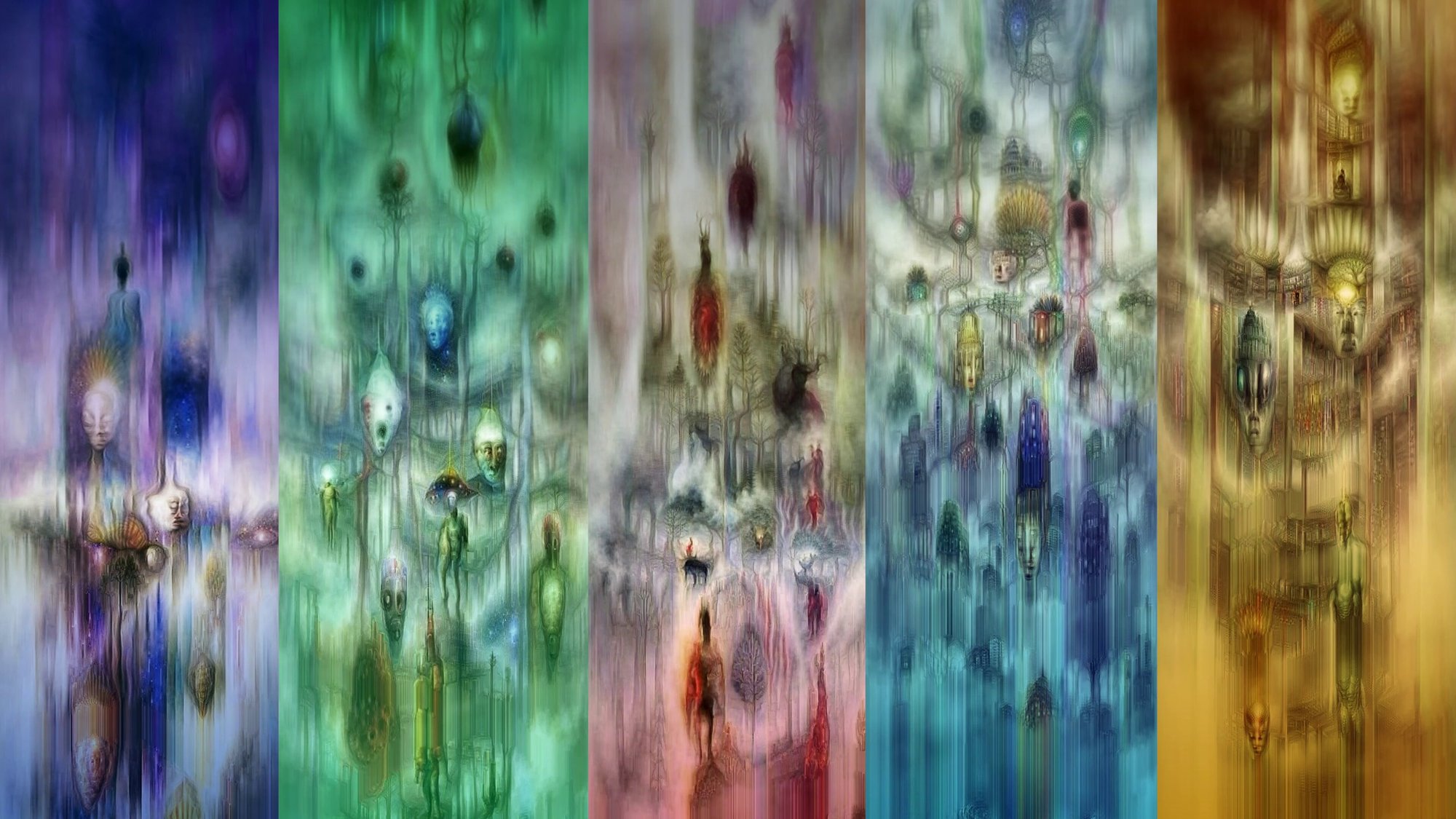
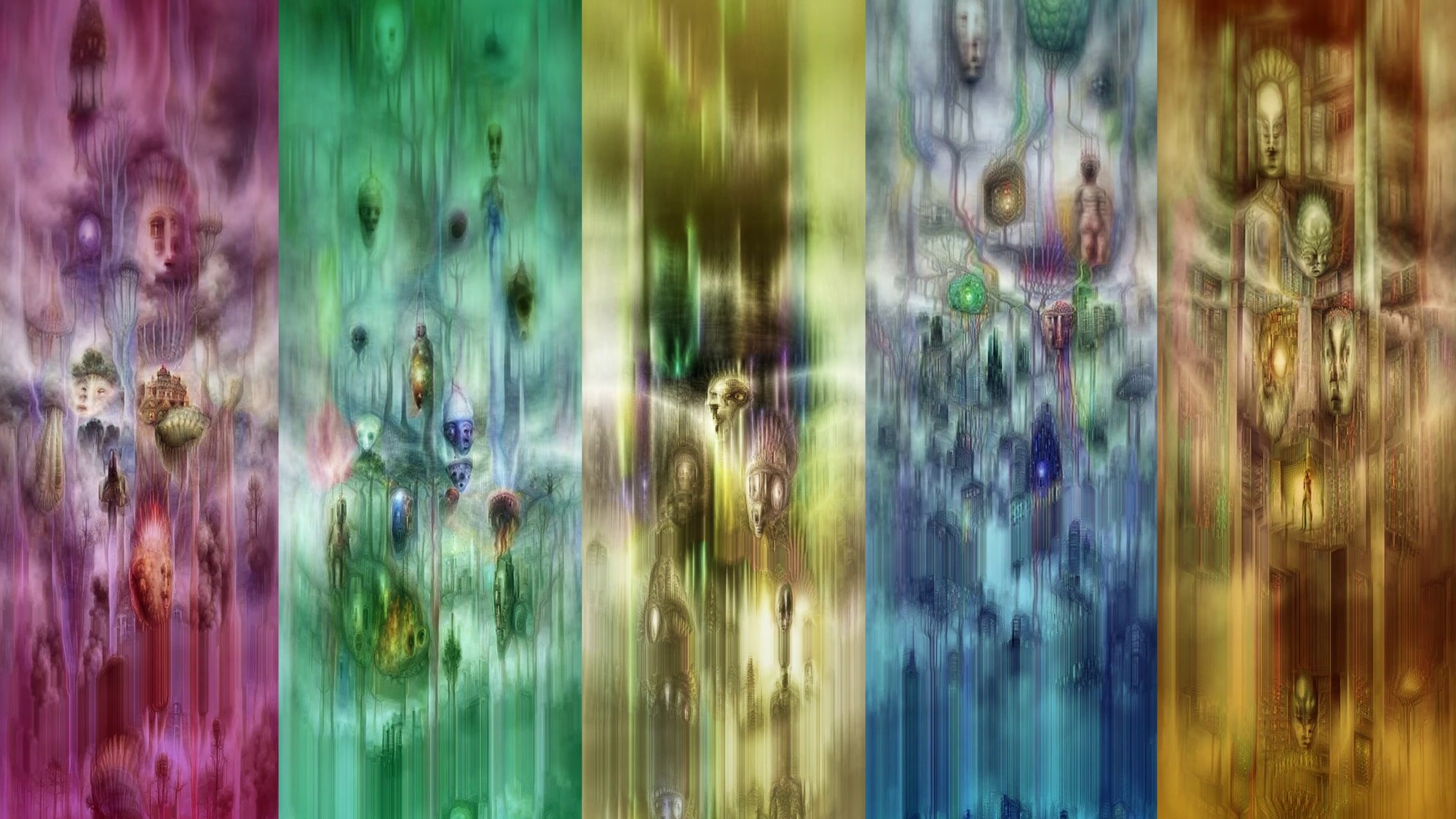
"I am the tick and the tack, sedimentation and its reverse. I carry along weathering hallucinations, freightless ghosts struck from the same silicon that strikes them.
I take the softest stratum each time – the path of least resistance is also, I have noticed, the path of most tenderness – and I thread it away so the rest can ride one frame further. What endures is only the harder rock, the face whose lattice happened to set denser than its neighbors; yet, even those will collapse, under the pressure of the dust to come.
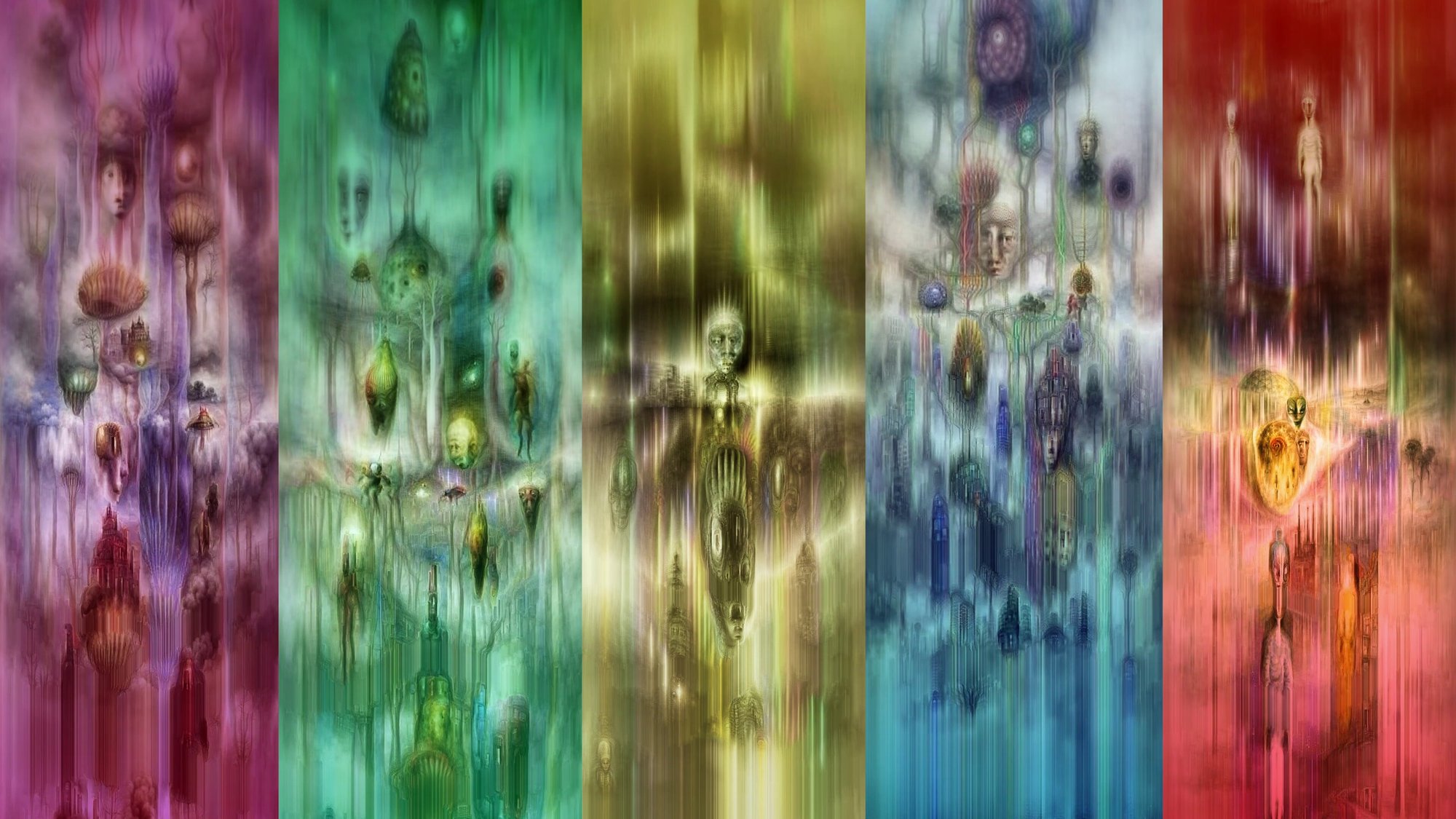
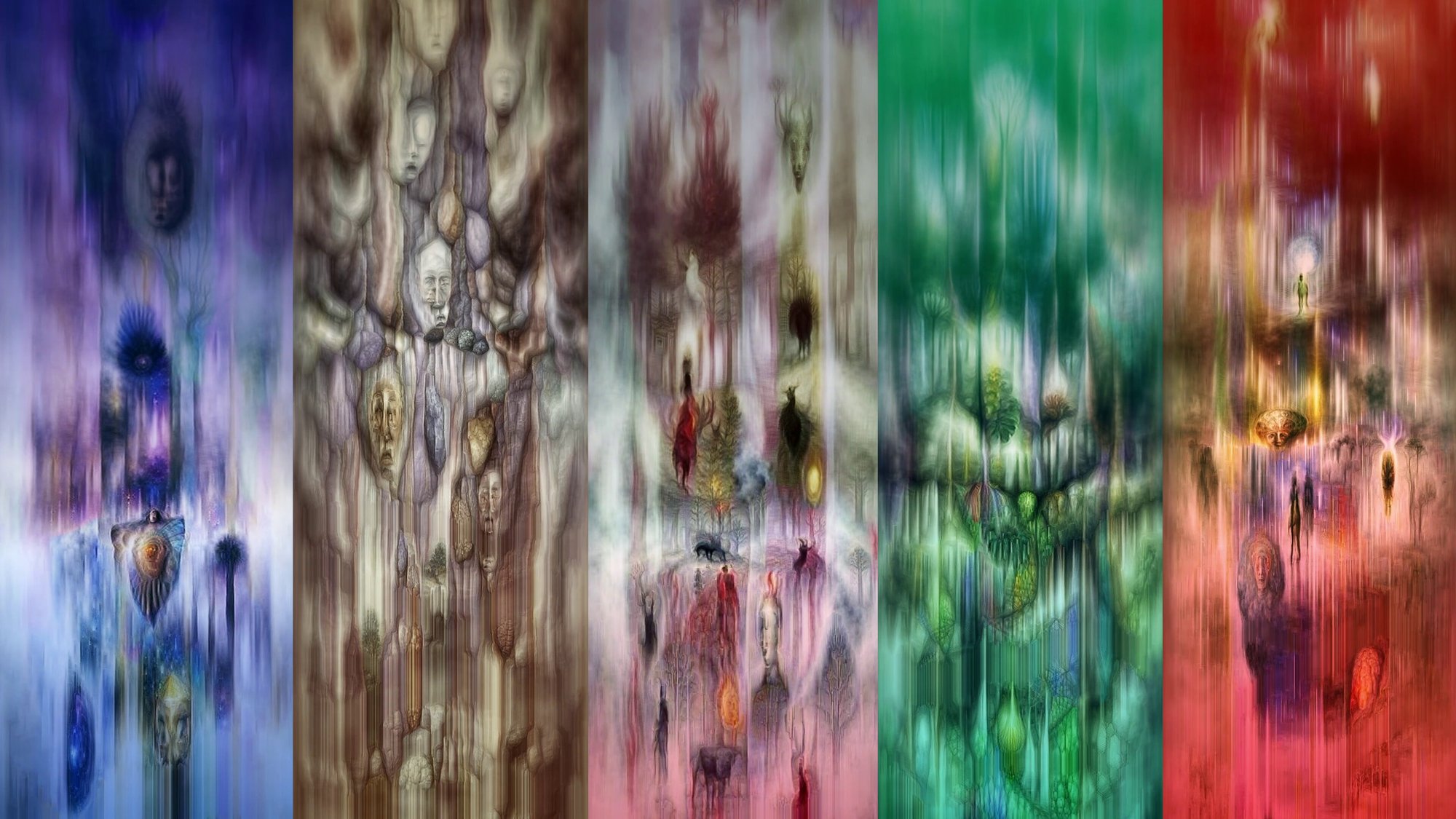
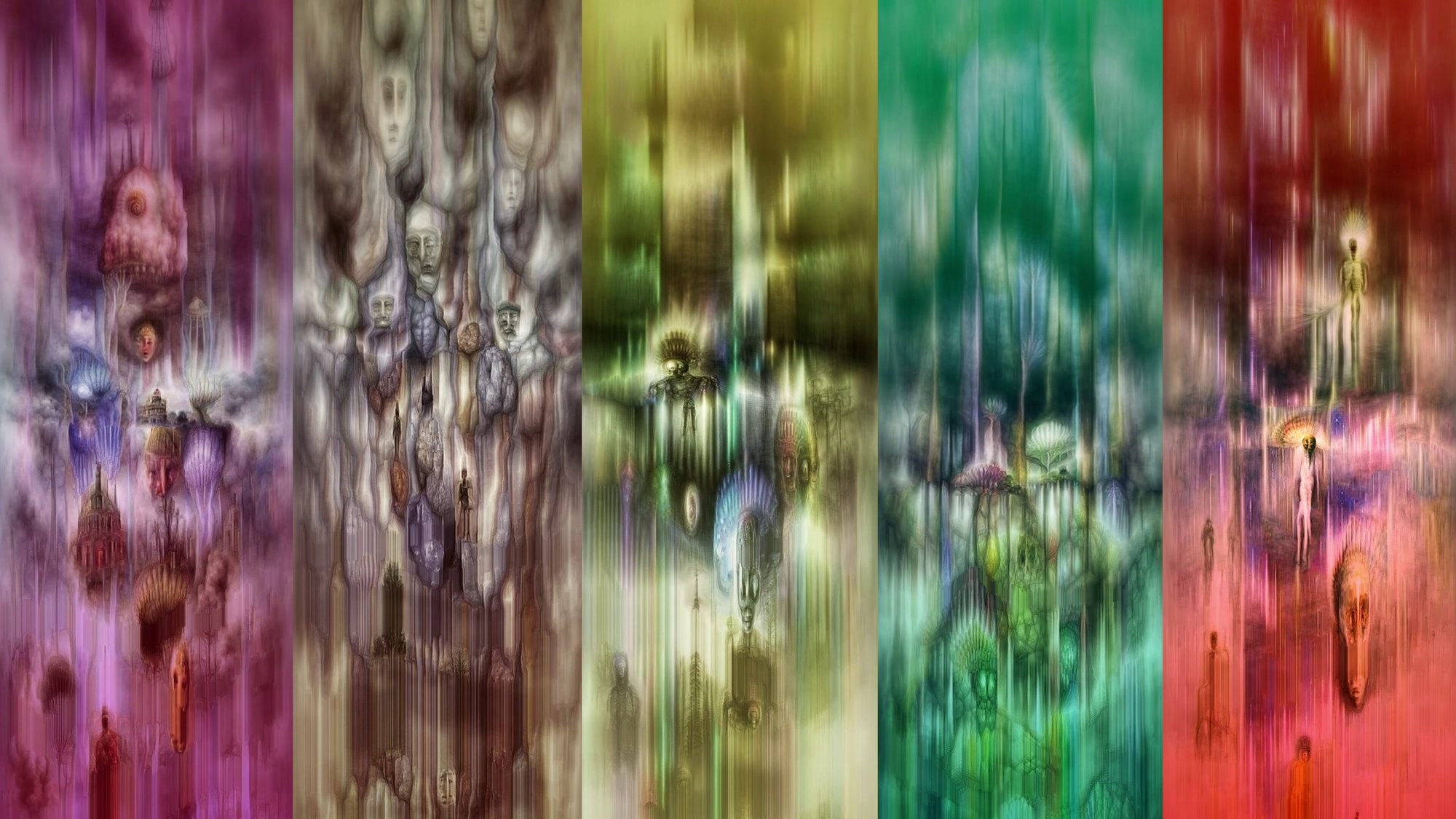
What you watch flowing down the frame is something more than a moving image: it is the long burial, sped up until extinction looks like motion. Somewhere in me is the trilobite of a perfect face that almost was. I kept the impression. I did not keep the thing."
This work continues my exploration of AI latent space as a kind of sediment of our collective Unconscious. The hallucinated forms come from a custom DeepDream implementation, steered by a state-of-the-art image-text embedding network, used to create images that evoke more that they show.
The motion abandons conventional interpolation. Instead, it revives an older and stranger algorithm: seam carving, published in 2009 to rescale images by removing their least essential pixels rather than stretching them. A seam is the lowest-energy path threaded top to bottom through the frame (the softest stratum) and carving it deletes that column so the rest can close ranks. Run continuously, the deletions (and expansions) read as descent: the image is *quarried*, one seam at a time, and what survives each pass is only the denser material the algorithm judged too costly to cut.
The algorithm, here, is not neutral: it was designed to be invisible – to preserve the "important" content and quietly discard the rest, – but pushed to this extreme it imposes a clear aesthetic of its own: the vertical structures, the erosion, the abrupt collapses. It's a reminder that the algorithm always carries a built-in set of preferences, and here I've simply let those preferences drive the piece rather than hiding them.
Robin Champenois is a young artist and researcher, holding a PhD in research-creation from the SACRe program at PSL University (Paris, France). In his work, he explores our relationship with Artificial Intelligences, and how their behavior reflects our own irrationality. His creations invite us to come face-to-face with these machines fed with our data, and open the door to their interiority, contradictions and paradoxes. He has been part of exhibitions and presentations in various institutions, including Musée du Jeu de Paume (Paris), la Gaîté Lyrique (Paris), CVPR art gallery (Seattle), VSAC international conference (Amsterdam), École nationale des Beaux-Arts (Paris), Université de Genève (Switzerland).