
1 / 7
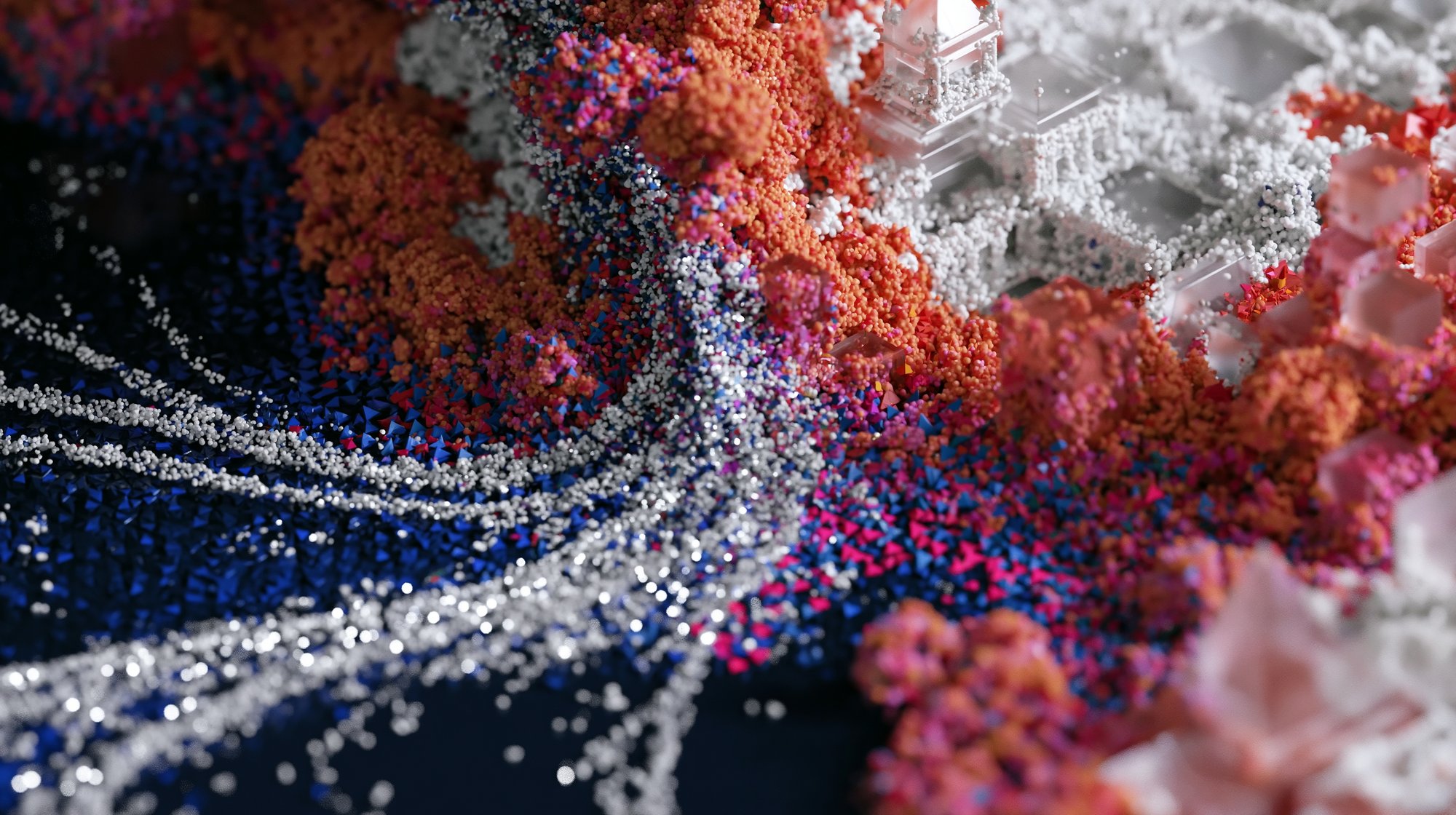
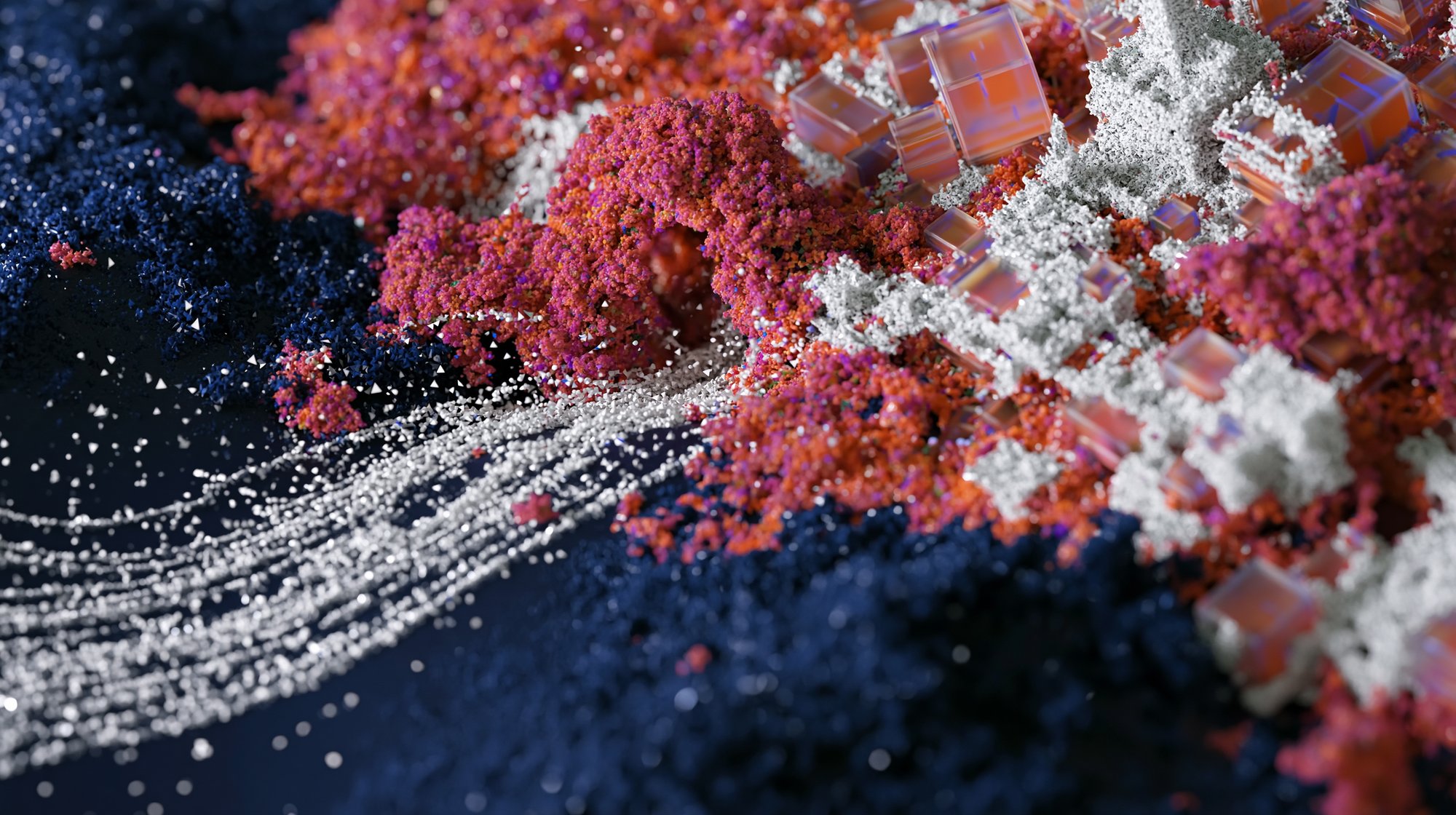
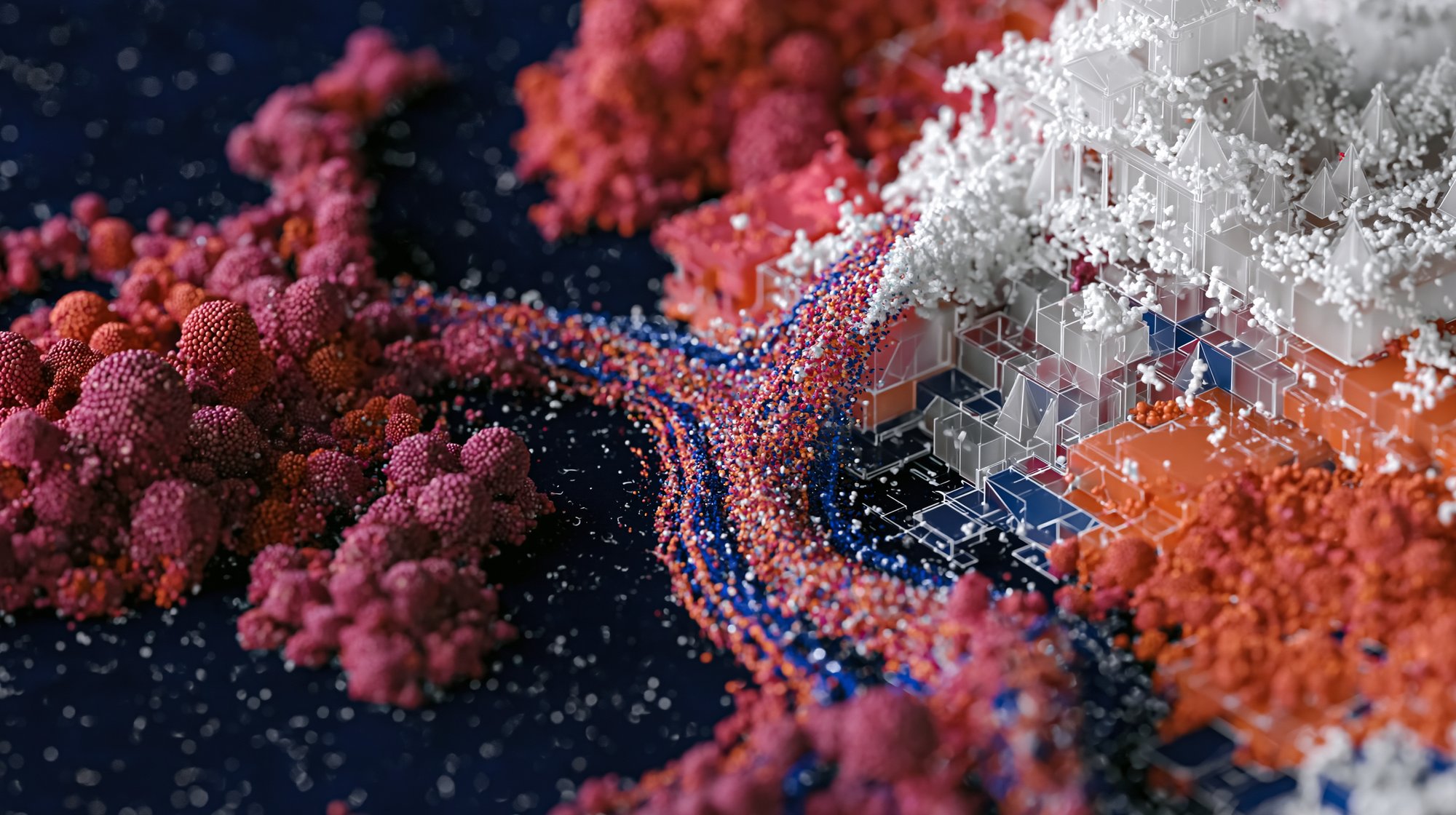
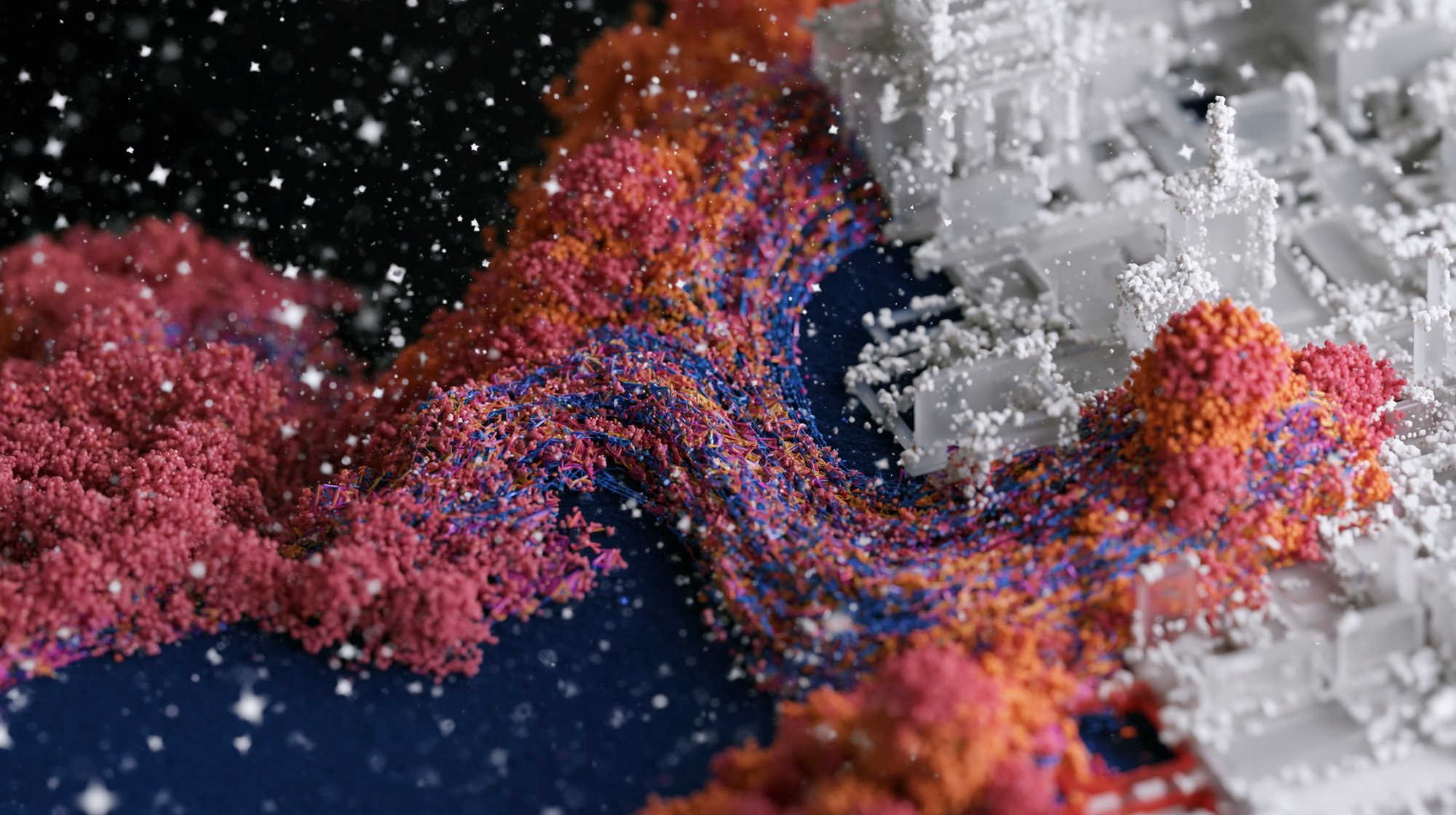
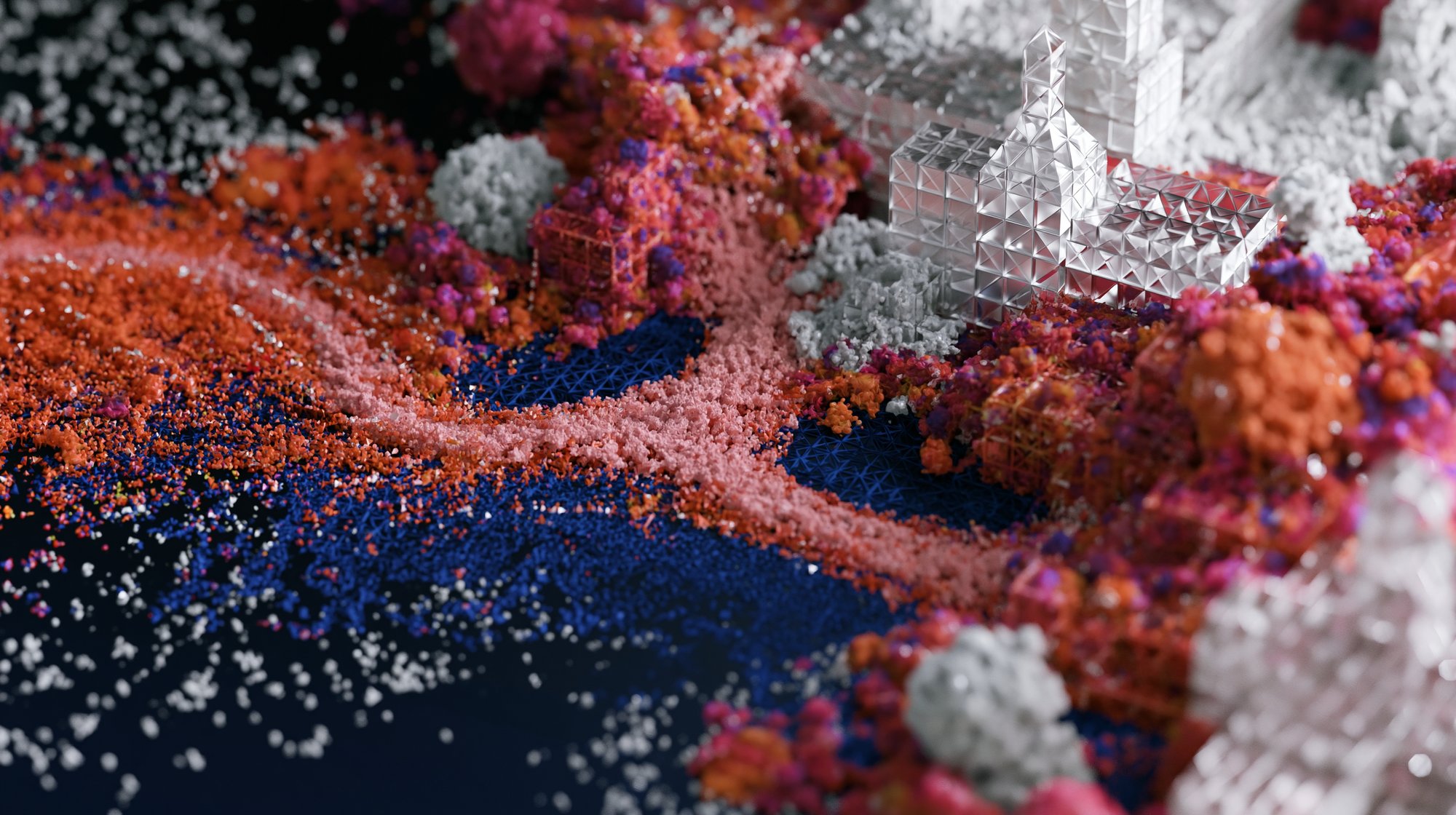
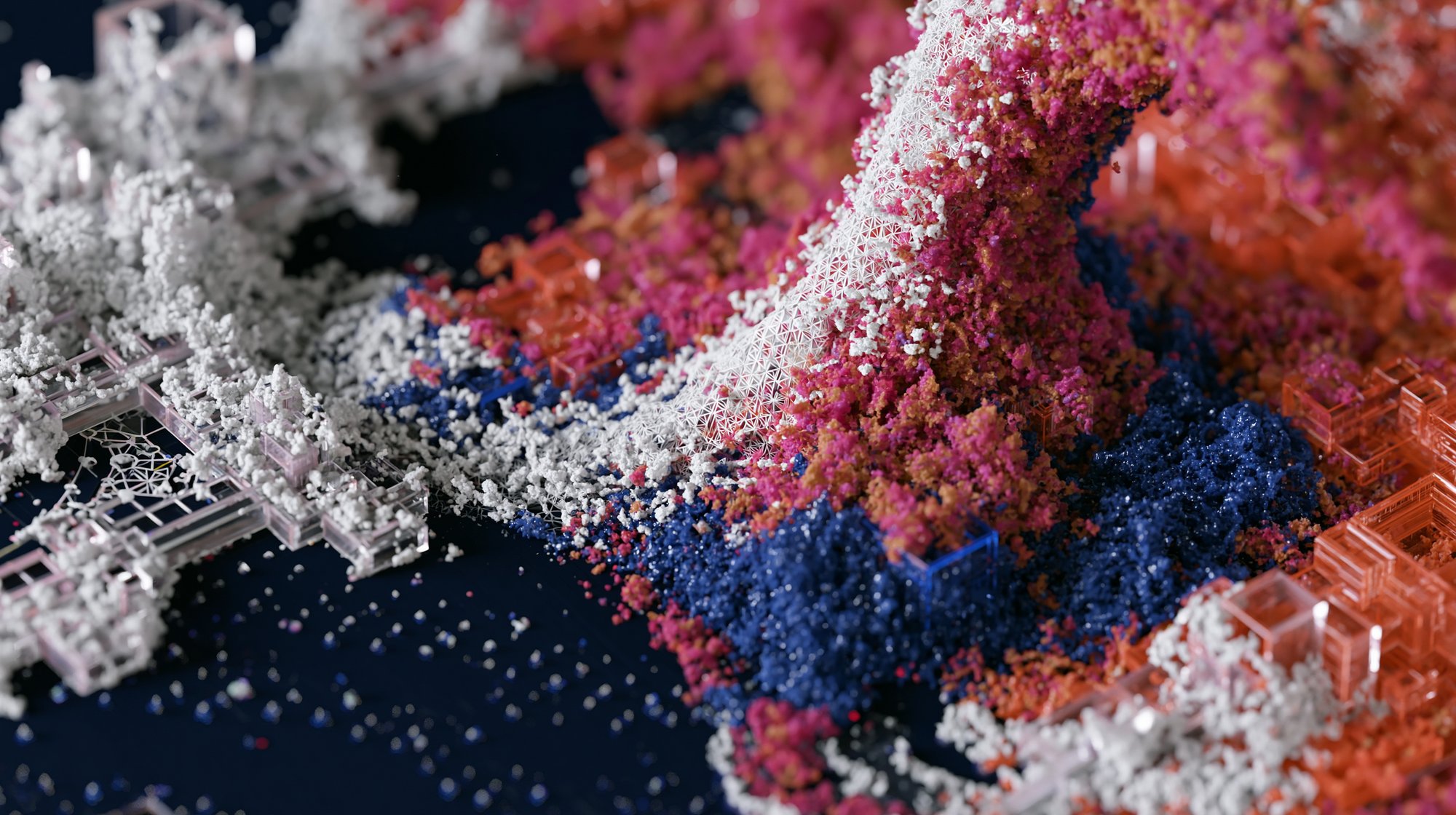
Particles / Organic reproduces the visual behaviour of particle simulation — swarming, dispersal, organic accretion and dissolution — without any physics solver underneath. Where a traditional pipeline would compute motion from forces, collisions and rules, here the movement is generated entirely by diffusion models responding to visual resemblance rather than physical law. The particles cohere because the model has learned what such motion looks like, not because anything is being simulated. The work sits deliberately on the boundary between symbolic abstraction and the natural world: its source material is the artist's own botanical photography, so the abstract particulate forms carry a residue of real organic structure. It asks the viewer to notice a familiar computational aesthetic — the solver-driven particle sim — arriving through a completely different mechanism, and to sit with the uncanny gap between apparent process and actual process.
The system takes the artist's own plant and botanical photographs as custom style references. These are used to condition a diffusion image-generation model (Midjourney), producing still frames whose particulate, organic forms inherit the structure and palette of the source photography rather than a generic learned distribution. Selected frames are then animated using an image-to-video diffusion model (Kling AI 3.0), which generates temporal motion directly from the still image without any underlying particle or physics engine. There is no solver, no force field, no collision system — motion emerges from the video model's learned priors about how such imagery moves. The resulting clips are assembled and colour-treated in After Effects into a continuous sequence. Inputs: personal botanical photographs (style reference) + text conditioning. Core components: diffusion image generation (style-referenced), image-to-video diffusion, edit/assembly. Output: a silent 4K video sequence. The conceptual point of interest is precisely the absence of the solver that the output visually implies.
Evgeniya Yaroshik is a motion designer and AI artist based in Munich with around two decades of experience in CGI and broadcast design. Her background spans senior motion design and art direction across broadcast and brand work, with a Cinema 4D–centred practice that has increasingly moved into generative, AI-integrated pipelines. Her personal work favours minimalism, abstraction and a cinematic, surreal register, deliberately resisting the generic aesthetics of default AI output. She is interested in the point where controlled digital craft meets emergent, model-driven behaviour — where a system produces the appearance of physical process without the physics underneath.