1 / 5
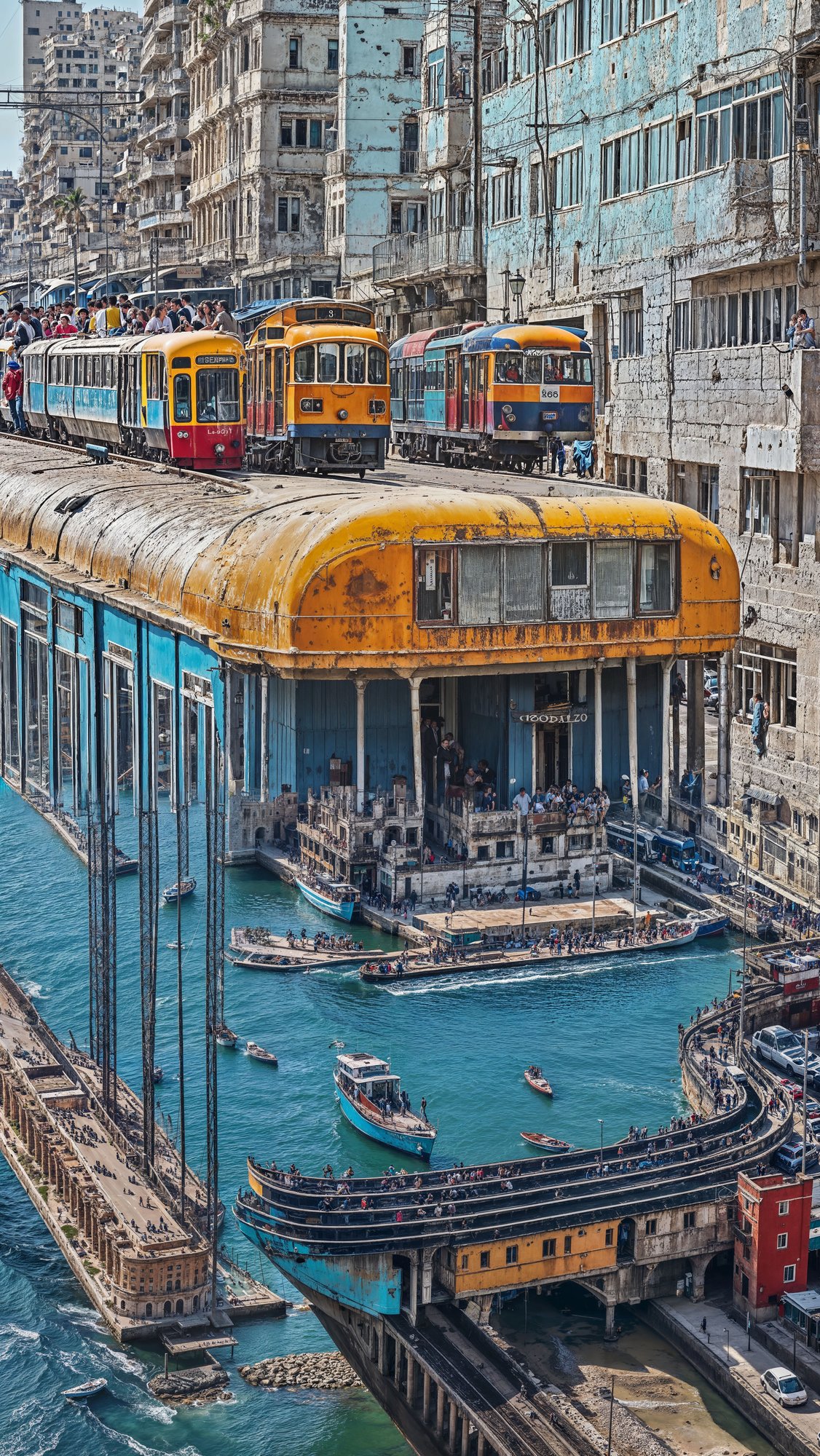
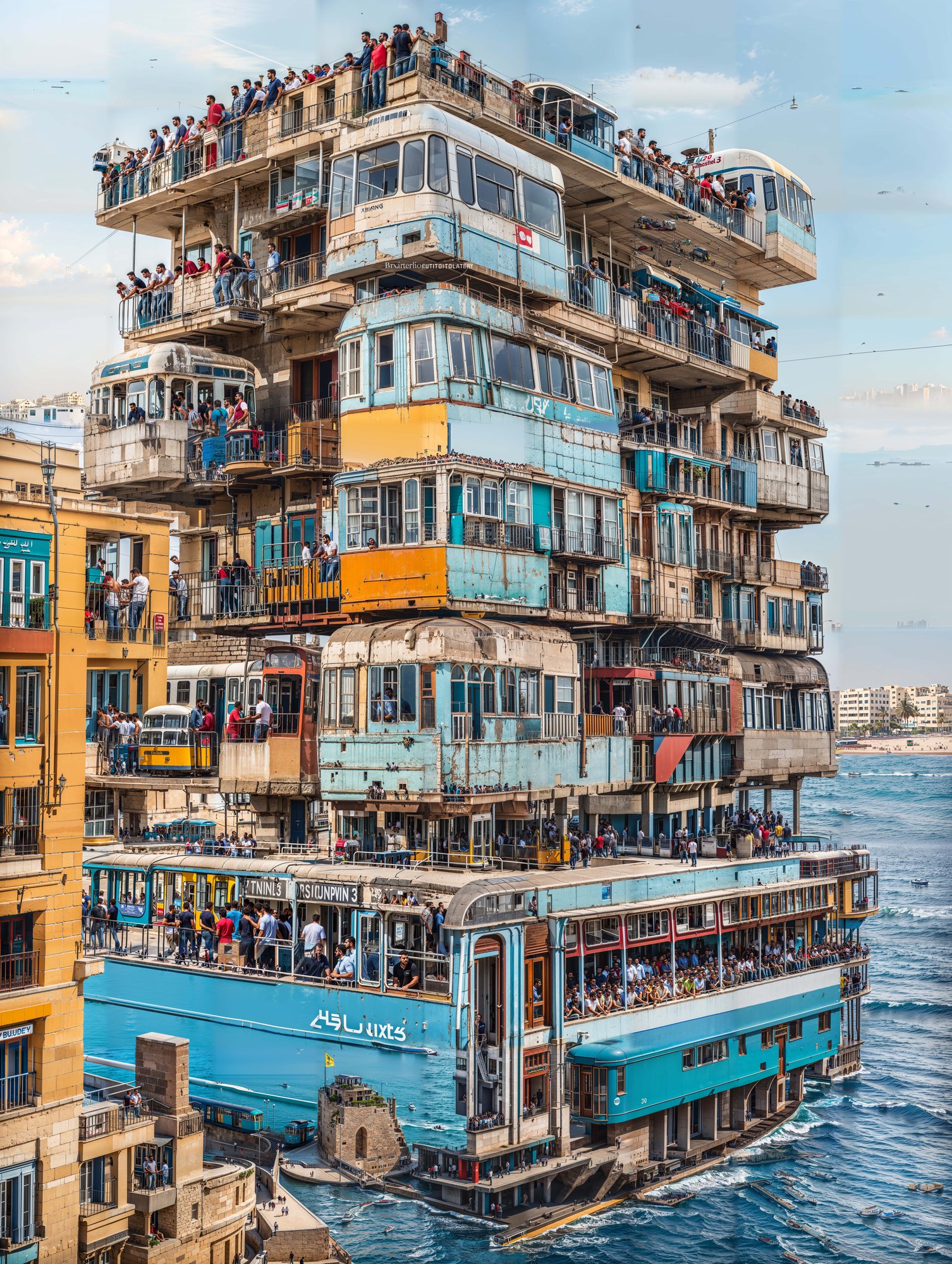
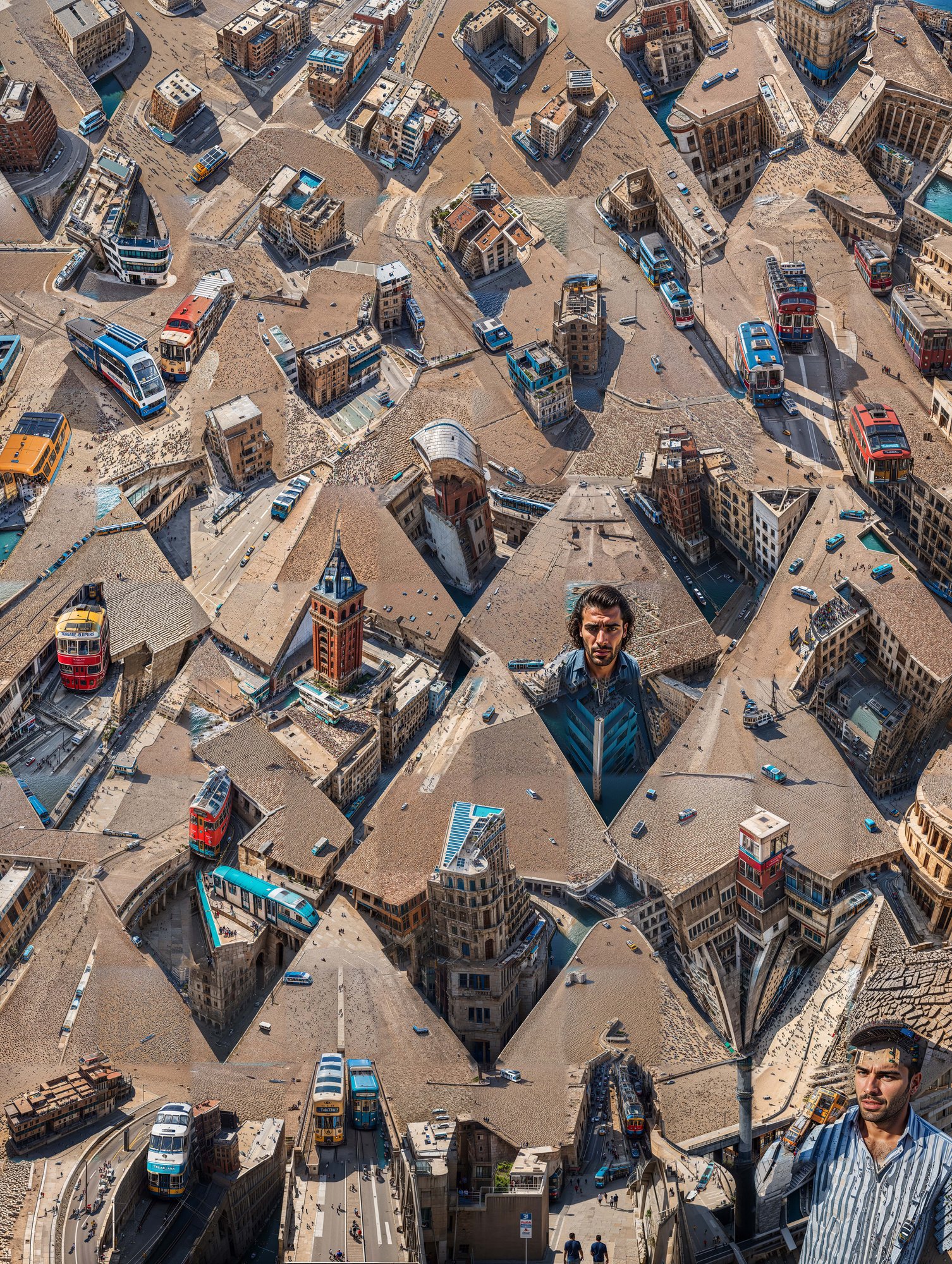
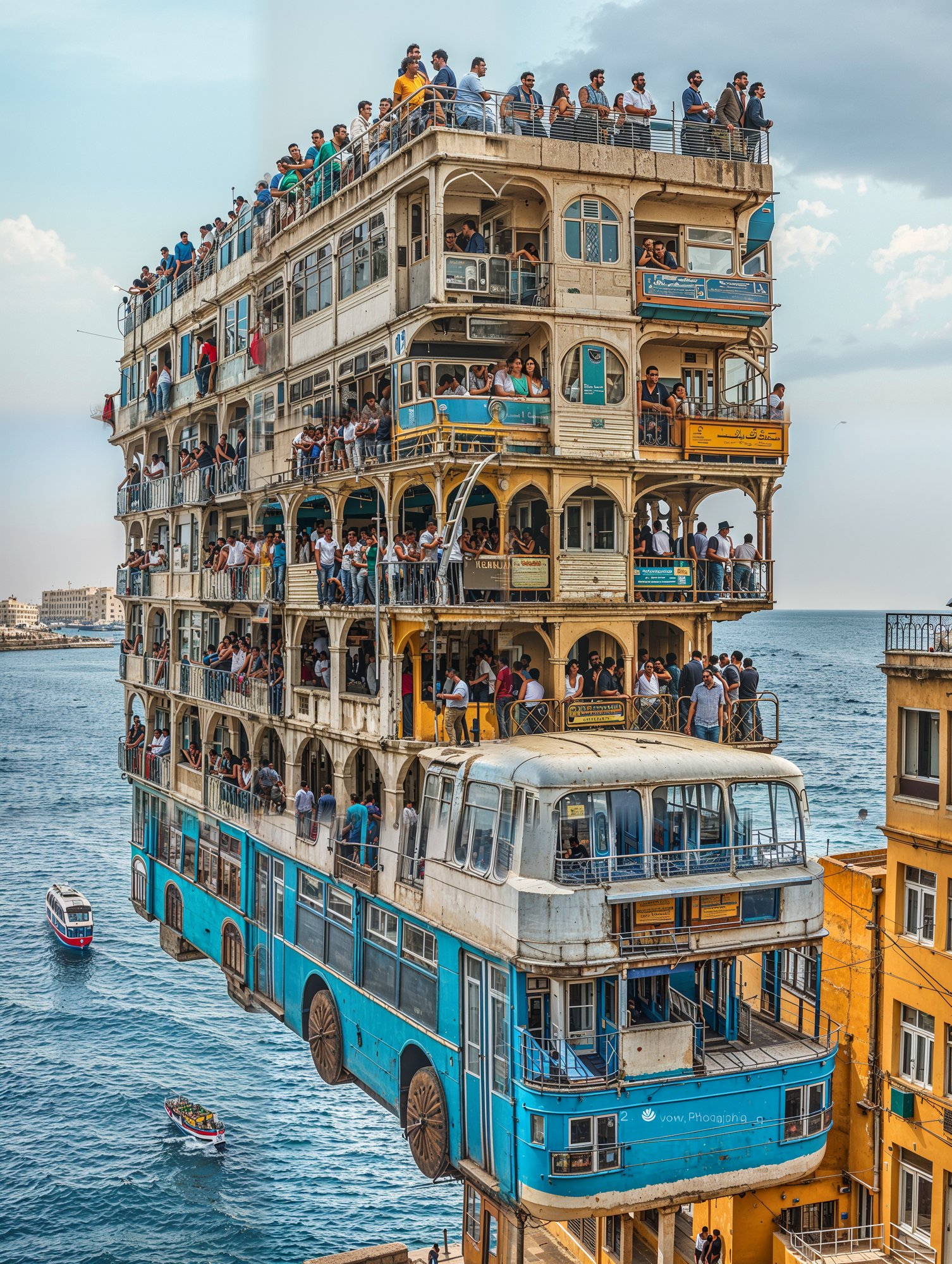
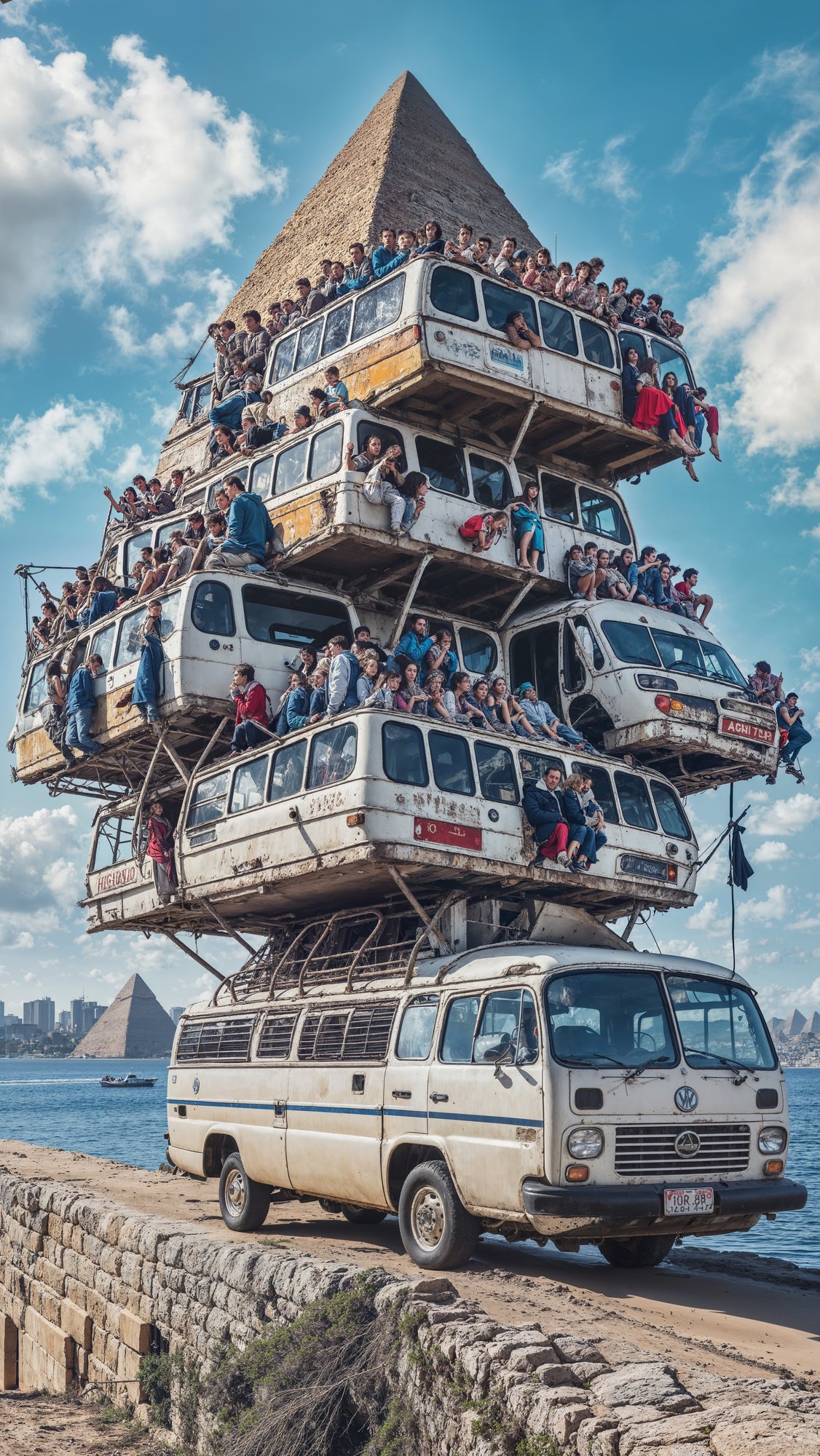
The work is an expansion that starts from how AI can evolve our visual vocabulary and moves toward what is the meaning of home — how my own bias has shaped, and been shaped by, a more complicated collective bias, and how that impacts me and everyone around me.
The elements are the ones that make up the Egyptian cities I know. How do I perceive them? How do large language models? How do they evolve, and is there any real interpretation in them? Why do these elements keep being destroyed and eliminated in real life, in exchange for a globalized image of a new Western city? How is colonialism shaping Egyptian identity to that point, and is there a point in trying to get rid of it?
The poetry and the sound revolve around confusion and not knowing an answer. The sound holds Pacific waves from California, seagulls from Alexandria and from California, the tram of Alexandria — demolished this year — and the Southern Pacific Amtrak train. These are the sounds of my life.
I don't really care what people will perceive. Maybe it's open to interpretation.
Since 2022 this work has been part of a larger ongoing attempt to document bias artistically. My observation is that the models are getting too realistic, closing down the possibilities of what we can try to reach — turning into something closer to a fast, dumb search bar. Sometimes that's useful. But the training data is biased, for many reasons, and so are we.
By hallucination I mean the variation a model produces while trying to get a detail right — remembering it, or dreaming it, from a distant place. I love those and I hate that they're going away. In current models they survive only in the smaller regions, the pixels, which is why upscaling and moving between the layers of an image became intuitive to me. Video hallucinations are the ones the field is most determined to eliminate. I'd rather we didn't spend all our effort getting rid of them, but studied them instead — they reflect back at us.
Process. Inputs are layered rather than single-prompt: pre-existing sketches, 2D collage, occasionally 3D, and older AI-generated work from earlier platforms and model generations, re-entered as material. Prompts change constantly and often address one part of the image at a time. Some models resist deforming certain motifs — the pyramid especially — which is why the pre-production intervention exists; without it, nothing moves. Regional upscaling is applied to specific zones rather than the whole frame, to hold detail where the variation still lives. Animation is first-frame/last-frame interpolation, chosen because it keeps that regional upscaling consistent across the transition. Exploring an artwork takes many iterations; executing a resolved one takes few.
The results are still unexpected, but that's getting harder. The models are becoming more definitive and the outputs more generic — to the point where sometimes I don't want to use AI at all.
Sound. A mix of my own field recordings, library material, and original archival recordings of Salah Jaheen reciting his Rubaiyat in his own voice. The recorded layers are Pacific waves, seagulls from Alexandria and from California, the Alexandria tram — demolished in 2026 — and the Southern Pacific Amtrak train.
Hassan Ragab
hsnrgb.com · Instagram · X
Hassan Ragab is a digital artist from Alexandria, Egypt, based in Southern California, with a background in architecture, computation, and design. His work focuses on the visual vocabulary of large language models — what they mean to him, how they can be broken, and what they do to our culture.