1 / 6
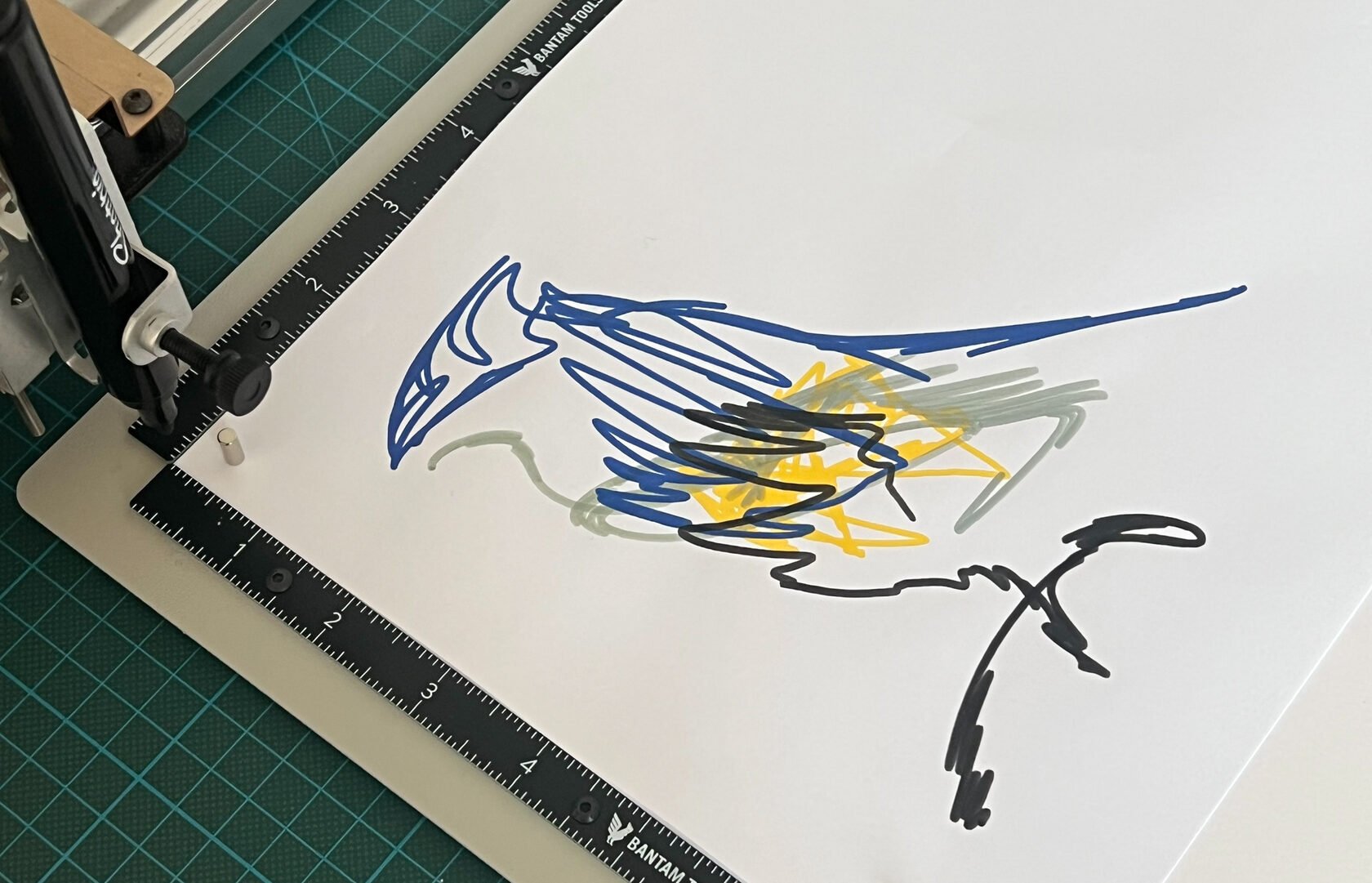
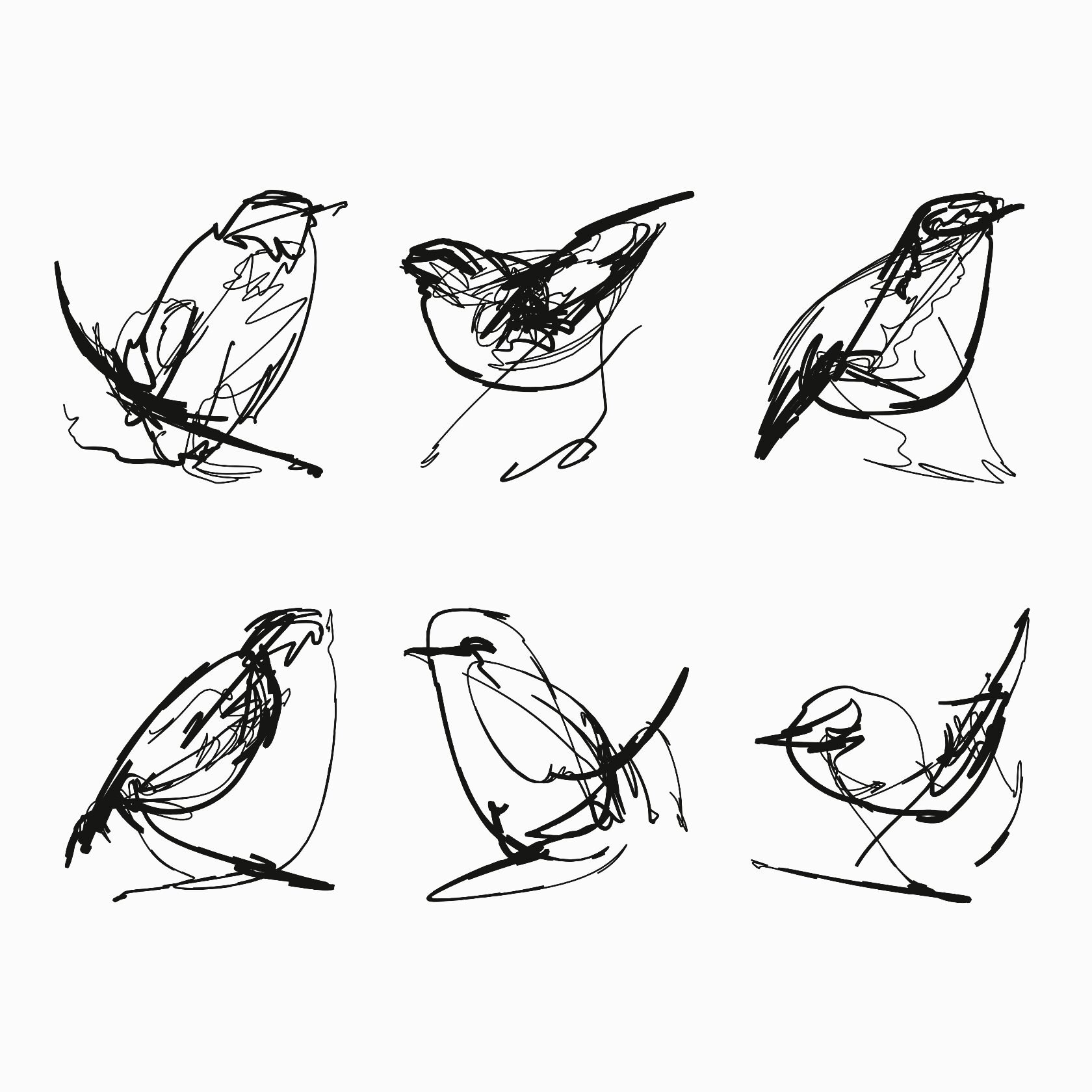
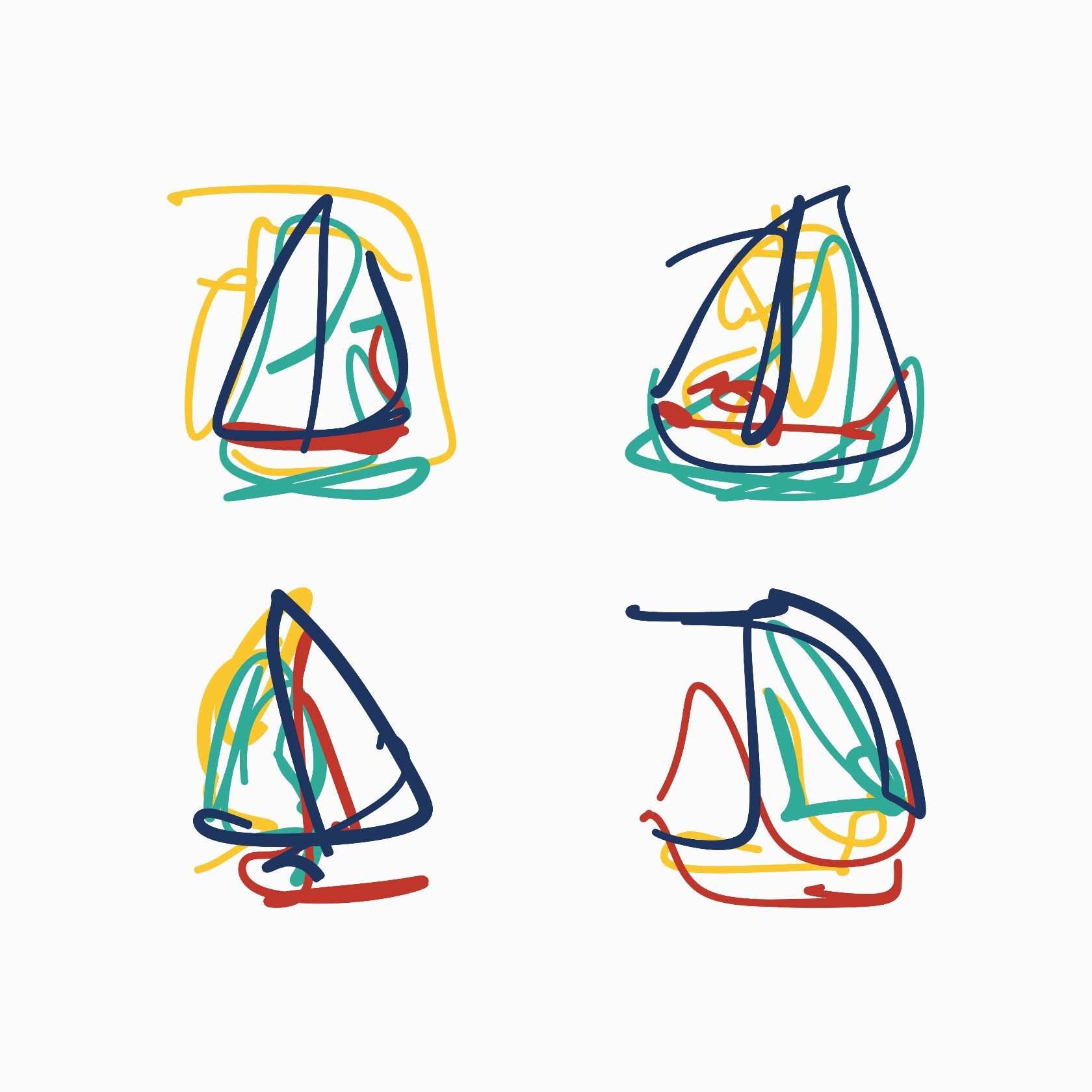
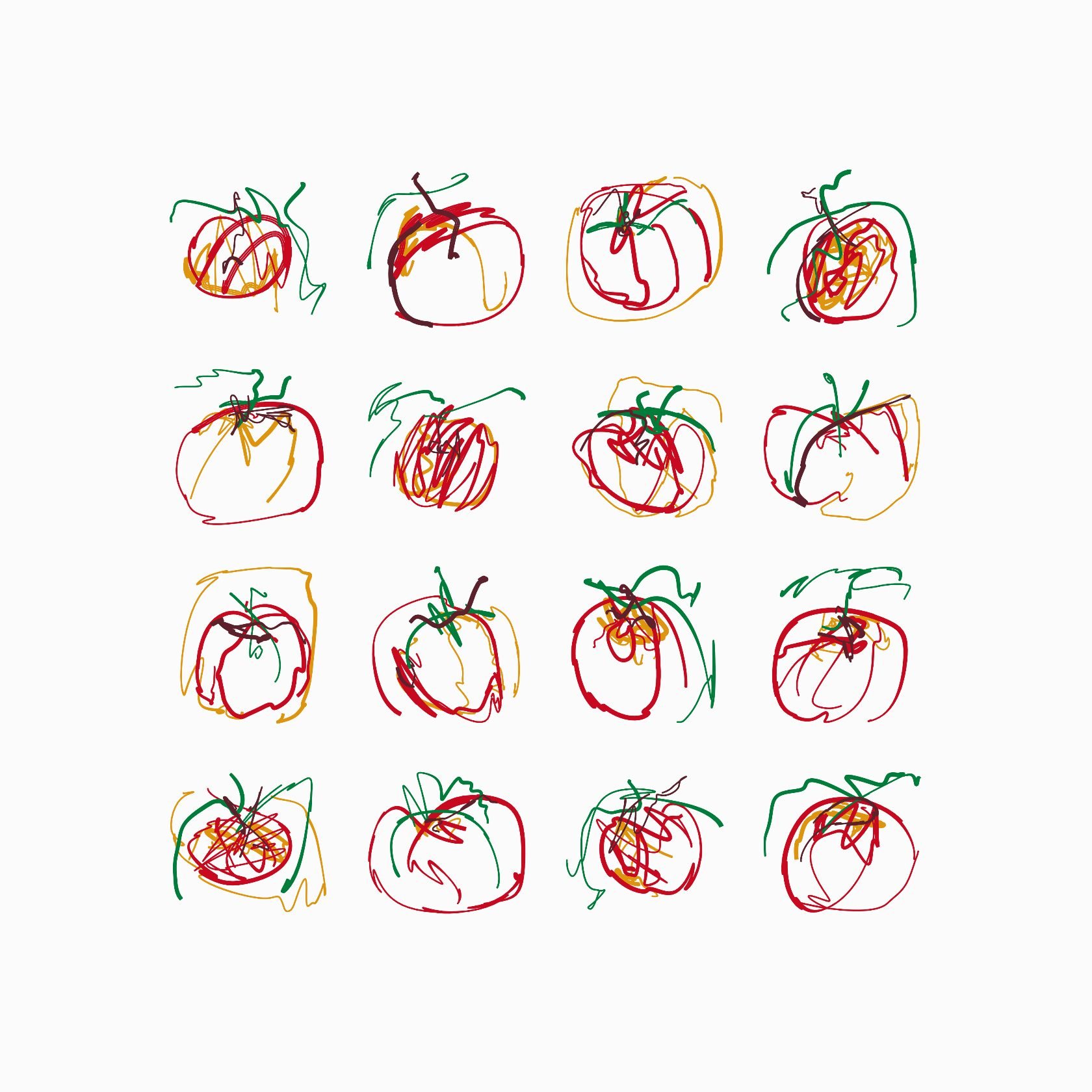
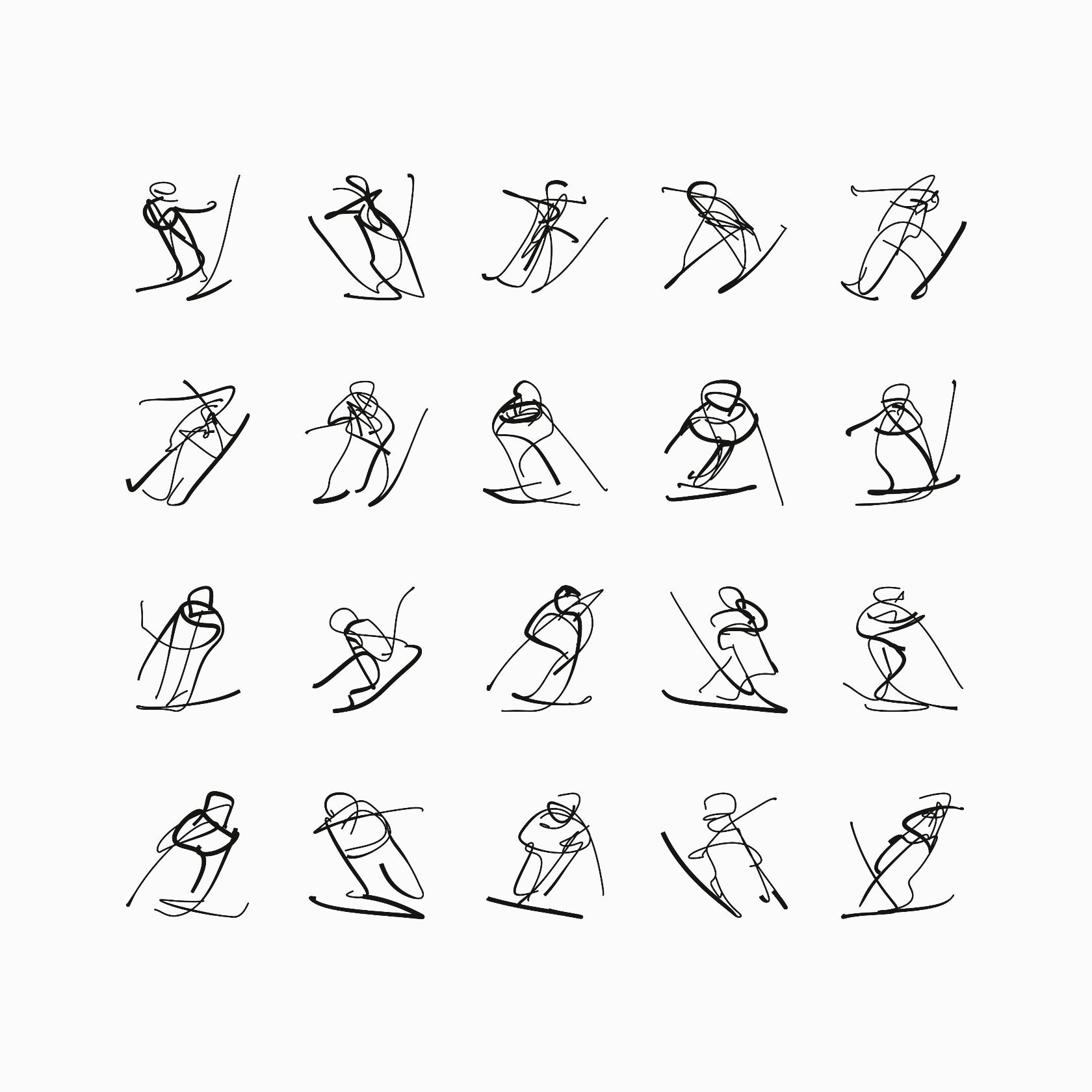
Synthetic Gestures is a generative drawing machine and custom machine learning system. An implicit neural representation (SIREN) is optimised with an evolution strategy (sNES) to maximise similarity to a text prompt, guided by CLIP. The system parameterises a series of expressive strokes made with the mechanical arm of a pen plotter, producing recognisable forms of text prompts like “sailboat,” “bird,” "tomatoes," and more.
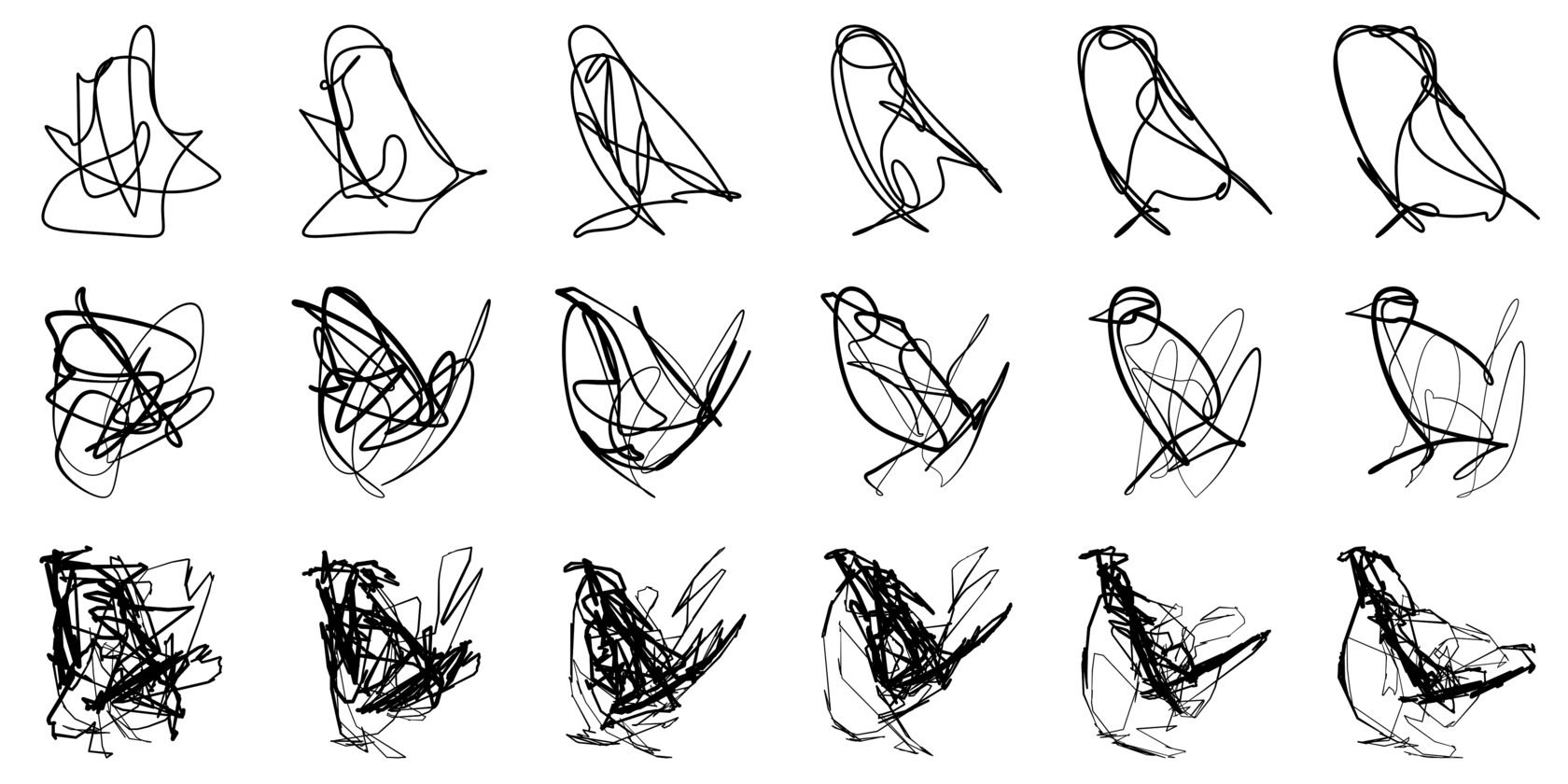
The work is realised as a series of plotter prints, alongside a digital display cycling through outputs from various prompts. Drawing paths are initialised randomly, then slowly evolved towards a set of trajectories that maximises semantic recognisability to the input prompt. The system can optimise disconnected, noisy, and multi-colour plotter drawings, a few variants of which are shown here. The continuous, gestural quality of the strokes sits within the context of surrealist and dadaist drawing systems, such as Exquisite Corpse and automatism.
The software follows a long history of artists creating their own tools and working with drawing machines. The use of SIREN, a sinusoidal implicit neural representation, was inspired by Desmond Paul Henry's (1921 – 2004) early spirograph-like drawing devices, modified from WW2 bombsight computers. The artwork also draws on the constraints faced by early computer artists, including Harold Cohen (1928 – 2016), who developed AARON, a suite of software and robots that could semi-autonomously paint representations such as plants, people, and scenes.
By using a derivative-free evolution strategy rather than gradient descent, the system can introduce noise, discontinuities, discrete operations, and other features that are typically challenging with end-to-end differentiable renderers. The rendering, optimisation, and live-editing workflow is built in JavaScript and runs in a web browser, giving the artist a tighter feedback loop to iterate on.
The work is built with JavaScript and the web, using a derivative-free optimisation (natural evolution strategy) to allow for arbitrary 2D rendering, noise, discontinuities, and other features that often prove challenging with gradient descent. Pen plotter paths are parameterised using SIREN, a implicit neural representation using sinusoidal activation functions, which allows for a continuous and expressive curve that can be globally learned. To guide fitness, we use a Python CLIP loss server, scoring the population based on the cosine similarity to a text prompt embedding. The end result is a flexible toolkit for optimising plotter drawings, that fits neatly within the toolkit of today's generative artists working on the web.
Matt DesLauriers
University of the Arts London, Creative Computing Institute
mattdesl.com · Instagram · X
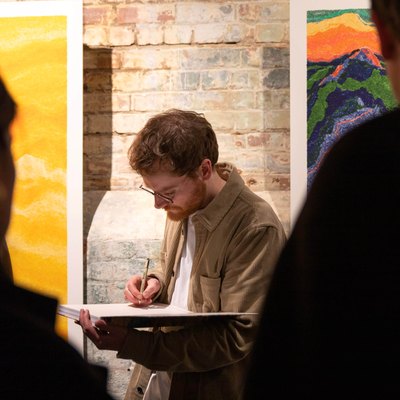
Matt DesLauriers is a Canadian-born artist now based in the United Kingdom. His practice focuses on a playful exploration of code as a creative medium, often driven by emergent, generative, and algorithmic processes. His work has been exhibited internationally, including at Somerset House in London, Paris Photo in France, Kunsthalle Zürich in Switzerland, MoCA Taipei in Taiwan, and Art Basel in Miami. Matt is active in the open source community and has given numerous talks, classes and workshops on creative coding. Matt is now pursuing a PhD at UAL in London, researching colour, perception, and machine learning for the arts.