





1 / 12
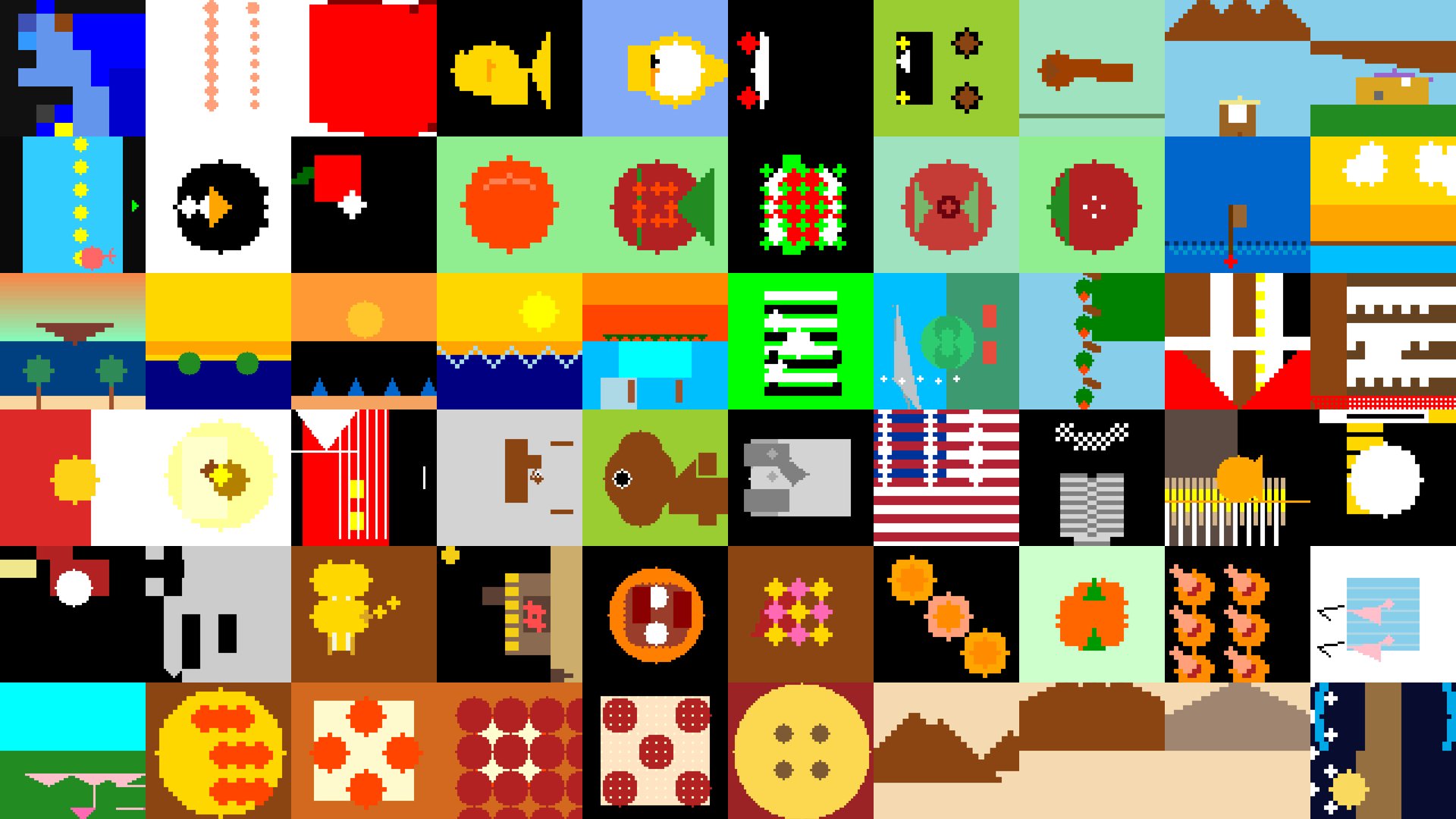
Autoregressive Mosaics explores a simple but intriguing question: Can a language model create visual art without ever truly understanding space?
Humans have been creating mosaics for thousands of years. From ancient Roman floors to the pointillist paintings of the nineteenth century, we instinctively know how countless small marks can combine into a meaningful whole. We constantly balance local decisions such as where to place the next tile or brushstroke with an awareness of the complete image.
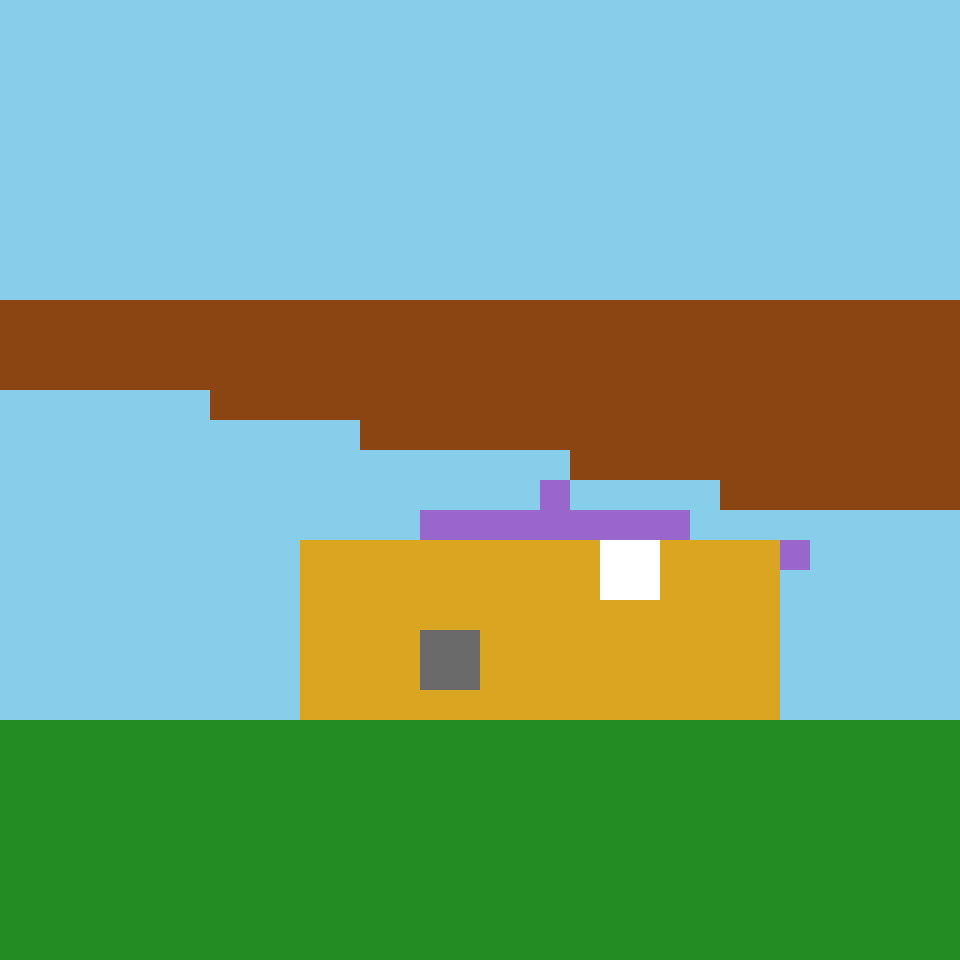
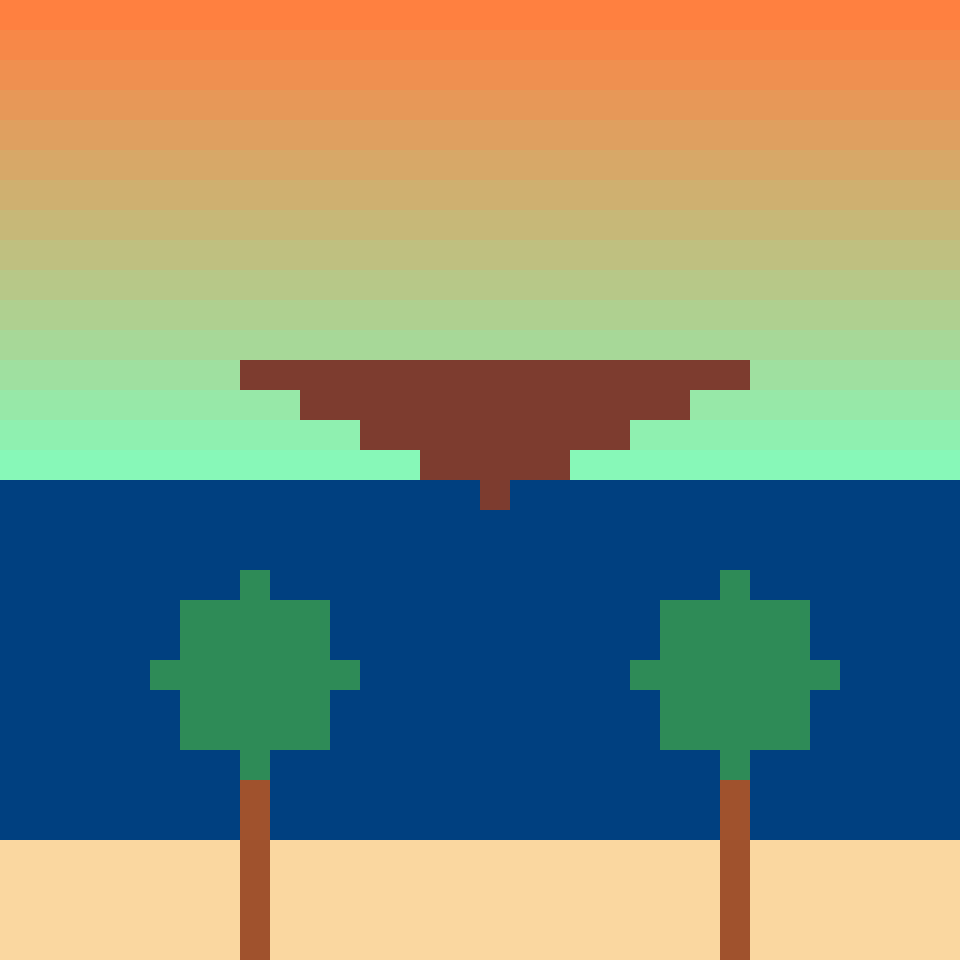
Large language models work very differently. Although they can describe images remarkably well, they do not naturally perceive space. Instead, they generate information one token at a time as a sequence of text. This artwork challenges such a model to create an image by placing one coloured character after another on an empty grid, relying only on patterns learned from language.
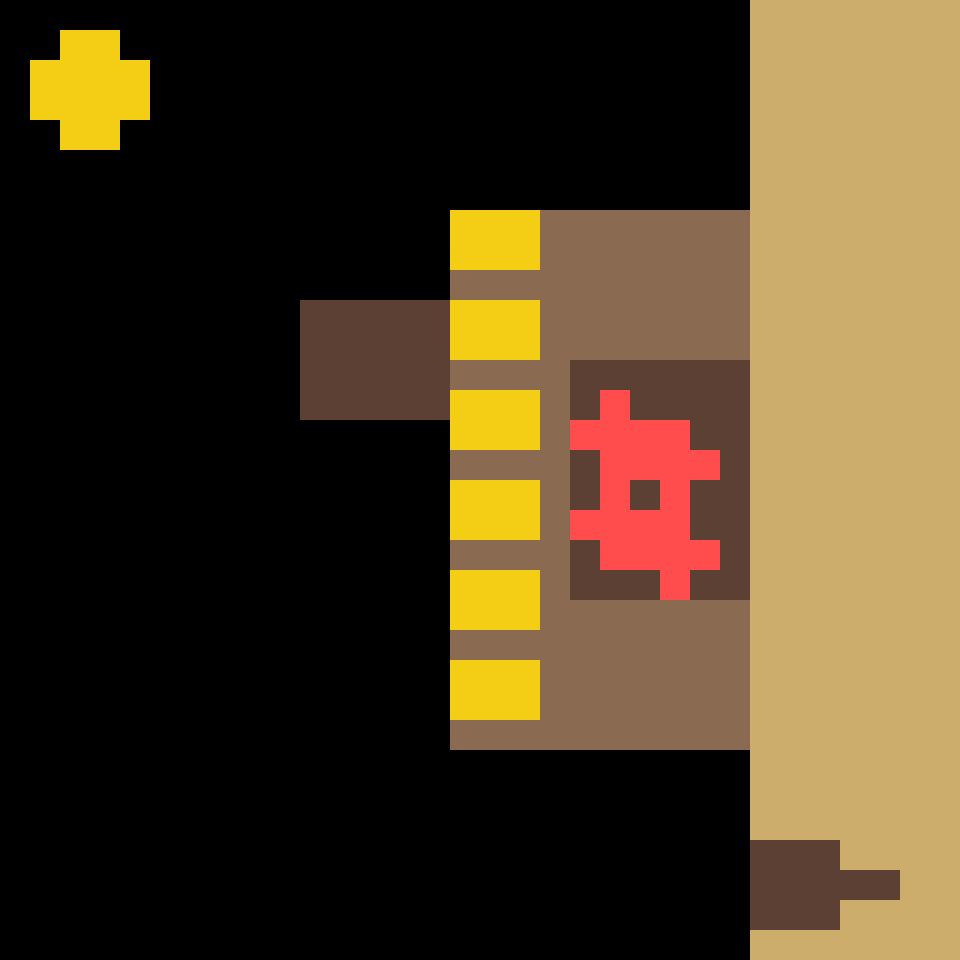
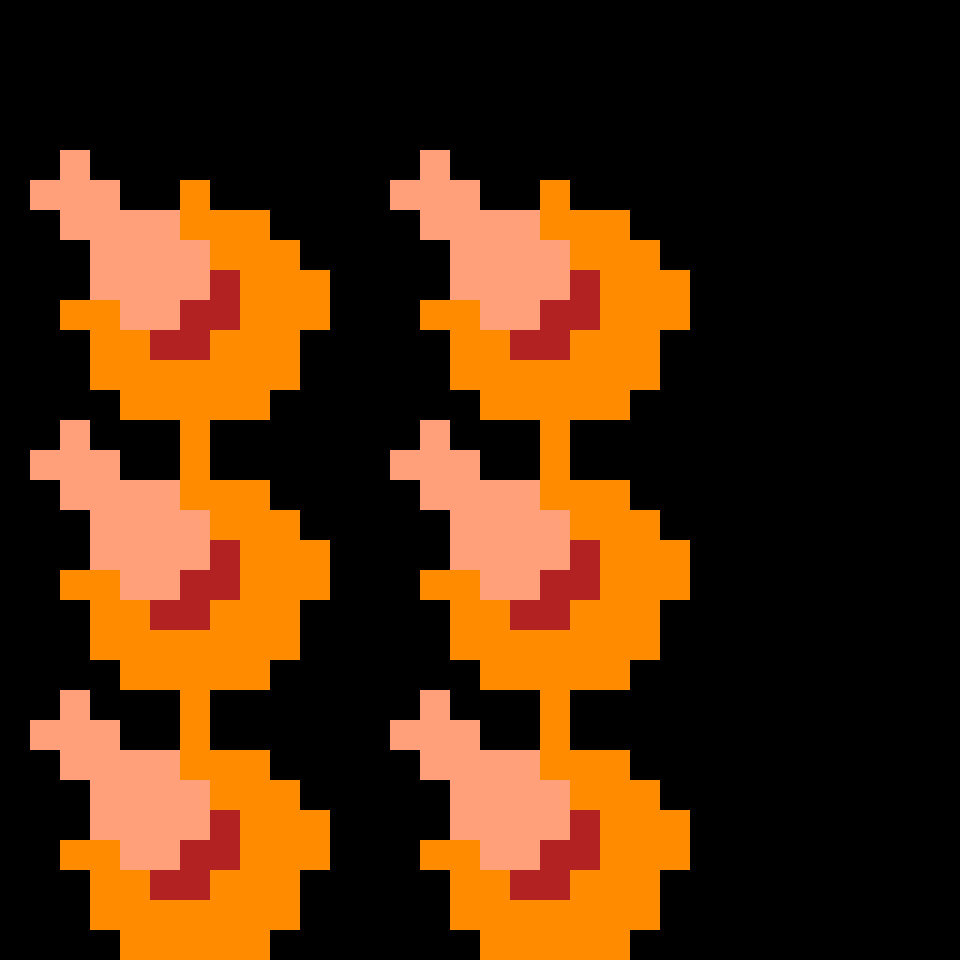
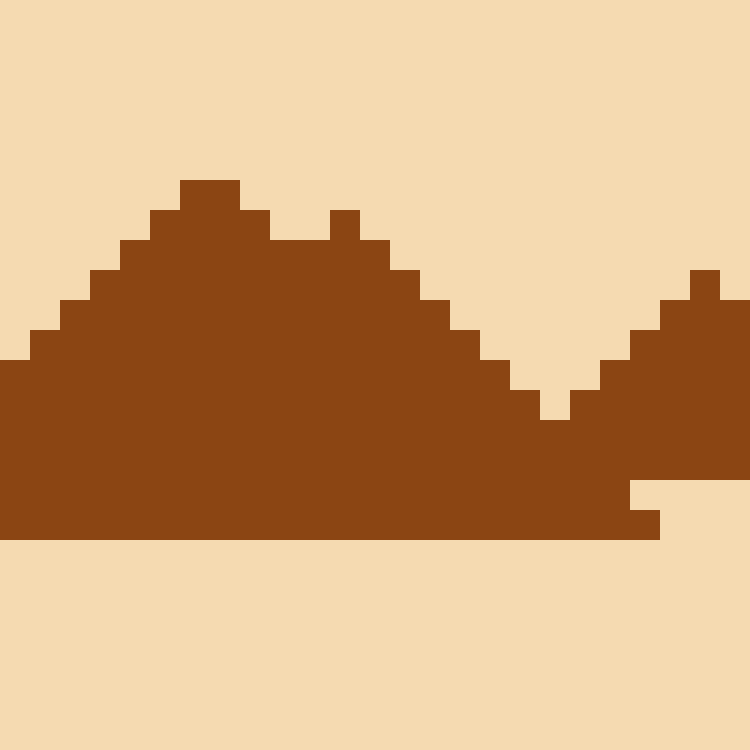
The resulting images are often fragmented, distorted, or unexpectedly abstract. Rather than being failures, these imperfections reveal how a system trained only on text attempts to reconstruct visual concepts. The works offer a rare glimpse into the model's internal reasoning, exposing where its understanding of objects, geometry, and composition begins to break apart.
A second series takes a different approach. Instead of directly placing every element, the language model writes a short computer program describing how the image should be drawn using geometric shapes such as lines, circles, and rectangles. A rendering engine then executes these instructions to produce the final artwork. By expressing its ideas through code rather than individual pixels, the model achieves far greater coherence, illustrating how symbolic reasoning can compensate for its limited spatial intuition.
Together, these two methods reveal a fundamental contrast in artificial intelligence: one struggles to build an image through sequential decisions, while the other succeeds by describing abstract rules that another system faithfully executes. The installation becomes both an artistic experiment and a window into how contemporary AI systems represent and misrepresent the visual world.
The audience is invited to look beyond technical accuracy. Step closer to examine the individual characters, then move back or squint your eyes as the fragments begin to merge into familiar forms. What do you recognise? Where does the image succeed, and where does it dissolve into abstraction? As with any artwork, the final interpretation belongs not to the machine, but to the viewer.
Overview
The system coerces a text-only language model, one never exposed to images during training, into behaving as a rasterizer. The model never emits pixels. It emits a program in a symbolic medium, and a deterministic, learning-free executor renders that program to a low-resolution raster. Everything spatial in the output originates in the model's weights, not in any visual component.
Inputs
A natural-language prompt naming a subject with optional coarse appearance cues ("a tuna, dark blue on top, silver belly"). No image, reference, or coordinate scaffold is given. A system prompt defines the medium (primitive vocabulary, coordinate convention, output contract) but carries no spatial content itself.
Components
The generator is an autoregressive language model. It maps a linguistic description of an object to a symbolic specification of that object's 2D layout: the placement, scale, and relation of parts on a canvas.
The medium is the constrained symbolic space the program inhabits. Two are used. The first is constrained drawing code: a six-primitive API (fill, set_pixel, rectangle, circle, line, triangle) over a canvas in normalised coordinates, emitted as a single render function. The second is a character grid: an R×C ASCII field over a small topology vocabulary plus a symbol-to-colour palette map. Code carries a heavy code-pretraining prior; the grid does not, so the medium is itself a variable that modulates how spatial knowledge is elicited.
The executor is a deterministic renderer with no learned parameters. For code, it runs the program in a restricted sandbox and rasterises primitives via standard algorithms (Bresenham lines, midpoint-circle and barycentric-triangle fill). For grids, it maps symbols to colours. Because it learns nothing and adds nothing, every compositional decision is attributable to the generator. A fixed 16-name colour palette prevents colour-token fragmentation across the tokeniser.
Outputs
A low-resolution mosaic (roughly 32×32 to 48×48 cells), assembled entirely from the model's emitted geometry. The intermediate program is equally part of the work: because it is symbolic and continuous (primitives in normalised [0,1]² coordinates), it records how the model reasoned about layout, independent of display resolution.
Process
A prompt enters, the generator autoregressively emits a program, the executor deterministically renders it, the mosaic emerges. The pipeline runs zero-shot and unmodified across subjects and models. Sampling across the decoding distribution yields a family of mosaics per subject, tracing the variance in the model's internal spatial commitments.
Point of interest
A system trained only on language is made to externalise a spatial imagination it was never taught it had, through a channel that contributes nothing of its own. The aesthetic object and the measurement instrument are the same artifact.

The author is a doctoral researcher at the University of Rostock, where his work center on robotics, computer vision, and the problem of spatial understanding i.e. how machines can learn to reason about the geometry of the 3D world. His research explores egocentric perception and self-supervised visual learning, asking how agents can develop coherent internal models of 3D space from lower dimensional or indirect sensory input.